Key takeaways
- Start every dial-in from a fixed dose (18g in a standard double basket) and a target ratio of 1:2, then chase a 25-30 second pour.
- Only change one variable at a time. Grind first, dose second, everything else after.
- Weigh your shots. A 15-cent kitchen scale ends more bad espresso than any $900 machine upgrade.
- Read the taste, not the timer: sour means speed up extraction, harsh and bitter means slow it down.
- Dial in fresh. Beans older than three to four weeks off roast fight you no matter what you do.
I have a shelf in the workshop where I keep the portafilters people mail in with their machines. Most of them are fine. The machine was fine too. What was broken was the shot, and no amount of descaling was going to fix a 40-second gusher of a pour coming out the color of dishwater.
Pulling good espresso is not luck and it is not about spending more money. It is four numbers pulling against each other: how fine you grind, how much coffee you load, how much liquid you get out, and how long it takes.
Get those four talking to each other and almost any half-decent machine will hand you a shot worth drinking. Here is how I set one up from zero.
The four dials that actually matter
People obsess over the machine. In twelve years on the bench I have seen $300 De’Longhi units pull better shots than $2,000 dual-boilers, because the person driving the cheap one understood the recipe.
There are only four things you truly control on any single shot:
- Dose – the dry coffee in the basket, in grams
- Yield – the liquid espresso in the cup, in grams
- Ratio – yield divided by dose (the classic double is 1:2)
- Time – from the moment you hit the button to when you stop the pump
Grind size is the fifth lever, and it is the one that moves everything else. Espresso itself is just water forced through compacted coffee at around 9 bars of pressure, as the basic definition of espresso spells out. Change how fine the grounds are and you change how hard the water has to fight to get through.
Weight beats volume every time. Scoops and “fill to the line” are how you end up chasing a moving target. A $12 scale that reads to 0.1g removes two of the four variables from the guesswork immediately.
Start with a fixed recipe, not a feeling
Before you touch the grinder, lock down two numbers so you have a reference to work from.
For a standard 58mm double basket, dose 18 grams of coffee. That is the sweet spot for most baskets that shipped in the last decade. If you are on a pressurized 51mm basket from a Gaggia Classic or an entry Breville, drop to around 14-16g.
Target a 1:2 ratio. So 18g in, 36g of espresso out. Weigh the cup on the scale, don’t eyeball the crema line.
Dose in, double out, thirty seconds. If you can only remember one thing, remember that.
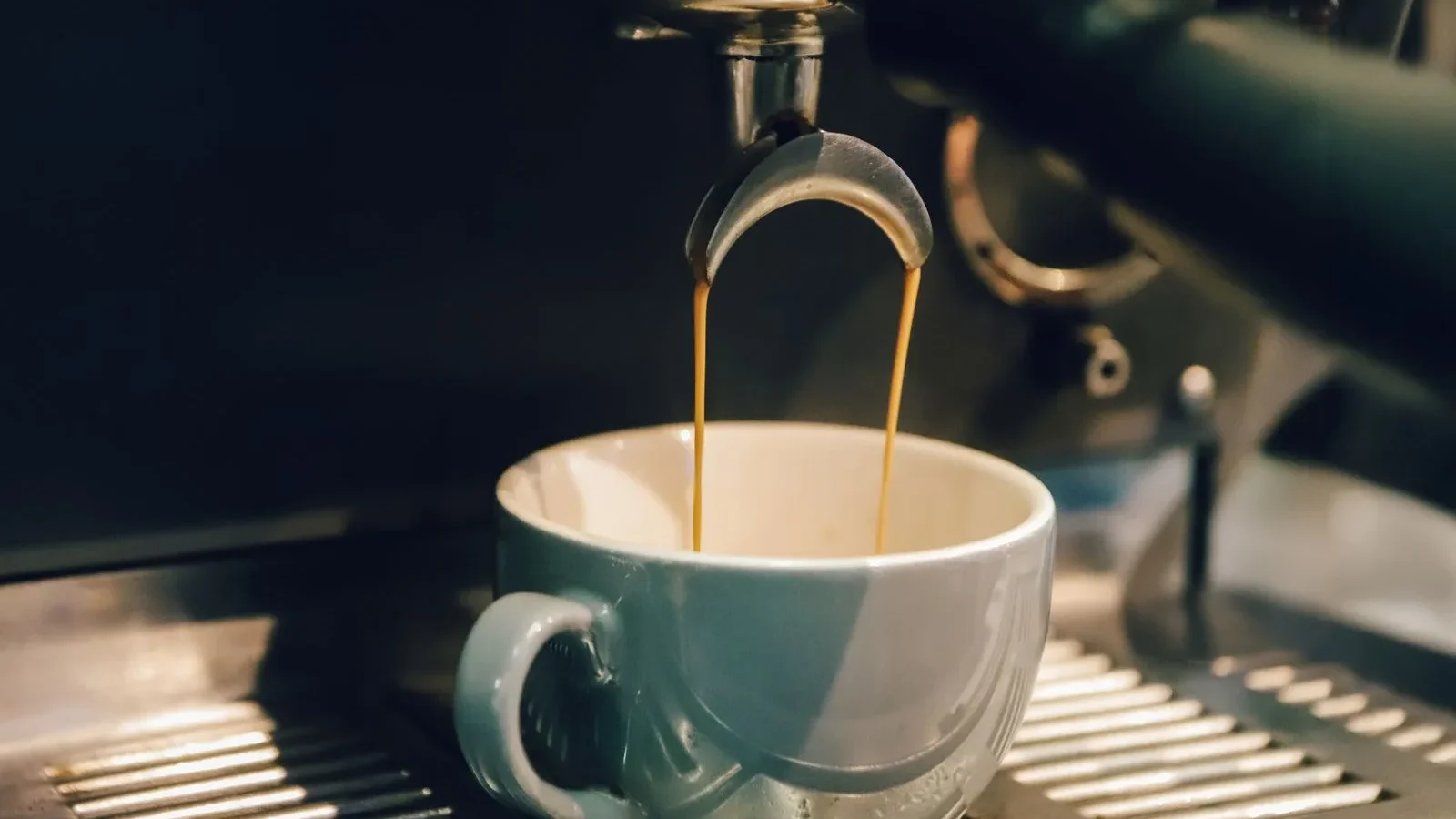
Now aim for that 36g to land somewhere between 25 and 30 seconds, including the two or three seconds of pre-infusion before the coffee starts dripping.
Why 1:2 and not something clever
Ratio is really about strength and how much of the coffee you pull into the cup. A tighter 1:1.5 gives you a thick, syrupy ristretto that can turn sharp. Stretch out to 1:3 and you get a longer, weaker, more forgiving shot.
Start at 1:2 because it is the most stable place to judge everything else. Adjust it later, once the basics behave.
Grind is the throttle
Here is the part that trips up almost everyone who calls me. The grinder, not the machine, is where good espresso is won or lost.
If your 36g pours out in 12 seconds, the grind is too coarse. Water is racing through the puck and barely touching the coffee, so you get a thin, sour, under-extracted shot. Go finer.
If it takes 45 seconds and chokes to a drip, the grind is too fine. The water is trapped, over-extracting and dragging out harsh, drying, bitter compounds. Go coarser.
Move the grinder one or two notches at a time and pull a fresh shot after each change. Then purge a couple of grams before that shot – the old setting’s grounds are still sitting in the chute and will muddy your result. If you want the deeper mechanics, our breakdown of espresso grind size and getting it just right walks through it burr by burr.
One thing worth saying plainly: a $40 blade grinder cannot make espresso. It produces uneven chunks and dust that channel water straight through. A used conical burr grinder for $120-150 will out-perform a $1,500 machine paired with junk grounds.
Dose, distribute, tamp – the puck prep
Once grind is close, the physical prep of the puck decides whether the water flows evenly or blows a hole straight through one side. That defect is called channeling, and it is the single most common fault I see.
Distribution
After you dose, the grounds sit in an uneven pile. Level them. A cheap distribution tool or even a gentle tap-and-swirl (the “Weiss” method with a needle) breaks up clumps so water meets an even bed.
Tamp
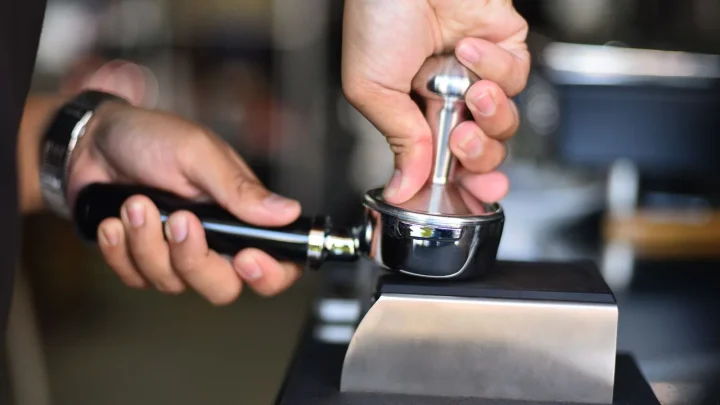
Press straight down, firm and level. The old advice of “30 pounds of pressure” matters far less than being consistent and level. A tamp that leans 5 degrees off creates a thin side and a thick side, and the water always cheats toward the thin one.
Never force a portafilter that won’t seat, and never crack the group open mid-shot to peek. There is pressurized near-boiling water behind that puck. Kill the pump, wait a few seconds for the pressure to bleed off, then release.
Read the shot, then read the taste
Time gets you into the ballpark. Your tongue gets you the rest of the way. The Specialty Coffee Association publishes serious work on extraction and brewing standards if you want the science, but at home you can diagnose most shots in one sip.
| Taste | What it means | Fix |
|---|---|---|
| Sharp, sour, watery | Under-extracted | Grind finer, or raise ratio slightly / slow the pour |
| Harsh, drying, bitter | Over-extracted | Grind coarser, or shorten the shot |
| Thin, no crema, fast pour | Grind too coarse or stale beans | Grind finer, check roast date |
| Balanced, sweet, lingering | Dialed in | Write the numbers down |
Sour and bitter are the two poles you will bounce between. If your shots keep landing sharp and acidic, our walkthrough on fixing sour espresso, causes and cures covers the exact adjustments. If they come out ashy and drying instead, read how to tame over-extraction and bitter espresso.
The variables people forget
Two things quietly sabotage more dial-ins than grind ever does.
Bean freshness. Coffee off-gasses CO2 for weeks after roasting. Beans in their sweet spot – roughly 5 to 21 days off roast – pull predictably. Past three or four weeks they go flat and sour, and no grind adjustment saves them. Check the roast date on the bag, not the “best by.”
Water temperature. Most espresso wants water around 200°F (93°C). Cheaper single-boiler machines swing wildly. Run a blank shot of hot water through the group before you brew to bring the head up to temperature – it makes a real difference on a cold machine.
Where to go from here
Pull one shot with everything measured. Write down the four numbers and how it tasted. Change exactly one thing, pull again, and compare.
That loop – change one variable, taste, adjust – is the whole craft. I have watched people go from undrinkable to genuinely good in a single afternoon just by weighing their dose and slowing down.
Once your machine and grinder are talking, you’ll stop thinking in numbers and start tasting your way to the shot. That is when it gets fun, and it is when you stop mailing your portafilter to people like me.
Every hands-on guide in this section, in one place:
- Fixing Sour Espresso: Causes and Cures
- Bitter Espresso? How to Tame Over-Extraction
- Espresso Grind Size: Getting It Just Right
- Espresso Ratios Explained: 1:2, 1:3 and Beyond
- Dialing In New Coffee Beans Step by Step
- What Is Channeling and How to Stop It
- WDT Tool: Better Puck Prep for Even Shots
- How to Tamp Espresso Correctly Every Time
- Coffee Distribution Techniques That Actually Work
- Espresso Shot Time: What the Seconds Tell You
- Single vs Double Basket: Which to Dose
- Updosing Espresso: When More Coffee Helps
- Brew Temperature and Taste: Hotter vs Cooler
- Pre-Infusion: How to Dial It In for Sweetness
Frequently asked questions
For a standard 58mm double basket, start at 18 grams of dry coffee. Baskets vary, so check what yours was designed for, but 18g is the safe default for most modern machines. Pressurized baskets on entry-level machines usually want less, around 14 to 16 grams.
A fast pour, under 20 seconds for a double, almost always means your grind is too coarse. Water is rushing through the puck without extracting properly, which gives you a thin, sour shot. Grind one or two steps finer and pull again. If it's still fast, your beans may be stale or your dose too low.
Yes, more than you need a better machine. A scale locks down two of your four variables, dose and yield, so you're only chasing grind and time. A basic 0.1g kitchen scale costs around $12 to $15 and removes most of the guesswork instantly.
Aim for 25 to 30 seconds to reach your target yield, including the two or three seconds of pre-infusion before liquid appears. Time is a guide, not a rule, though. If a 27-second shot tastes sour, it's still under-extracted and you should grind finer regardless of the clock.
You can with a cheap burr grinder, but not with a blade grinder. Blade grinders produce uneven chunks and dust that make consistent extraction impossible. A used conical burr grinder for $120 to $150 will beat an expensive machine paired with a bad grinder every time.
Bitterness usually points to over-extraction or old, dark, or stale beans. Try grinding slightly coarser or shortening the shot to a tighter ratio so less bitter material ends up in the cup. Also check your water temperature, since running too hot scorches the coffee and drives up bitterness.