Key takeaways
- Grind finer to slow the shot down and pull out more flavor; grind coarser to speed it up and cut harshness.
- A 27-second shot at 1:2 is your reference point. Time it and taste it before touching anything else.
- Move the grinder one small step at a time, then pull a fresh shot. Two clicks at once and you lose the thread.
- Change beans, roast, or humidity and you re-dial. There's no permanent setting.
- Sour usually means too coarse; harsh and dry usually means too fine. Grind fixes both before ratio does.
A customer once brought me a $700 grinder swearing it was broken. Every shot gushed out in nine seconds, thin and sour. Nothing wrong with the machine. He’d been turning the collar the wrong direction for a week, chasing coarser when he needed finer.
That’s the thing about grind. It’s the loudest control you have, and most people barely touch it.
Get the espresso grind size right and a mediocre bean tastes expensive. Get it wrong and no ratio, temperature, or fancy puck screen will save you.
Why grind moves the shot more than anything else
Water is lazy. It finds the path of least resistance through your coffee puck and takes it.
Grind finer and you shrink every gap between particles. Water slows down, spends more time touching coffee, and dissolves more of it. Grind coarser and water sprints through, barely wetting the grounds before it’s in your cup.
That contact time is the whole game. It’s why grind sits upstream of everything else in how to pull the perfect espresso shot – dose and temperature matter, but they’re fine adjustments compared to the swing grind gives you.
Finer slows the shot down and pulls more out. Coarser speeds it up and leaves more behind. Everything else is a footnote.
Espresso lives in a tiny slice of the grinding world – somewhere between table salt and powdered sugar. A change you can barely see with your eyes can turn a 22-second shot into a 40-second one. That sensitivity is exactly why it’s such a powerful tool, and exactly why it frustrates people.
Your reference point: the 27-second shot
Before you can adjust by feel, you need a baseline your senses can hang onto.
Here’s the one I use on nearly every machine that lands on my bench. It’s not sacred, but it’s a reliable middle of the road to start from.
Aim for 18g of coffee in, 36g of espresso out, in about 27 seconds counting from the moment you hit the button. That’s a 1:2 ratio, roughly the industry default a lot of machines are built around.
Weigh the shot on a scale. Time it. Then taste it.
Those three numbers – dose, yield, time – are the language your grinder speaks. If you want the full breakdown of why 1:2 works and when to stray from it, the piece on espresso ratios explained covers that ground properly.
Reading the pour itself
You don’t always need a stopwatch. After a few hundred shots you’ll read the stream.
- A good shot starts as fat dark drips, then flows like warm honey – steady, unhurried, with a bit of body to it.
- Too coarse and it gushes pale and fast, spitting almost immediately.
- Too fine and it dribbles, blonds out early, or the pump groans and nothing comes at all.
Adjusting by feel, not by numbers
Most home grinders don’t have marked settings you can trust between beans. So stop thinking in numbers and start thinking in direction.
The logic never changes. Shot too fast and sour? Go finer. Shot too slow and harsh? Go coarser.
The mistake I see constantly is people making three changes at once – finer grind, higher dose, and hotter water in the same breath – then having no idea which one helped. One variable at a time. Always the grind first.
Move one small step, then purge and pull a completely fresh shot. Old grounds are still sitting in the burr chamber at the last setting, so the first shot after any adjustment is a lie. Toss it or grind a few grams through before you judge.
How big a step is one step
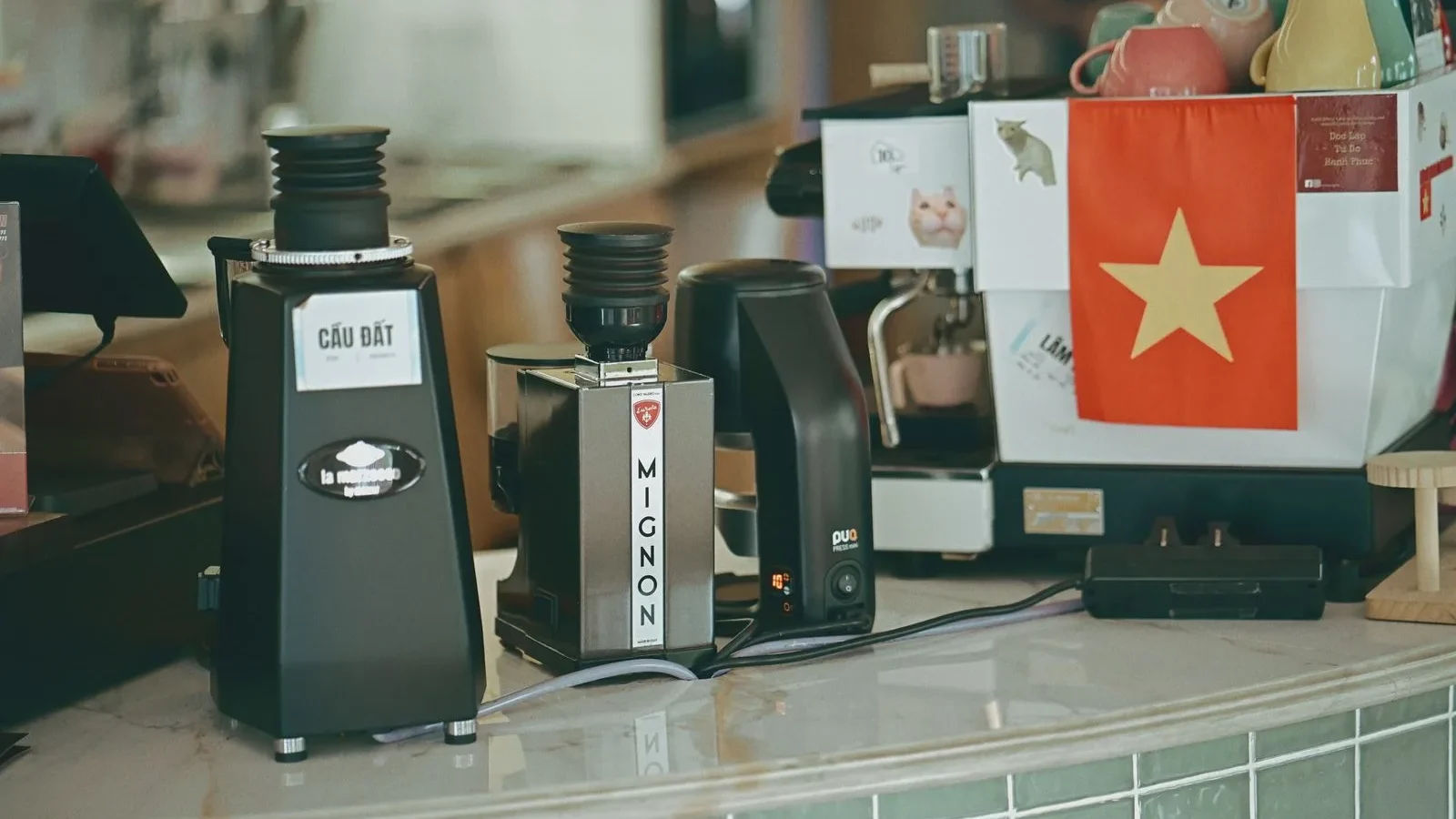
On a stepped grinder like a Baratza Encore ESP or a Breville Smart Grinder Pro, one click is one step – easy. On a stepless espresso grinder like a Eureka Mignon or a Niche Zero, “one step” is maybe five degrees of collar rotation, no more.
That five degrees can shift your shot time by four or five seconds. It really is that touchy near the espresso range, so be gentle.
What sour and bitter are actually telling you
Taste is the honest signal. Timing gets you close; your tongue closes the gap.
Sour, sharp, lemony, watery – that’s under-extraction. Water didn’t stay long enough. Nine times out of ten your grind is too coarse, so go finer and slow the shot down. There’s a full walkthrough on fixing sour espresso if that flavor keeps showing up.
Harsh, dry, ashy, lingering bitterness that coats your mouth – that’s over-extraction. Water pulled too much out, usually because the grind is too fine and the shot choked. Back off coarser. The over-extraction fixes get into the weeds on that one.
The Specialty Coffee Association pegs a well-extracted brew at roughly 18–22% of the coffee’s mass dissolved into the cup. You can’t measure that at home without a refractometer, but grind is your main handle on where you land in that window.
The variables that quietly break your dial-in
You nail a shot on Monday, come back Thursday, and the same setting runs slow. Nothing’s broken. Something changed under you.
Fresh beans move fast
Coffee off-gasses CO2 for the first week or two after roasting. Fresher beans resist water more, so a bag on day three often needs a slightly coarser grind than the same bag on day twelve. Roast date matters more than most people think.
Roast level changes the grind
Dark roasts are brittle and porous – they extract easily, so they usually want a coarser grind. Light roasts are dense and stubborn and often need you to go noticeably finer to get anything out of them at all. Switch from a dark Italian blend to a light Ethiopian and you’re re-dialing from scratch.
Humidity and static
On a damp morning grounds clump and static throws them everywhere. A quick spritz of water on the beans before grinding – the Ross Droplet Technique, one drop stirred in – tames static and tightens up your shot consistency for pennies.
Only ever adjust a stepless grinder’s burrs while the motor is running, and never force the collar past its stop. Setting the burrs finer than zero while stopped can grind them together – that’s $80 to $150 in replacement burrs and a wrecked alignment. If you feel metal chirping, you’ve gone too far.
A quick-reference for which way to turn
Tape this to the wall behind your machine if you’re still building the instinct.
| What you taste or see | Likely cause | Move |
|---|---|---|
| Shot runs under 20s, sour, thin | Too coarse | Grind finer |
| Shot runs over 35s, bitter, dry | Too fine | Grind coarser |
| Pale, gushing, spitting stream | Way too coarse | Several steps finer |
| Pump groans, barely drips | Way too fine (choked) | Several steps coarser |
| Time right, still sour | Channeling or low temp | Fix puck prep first |
Notice that last row. If your timing is bang on 27 seconds and it still tastes wrong, grind isn’t your problem anymore – you’ve got water sneaking through a crack in the puck, and no grinder setting fixes bad distribution.
Building the instinct so you stop measuring
The scale and stopwatch are training wheels. They teach your senses what “right” looks and tastes like, and one day you won’t reach for them.
Pull a shot every morning with intent. Watch the color, feel the timing in your body, taste with attention. Within a month you’ll glance at a stream and know it’s running three seconds fast before it ever finishes.
That’s the payoff for treating grind as the primary control it is. Everyone fusses over $2,000 machines and imported water, but the person who truly understands their grinder pulls better espresso on a Gaggia Classic than most people manage on gear ten times the price. Learn to read the grind, adjust by feel, and the rest of dialing in gets a whole lot quieter.
Frequently asked questions
Go finer. A fast shot means water raced through the puck without extracting enough, which reads as sour and thin. Finer grind tightens the gaps between particles, slows the flow, and gives water time to pull more flavor out. Move one small step, purge the grinder, and pull a fresh shot to judge.
Almost always the coffee changed, not the grinder. Beans off-gas CO2 for a week or two after roasting, so a fresh bag resists water differently than an older one. Roast level and even room humidity shift how the grounds behave too. Re-dial whenever you open a new bag or notice the shot timing drift.
On a stepped grinder, one click at a time. On a stepless espresso grinder, no more than about five degrees of collar rotation. Espresso lives in a tiny grind range, so even a small move can swing your shot time by several seconds. Bigger jumps make it impossible to tell what actually helped.
No, but you need one that grinds fine enough and adjusts in small steps. Many cheap grinders can't go fine enough for espresso or jump too coarsely between settings. A solid entry espresso grinder in the $150 to $300 range will out-perform an expensive machine paired with a bad grinder every time.
There isn't a universal number, which is why feel matters more. Grind settings don't transfer between grinders or even between beans on the same grinder. Use a target of 18g in, 36g out, in about 27 seconds as your reference, then adjust the grind until the timing and taste line up for the coffee in front of you.
You've gone too fine and the puck has clogged. Water can't push through, the pump groans, and you get a slow dribble or nothing. Step the grind coarser a notch or two and pull again. If it still chokes at a reasonable setting, check your dose isn't too high or the puck isn't overly compressed.