Key takeaways
- Channeling is uneven water flow: water carves a low-resistance tunnel and rushes through, leaving most of the coffee under-extracted.
- The dead giveaway is a spitting, spraying stream from the naked portafilter within the first 5 seconds instead of two smooth honey-like ropes.
- Most channeling starts at prep: an unlevel grind bed, a clumpy dose, or a tilted tamp. Fix those before you touch the grinder setting.
- Distribute, then tamp level to about 30 lb of pressure, and knock a WDT tool through the grounds to break up clumps.
- A bottomless (naked) portafilter is a $25 diagnostic tool that shows you exactly where and when the puck is failing.
I keep a bottomless portafilter clipped to the pegboard above my bench, right next to the pressure gauge. Not because it makes better coffee on its own, but because it’s the fastest way to catch the problem that walks through my door more than any grinder fault or brew-head leak: channeling.
A customer will swear their machine is broken. The shots taste thin and sour, the timing is all over the place, and they’ve already replaced the basket twice. Nine times out of ten the machine is fine. The water is just taking a shortcut.
Let me show you what that actually looks like, why it happens, and the handful of prep habits that stop it cold.
What Is Channeling in Espresso?
Channeling is uneven water flow through the coffee puck. Instead of pushing evenly through all of the grounds at roughly the same rate, the pressurized water finds a path of least resistance, a crack or a soft spot, and rushes through that one channel.
Think of it like rain on a hillside. Most of the water should soak in evenly, but if there’s a rut, everything funnels into it and blasts down that one line. The rest of the hill stays dry.
In the basket, that “rut” means a few grams of coffee get hammered with almost all the water while the rest barely gets touched. You end up over-extracting the channel and under-extracting everything around it, all in the same shot.
That’s why sour espresso shots and harsh, bitter over-extracted notes can show up in the same cup. You’re tasting both problems at once. Espresso channeling is the reason a shot can be weak and aggressive on the same sip.
Espresso is brewed by forcing near-boiling water through compacted coffee at around 9 bar of pressure. When flow is uneven, the whole thing falls apart fast. You can read more about the mechanics on Wikipedia’s espresso entry.
How Do I Know My Shot Is Channeling?
The single best diagnostic tool is a bottomless portafilter, sometimes called a naked portafilter. They run about $25 to $40 for most 58 mm machines. Pull the spouts off, put the naked one in, and watch the underside of the basket while you brew.
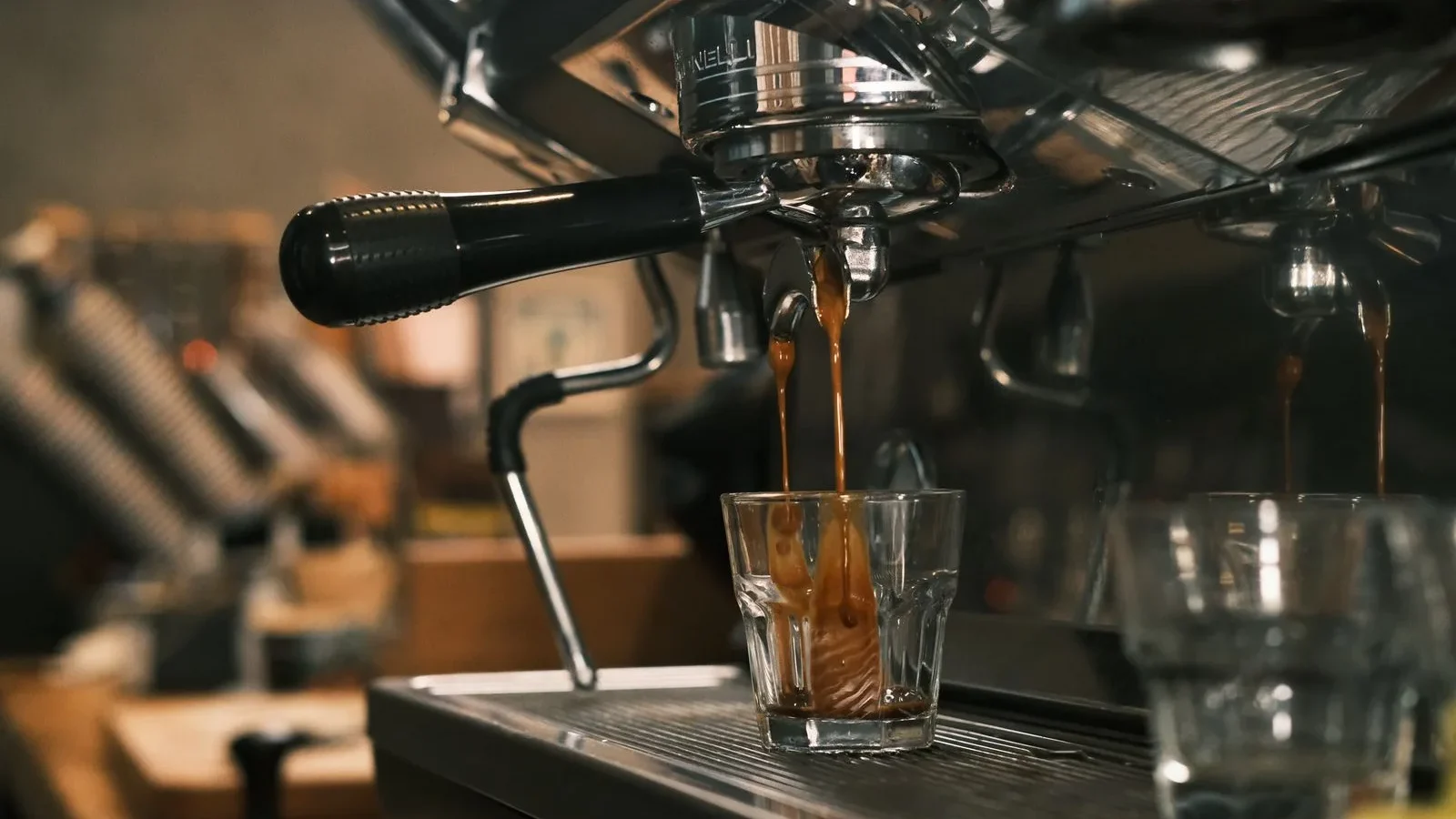
A healthy shot looks like this: after 3 to 6 seconds of bloom, coffee starts to weep from the whole face of the basket, then draws together into two or three thin, tiger-striped ropes that fall smooth and glossy, like warm honey.
A channeling shot looks angry.
If the stream sprays, spits, or jets sideways in the first 5 seconds, you’re channeling. Smooth ropes good, garden sprinkler bad.
The telltale signs
- A jet of espresso firing off to one side while the rest of the basket dribbles
- Pale, watery blonde streaks appearing far too early in the shot
- Shot times that swing wildly, say 18 seconds one pull and 40 the next with no changes
- A pulled shot that tastes both sour and bitter, thin body, no sweetness
- Dry patches or a crater on top of the spent puck when you knock it out
That spent puck tells a story. Flip it out and look. A clean puck should be an even, level disc. If you see a hole punched through it or a soft mushy patch, water tunneled right there.
What Actually Causes Channeling?
Almost every case I diagnose traces back to prep, not hardware. The water only tunnels because you gave it a soft spot to tunnel through. Here are the usual culprits, in the order I see them.
An uneven or clumpy dose
Modern grinders, especially conical burr models, throw coffee out in clumps and little “sausages.” Drop that straight into the basket and you’ve got dense spots and airy spots sitting right next to each other. Water skips the dense parts and floods the airy ones.
A tilted or weak tamp
If your tamp goes in at even a 3 or 4 degree angle, one side of the puck is denser than the other. Water always favors the loose side. A tamp that’s too light overall leaves the whole bed soft and crack-prone.
Distribution gaps and the dreaded side crack
Grounds pushed up the sides of the basket, or a gap between the puck edge and the basket wall, give water a free ride straight down the side. This is the classic cause of that sideways jet.
A channeling shot can spray hot espresso, near 200°F at the group, outside the cup and off the bench edge. If you’re testing with a bottomless portafilter, keep your hand and forearm clear of the basket face until you know the shot runs clean.
The Prep Habits That Stop Channeling
Here’s the routine I teach every customer who brings me a “broken” machine that isn’t broken. Do these in order and you’ll eliminate the vast majority of espresso channeling before it starts.
1. Break up the clumps with a WDT tool
WDT stands for Weiss Distribution Technique. It’s just a set of fine needles, around 0.3 to 0.4 mm, on a handle. You stir them gently through the dosed grounds to shatter every clump. A decent WDT tool costs $15 to $30, and honestly it’s the highest-impact upgrade a home barista can make.
Ten seconds of stirring turns a lumpy dose into a fluffy, uniform bed. That alone kills most channeling.
2. Level the bed before you tamp
Give the portafilter a light tap on the bench, then use a distribution tool or the flat side of a finger to get the surface truly level. You’re aiming for a flat, even bed with no mound in the middle and nothing riding up the walls.
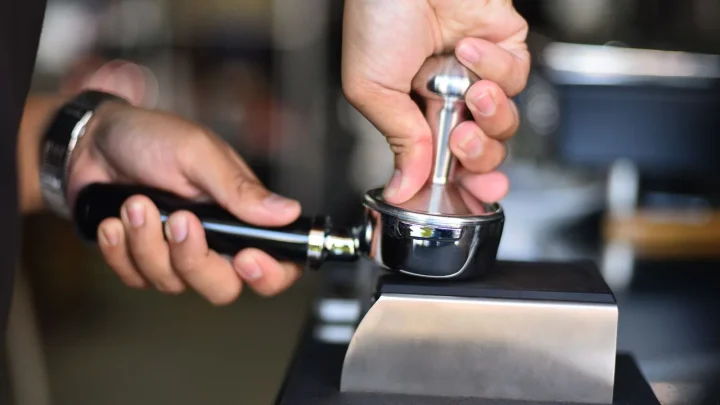
3. Tamp level, around 30 pounds
Press straight down. Not sideways, not leaning. The classic number is about 30 lb of force, but consistency matters more than the exact figure. Once the grounds are compressed, extra pressure does almost nothing, so find a firm, repeatable press and lock it in every time.
Set your portafilter on a bathroom scale and push until it reads about 30 lb. Do it five times so your arm memorizes the feel. After that you’ll tamp by muscle memory and never think about the number again.
4. Match your grind to your basket
If the bed still cracks after good prep, your grind may be too coarse for the dose, leaving the puck loose. Dialing in the right espresso grind size gives the water enough resistance to spread evenly instead of shooting a gap. This is a real factor, but chase it last, after distribution and tamp are solid.
What About Hardware and the Basket Itself?
Prep fixes most of it, but not everything. A few equipment issues genuinely cause channeling, and it’s worth ruling them out.
Worn or cheap baskets are the big one. Stock baskets that ship with entry machines from brands like Gaggia or Breville often have unevenly spaced or poorly drilled holes. A precision basket, IMS or VST for example, runs $25 to $50 and drains far more evenly.
The other culprit is a tired group gasket or a dirty dispersion screen. If water isn’t spread evenly across the top of the puck before it even enters, you’re starting the shot with a disadvantage. A clogged screen from months of skipped backflushing is more common than people think.
| Symptom | Most likely cause | First fix to try |
|---|---|---|
| Sideways spray from day one | Grounds up the basket wall | Level and tamp straight |
| Clumps visible in dry dose | Static-heavy grinder | WDT stir, 10 seconds |
| Random spray on old machine | Worn basket or clogged screen | New precision basket, backflush |
| Crack down the middle | Grind too coarse for dose | Grind finer, one step |
Putting It All Together on the Bench
When someone hands me a machine and says the espresso is undrinkable, I don’t touch the boiler or the pump first. I pull one shot through the bottomless portafilter and watch. That single pull tells me whether I’m looking at a repair job or a prep lesson.
Nine times out of ten it’s prep. Stir with the WDT, level the bed, tamp straight at a steady pressure, and the spray disappears. The ropes come back, the timing steadies out, and the sour-and-bitter clash turns into something sweet.
Get comfortable with that naked portafilter and run through the fundamentals in pulling a proper espresso shot. Once you can read the basket, channeling stops being a mystery and starts being a checklist you run without thinking. Your $25 diagnostic tool just saved you a repair bill.
Frequently asked questions
Absolutely. Even high-end conical burr grinders throw out clumps and build up static, and clumps are one of the main causes of channeling. That's why distribution steps like a WDT stir matter regardless of how good your grinder is. Better burrs give you more even particle size, but they don't fluff and level the bed for you.
It's the clearest way, but not the only one. Without one, watch for wildly inconsistent shot times, an early blonde stream, and thin sour-bitter flavor. Flipping out the spent puck also helps: a hole punched through it or a soft mushy patch is direct evidence water tunneled through that spot.
Around 30 pounds is the traditional number, but level and consistent beats hard. Once the grounds are compressed, extra force barely changes anything. A tilted tamp at 20 pounds causes far more channeling than a straight, gentle one, so focus on keeping the tamper flat and repeating the same press every shot.
Sometimes, but it's the wrong place to start. A grind that's too coarse leaves the puck loose and prone to cracking, so a finer grind can add resistance and help. But if the real issue is clumping or an uneven tamp, grinding finer just changes the flavor without stopping the channel. Fix distribution and tamp first, then adjust grind.
Yes, more than people expect. Cheap stock baskets often have unevenly drilled or spaced holes that drain inconsistently. Upgrading to a precision basket like an IMS or VST, usually $25 to $50, gives more even flow across the whole puck and removes one variable from the equation.
Because you're extracting unevenly in the same pull. The channel gets flooded with water and over-extracts, producing bitter, harsh notes, while the surrounding coffee barely gets touched and stays under-extracted and sour. Fix the even flow and both faults usually clear up together, leaving a sweeter, more balanced cup.