Key takeaways
- Weigh the dose going in and the liquid coming out. A 1:2 espresso brew ratio means 18g of coffee yields 36g in the cup.
- Ristretto (1:1 to 1:2) tastes syrupy and intense; normale (around 1:2) balances sweet and acid; lungo (1:3 to 1:4) drinks lighter and thinner.
- Tightening the ratio raises perceived strength but risks sourness; opening it up raises volume but courts bitterness past 1:4.
- Change one variable at a time. Lock your dose and yield, then move grind size before you touch anything else.
- A $20 pocket scale that reads to 0.1g does more for your shots than a $200 machine upgrade.
Last winter a customer brought in a Gaggia Classic Pro convinced the pump was dying. Every shot gushed out weak and watery, he said, and no amount of descaling fixed it.
The pump was fine. He was pulling a 6-gram dose into a 55-gram puddle and calling it espresso. That is a 1:9 ratio. No machine on earth makes that taste good.
Ratio is the number most home baristas skip, and it is the one that decides whether your shot is syrup or dishwater. Let me walk through what the numbers actually mean.
What is an espresso brew ratio, exactly?
The espresso brew ratio is the weight of ground coffee you start with compared to the weight of liquid espresso you end up with. It is written as dose to yield, like 1:2.
An 18-gram dose pulled to 36 grams in the cup is a 1:2. Same dose stopped at 18 grams is a 1:1. Same dose run out to 54 grams is a 1:3.
Two things to know before we go further. You measure liquid weight, not volume, because crema fools the eye and cup markings lie. And you weigh the shot in the cup on a scale, not by watching lines on a shot glass.
Ratio is weight in versus weight out. It is not the same as extraction yield, which is the percentage of coffee solids that actually dissolved. You can hit a textbook 1:2 and still under-extract if your grind is too coarse.
This is why I tell people a $20 pocket scale that reads to 0.1 grams does more for their coffee than a $200 machine upgrade. The Specialty Coffee Association builds its whole brewing framework around measured ratios for exactly this reason.

Ristretto, normale, lungo: what changes in the cup?
These three Italian words are just ranges on the ratio dial. They are not different drinks so much as different stopping points.
Ristretto (roughly 1:1 to 1:2)
Ristretto means restricted. You cut the shot short, somewhere between an equal weight of water and double.
The result is dense, syrupy, and intense. You get the sweet, punchy front of the extraction and stop before the drying, bitter compounds show up. A ristretto can taste sour or salty if you cut it too early, though, because acidity extracts first.
Normale (around 1:2)
This is the modern default and the one I set almost every customer’s machine to. Around 18 grams in, 36 grams out, pulled in roughly 25 to 30 seconds.
At 1:2 you get the sweetness and body of the early extraction plus enough of the later flavors to round it out. Balanced acidity, real sweetness, a clean finish. If someone asks me where to start, this is always the answer.
Lungo (roughly 1:3 to 1:4)
Lungo means long. You keep the water running well past the normale point, tripling or quadrupling the dose weight.
A lungo drinks lighter and thinner, with more total volume in the cup. Push past 1:4 and you start pulling the harsh, ashy compounds that arrive last, which is why an over-long shot tastes bitter and hollow.
Tighter ratio, more intensity and risk of sour. Longer ratio, more volume and risk of bitter. Your job is to find the window between.
| Style | Ratio | 18g dose yields | Tastes like |
|---|---|---|---|
| Ristretto | 1:1 – 1:2 | 18 – 36g | Syrupy, intense, punchy |
| Normale | ~1:2 | 36g | Balanced, sweet, clean |
| Lungo | 1:3 – 1:4 | 54 – 72g | Lighter, thinner, more volume |
Does a tighter ratio really mean a stronger shot?
Yes, but strength and extraction are two different things, and people mix them up constantly.
Strength is concentration, how much dissolved coffee sits in each milliliter. A ristretto is stronger because you packed the same solids into less water. It hits harder on the tongue.
Extraction is how much you pulled out of the grounds overall. A lungo runs more water through the bed, so it often extracts more total solids even though the drink tastes weaker and more diluted.
If your normale tastes thin and sour, do not just tighten the ratio to a ristretto to hide it. Grind finer first. A sour 1:2 is usually an under-extraction problem, and our breakdown on fixing sour espresso shots walks through the exact order to check.
The reverse trap is just as common. When a shot tastes harsh, tightening to a ristretto can mask bitterness, but if the real cause is over-extraction you are treating a symptom. Our piece on taming over-extracted espresso covers the actual fixes.
How do I actually dial a ratio at home?
Here is the routine I run on every machine that comes across my bench, from a $150 De’Longhi Dedica to a $1,600 dual boiler.
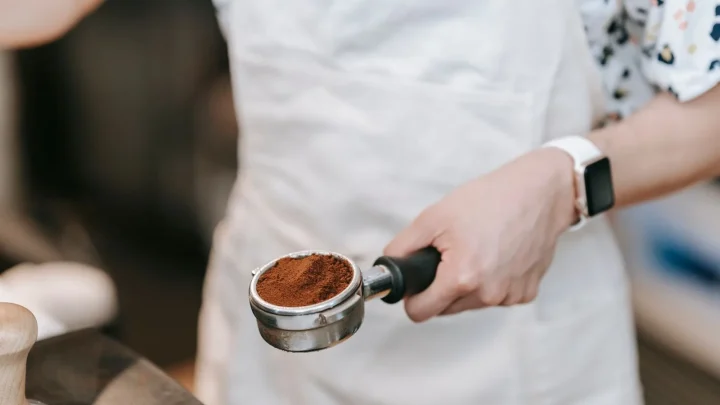
- Weigh your dose. For a standard 58mm double basket, start at 18 grams. Smaller 51mm and 54mm baskets want 14 to 16 grams.
- Put your cup on a scale and tare it to zero.
- Start the shot and the timer together.
- Stop at your target yield. For a 1:2 with an 18g dose, that is 36 grams in the cup.
- Check the time. You want 25 to 30 seconds for a normale.
If you hit 36 grams too fast, under 22 seconds, your grind is too coarse. If it crawls past 35 seconds, it is too fine. Adjust the grinder, not the ratio, until the timing lands.
Grind is the lever that controls flow rate at a fixed ratio, and it is worth getting comfortable with. Our grind size breakdown explains how small the adjustments really need to be.
Never chase a ratio by force. If a shot chokes and no espresso comes out, kill it. Running a pump against a fully blocked puck can spike line pressure past 15 bar and stress the group seals. Back off the grind and try again rather than letting it strain.
What about ratios beyond the classic three?
Light-roast specialty coffee has pushed some baristas well past 1:2. I have seen recipes at 1:2.5 and even 1:3 for dense, high-grown beans that need more water to give up their sweetness.
Turbo shots go the other way in a sense, using a coarser grind and a fast 1:3 in under 20 seconds. They can taste clean and juicy, but they are fussy and I would not start there.
The point is that the classic ratios are anchors, not laws. Once you can hit a repeatable 1:2, moving to 1:2.5 to chase clarity is a small, deliberate step. Espresso itself, as the background on the method notes, was standardized around concentration, and everything past that is refinement.
Where to point your attention next
Pick one ratio and live with it for a week before you touch anything else. I would start at a normale 1:2, because it forgives the widest range of beans and roasts.
Weigh in, weigh out, watch the clock. Once those three numbers are steady you have a baseline, and every change after that means something because only one thing moved.
When the timing and taste finally click, the ratio stops being a chore and becomes a dial you actually understand. If you want the full mechanics behind each shot, our walkthrough on pulling the perfect espresso shot ties the dose, grind, and ratio together from the first tamp.
Frequently asked questions
Start at a normale, roughly 1:2. For a standard 18-gram dose that means stopping the shot at 36 grams in the cup, pulled in about 25 to 30 seconds. It forgives the widest range of beans and gives you a stable baseline before you experiment with ristretto or lungo.
Yes, and it is the single most useful tool you can buy. Volume and crema fool the eye, so you weigh both the dry dose and the liquid in the cup. A pocket scale that reads to 0.1 grams costs around $20 and does more for your shots than most machine upgrades.
Acidity extracts first, so cutting a shot short at 1:1 or so can leave you with the sour front of the extraction and none of the rounding sweetness that comes later. Try grinding finer or letting the ratio open toward 1:1.5 to 1:2. If it stays sour, the problem is under-extraction, not the ratio itself.
No. A lungo forces more water through the coffee puck during the shot, so all of it passes through the grounds and extracts, which is why a long lungo turns bitter. An Americano is a normale espresso with hot water added to the cup afterward, so the extra water never touches the puck.
Ratio sets the concentration of the shot itself. A tight 1:1 ristretto is intensely strong because the solids sit in very little water. Adding water after the fact, as with an Americano, lowers concentration without changing what was extracted from the grounds, so strength and extraction move independently.
You can start there, but light roasts are denser and often taste better opened up slightly, around 1:2.5, to draw out their sweetness. Dark roasts extract quickly and can turn bitter, so many people keep them closer to 1:1.5 to 1:2. Adjust in small steps and taste after each change.