Key takeaways
- Time the pour from the moment you hit the button, not from first drip - the pre-infusion seconds count.
- A 25-second window (25-30s for most double shots) is a target, not a rule; taste beats the timer every time.
- Fast pours (under 20s) usually mean grind too coarse or dose too low; slow pours (over 35s) mean too fine or overdosed.
- Change one variable at a time - grind first, then dose - or you'll never know what fixed it.
- A gushing shot after a good one usually means a clogged or worn basket, not your technique.
The most useful tool on my bench isn’t the torque driver or the pressure gauge. It’s a $9 stopwatch, and half the machines that land on my table don’t actually have a fault. They have an owner who’s never timed a shot in their life.
Shot time is the one number that tells you what’s happening inside the puck without taking anything apart. Water speed through coffee is a direct readout of resistance, and resistance is grind and dose. Read the seconds correctly and the machine stops being a black box.
So let’s treat the timer like the diagnostic instrument it is.
What counts as a good espresso shot time?
For a standard double, most people aim for roughly 25 to 30 seconds to pull about 36 grams of liquid from an 18-gram dose. That’s the common 1:2 ratio, and it’s a starting point, not scripture.
The number that trips people up is where the clock starts. I start it the second I press the button, pre-infusion and all – not when the first drops appear. A machine with a long pre-infusion, like some Breville models, can spend 8 seconds soaking the puck before anything drips.
Time the button, not the drip. Half the “my shots are too fast” complaints vanish once people count the soak.
The Specialty Coffee Association frames espresso as a small, pressurized brew, and that pressure is why a few seconds swings the flavor so hard. This is a different animal from filter coffee. For the full workflow around this, my walkthrough on how to pull the perfect espresso shot covers dose, tamp, and yield together.
Single baskets behave differently. A single shot from a 7-9g dose often runs faster and is far fussier – most home baristas get steadier results pulling doubles and splitting the cup.
My shot pours in under 20 seconds – what’s wrong?
A fast pour means water found too little resistance. It sprinted through the puck instead of soaking it, and you’ll taste that as sour, thin, and weak – classic under-extraction.
Two things cause it, and I check them in this order.
Grind too coarse
This is the culprit nine times out of ten. Coarse grounds leave big channels for water to race through. Tighten the grind a step or two and re-time.
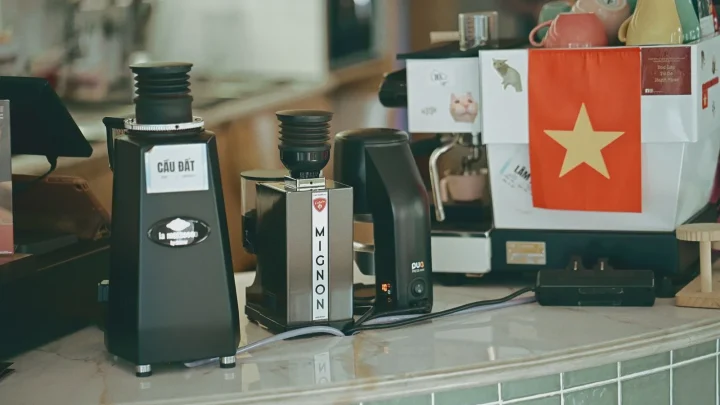
On a stepped grinder that might mean one or two clicks finer. On a stepless like a Eureka Mignon, it’s a small nudge of the dial – maybe 5 degrees of rotation. Go in small moves; grind is aggressive.
Dose too low
Not enough coffee in the basket leaves headroom, the puck sits loose, and water blows through. If your grind is already reasonable, add a gram and re-time before touching anything else.
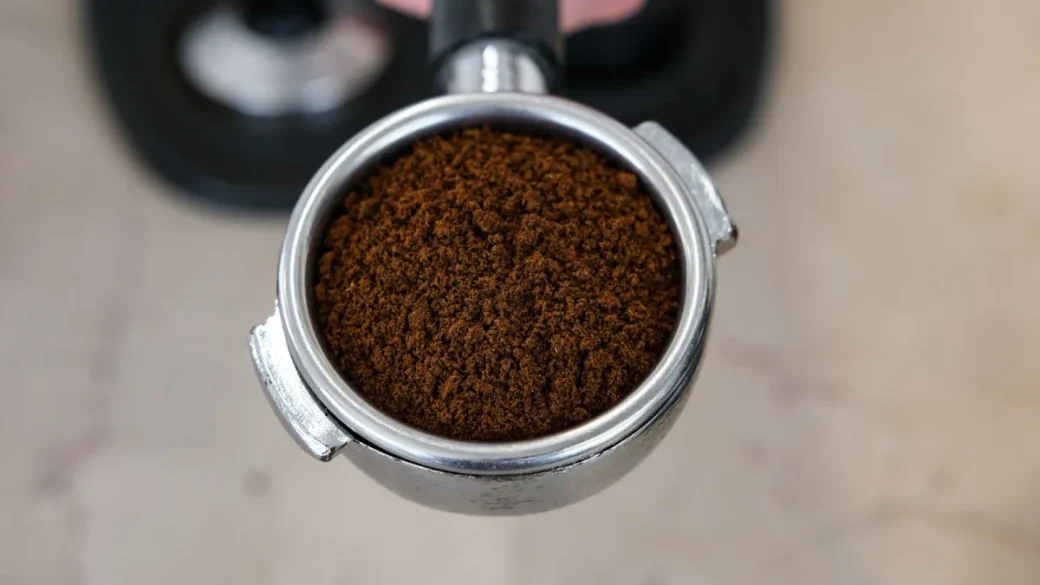
Change one thing per shot. If you go finer and bump the dose in the same pull, a good result tells you nothing about what actually fixed it. I keep a notepad by the machine – dose, grind setting, time, taste. Boring, but it saves beans.
If your fast shots taste sharp and lemony, my piece on fixing sour espresso walks through the taste side of the same problem.
My shot takes over 40 seconds – is the machine broken?
Usually not. A slow, dripping, dark-and-syrupy pour is the machine straining against too much resistance, and that resistance almost always comes from the puck, not the pump.
The flip side of a fast shot applies: grind too fine or dose too high. Coarsen the grind a step, or drop half a gram to a gram of coffee, and re-time.
Over-extraction is what you’re tasting here – harsh, ashy, bitter, drying on the tongue. If the flavor is the main complaint, taming bitter, over-extracted espresso gets into the palate side of it.
If a shot chokes completely – pump groaning, almost nothing coming out – stop the pull. Forcing a fully blocked puck spikes pressure against the group seals. On lever machines especially, a suddenly clearing blockage can spit hot water. Kill the shot, knock the puck, and start over.
When it really is the hardware
A few genuine faults mimic a slow shot. A limescale-clogged group screen, worn from age, or a shower screen caked with old grounds all add resistance. If your grind and dose haven’t changed but times keep creeping up, pull the shower screen – it’s usually one screw – and check it. A replacement screen for a Gaggia Classic runs about $12 to $18.
A worn portafilter basket is the sneaky one. After a couple thousand shots the holes distort and flow gets unpredictable. A quality precision basket costs $20 to $30 and often fixes “random” timing.
My timing is all over the place – one shot fast, the next slow
Inconsistent times point at prep, not the machine. The puck isn’t the same twice, so the resistance isn’t either.
Run through this before you blame parts:
- Dose by weight every time – a 0.1g scale, not the built-in doser guess
- Distribute the grounds so there are no clumps or gaps before tamping
- Tamp level and consistent – the exact pressure matters less than doing it the same way each time
- Wipe the basket rim so the portafilter seats fully in the group
- Purge the group for a second before locking in, to stabilize temperature
The biggest offender is uneven distribution. Water is lazy – it finds the loosest path and channels straight through, which reads as a fast, patchy shot even with a fine grind. A simple distribution tool for $15 to $25 removes most of that variability.
Fresh coffee degasses. Beans two to four days off roast pour slower and can gush from trapped CO2; the same beans at three weeks pull faster and flatter. If your timing drifted over a fortnight and you changed nothing, the bag aged – not the machine.
How do I actually dial in using the timer?
Here’s the loop I hand every customer who picks up their repaired machine. It gets you to a drinkable shot in three or four pulls.
| Shot time | Likely cause | First move |
|---|---|---|
| Under 20s | Grind too coarse / dose low | Grind finer one step, re-time |
| 20-25s | Slightly fast | Nudge finer or add 0.5g |
| 25-30s | In the window | Taste – adjust to palate |
| 30-35s | Slightly slow | Nudge coarser or drop 0.5g |
| Over 35s | Grind too fine / dose high | Grind coarser one step, re-time |
Fix grind first, since it’s the strongest lever. Only once time lands in range do you fine-tune dose and ratio to taste. Grind size is doing most of the heavy lifting here – the mechanics of getting espresso grind size right is worth reading alongside this.
And remember the timer is a guide to the target, not the goal. I’ve had shots land at a textbook 27 seconds and taste like battery acid, and shots at 22 that were gorgeous. The clock narrows your search. Your tongue makes the call.
Where the seconds stop mattering
Once your shots consistently land in a range you like, you can retire the stopwatch for daily brewing. You’ll learn to read the pour by eye – the way it starts as thick dark drips, blooms to a steady mouse-tail, then lightens toward blonde. That visual is the same information the timer gives, just live.
Bring the timer back out when something changes: a new bag of beans, a fresh grinder burr, a machine back from descaling. Those are the moments a 30-second baseline saves you a wasted morning.
The whole point is that espresso rewards attention, not gadgets. A cheap timer, a decent scale, and the discipline to change one thing at a time will out-perform a $2,000 machine run on guesswork. I’ve watched it happen on my bench more times than I can count.
Frequently asked questions
Start it at the button press, including any pre-infusion. Some machines soak the puck for 5 to 8 seconds before the first drop appears, and ignoring that time makes your shots look faster than they really are. Timing from first drip is the single most common reason people misjudge their pours.
Yes. A single basket holds far less coffee, and the puck geometry makes flow harder to control, so singles often run faster and are much fussier to dial in. Most home baristas get steadier, more repeatable results pulling a double and splitting it into two cups if they want less coffee.
The timer only confirms flow rate, not flavor. If a 27-second shot tastes sour, your water may be too cool or your grind still slightly coarse for that bean; if it tastes bitter, back off the grind or lower the temperature. Trust your palate over the clock and adjust from there.
Small. One to two clicks on a stepped grinder, or a few degrees of dial on a stepless model. Grind is the most powerful variable, so large jumps overshoot the target and you end up chasing the setting back and forth. Move a little, re-time, taste, repeat.
Two usual suspects: fresh beans degassing, or hardware. Very fresh coffee (under a week off roast) traps CO2 and pours slower. If the beans aren't new, check for a scaled or grounds-clogged shower screen, or a worn basket - those quietly add resistance over time.
No. Consistency comes from your prep and your grinder, not the machine's price tag. A repeatable dose by weight, even distribution, a level tamp, and a decent grinder will produce more consistent times than an expensive machine used carelessly.