Key takeaways
- Sour means under-extracted - grind finer in small steps before touching anything else.
- Push brew temperature toward 200–204°F; cold water under-extracts and tastes sharp.
- Stretch your ratio to at least 1:2 (18g in, 36g out) so you pull enough sweetness.
- Change one variable at a time and taste between each - chasing three at once hides what worked.
- Fresh beans matter: past three weeks off roast, no dial-in will fully rescue the cup.
A customer handed me a shot last month and said it tasted like biting into a green apple. He’d spent $900 on a dual-boiler machine and was ready to return it, convinced the group head was broken.
Nothing was broken. The coffee was leaving the puck before it had a chance to dissolve the sweet stuff. That sharp, puckery bite is the single most common complaint I get on the bench, and nine times out of ten it has nothing to do with the machine.
Sour is the taste of a rushed extraction. Fix the rush, and the acid mellows into the caramel and fruit the roaster actually put in the bag.
Why sour tastes the way it does
Coffee dissolves in a fixed order during a shot. The bright, fruity acids come out first. The sugars and caramelized sweetness follow. The heavier, bitter compounds arrive last.
When a shot runs too fast or too cool, you capture that first wave of acid and almost none of the sweetness that’s supposed to balance it. That imbalance is what your tongue reads as sour.
So the whole game with a sour espresso fix is extending contact and heat just enough to reach the sugars – without overshooting into the bitter zone. The Specialty Coffee Association pins ideal solubles extraction around 18–22%; sour shots usually land well under that.
Sour and bitter are opposite problems. If your shot is harsh and dry rather than sharp and tangy, you’ve gone too far the other way – our companion piece on taming over-extraction covers that fault.
Start at the grinder – it fixes 70% of sour shots
Grind is the first lever I reach for, every single time. A coarser grind lets water sprint through the puck; a finer grind slows it down and pulls more out.
If your shot is sour, grind finer. Not a wild jump – one or two clicks on a stepped grinder, or a small nudge on a stepless collar.
How to read the timing
Pull a shot and watch the clock. A standard 18g double should take roughly 25–30 seconds to reach your target yield.
If yours is done in 18 seconds, water is channeling straight through. Grind finer until the shot slows into that window and the stream turns to warm honey instead of a thin stripe.
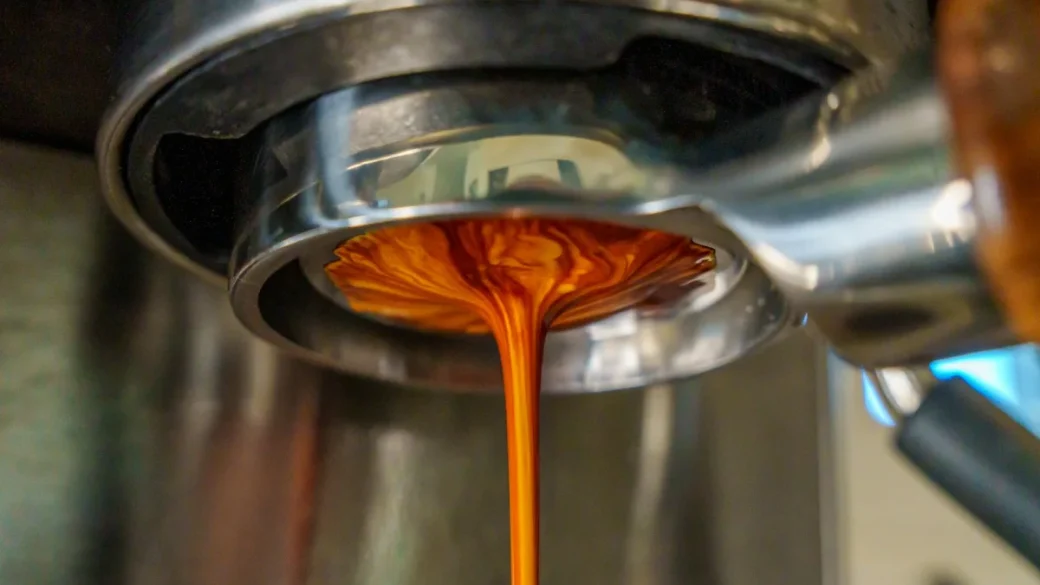
Change grind in tiny increments and pull a fresh shot after each. I’ve watched people crank the grinder four steps at once, overshoot into bitter, and then swear the machine is possessed. One step, taste, repeat.
If you’re not sure your grinder can hold a fine, consistent setting, that’s worth ruling out early. Our breakdown of dialing in grind size walks through what a good espresso grind should actually look and feel like.
Check your brew temperature next
Heat drives solubility. Cool water simply can’t dissolve the sugars fast enough, so even a well-ground puck comes out sour if the boiler is running cold.
Target range for most coffees is 200–204°F (93–95°C). Lighter roasts often want the top of that band; darker roasts sit lower.
Machine-specific quirks I see
Single-boiler machines like an older Gaggia Classic lose temperature fast between the heat-up light cycling and the actual pull. On those, I run a blank “flush” through the group for 5 seconds right before locking in the portafilter to bring the brew path up to temp.
Thermoblock machines – a lot of entry-level De’Longhi and older Breville units – can read hot on the panel but deliver cool water on the first shot. Pull one throwaway shot to prime it, then dial in on the second.
If you flush or purge a hot group head, keep your hand clear of the stream – that water leaves the boiler at over 200°F and the metal portafilter gets hot enough to blister. Purge into the drip tray, not over your fingers.
A cheap way to know for sure is a thermocouple or a Scace-style device, but even a $15 instant-read probe in the stream tells you if you’re chasing a real temperature problem or imagining one.
Then open up your ratio
Ratio is how much liquid espresso you pull relative to the dry dose. A short, tight shot stops before the sweetness has fully come across.
If you’re pulling 18g in and stopping at 25g out, that’s a 1:1.4 ratio – a ristretto. Ristrettos taste gorgeous with the right coffee but turn sour fast when a shot is already under-extracted.
When a shot tastes sour, stretch it before you blame it. More yield pulls more sweetness.
Move to a standard 1:2 – 18g in, 36g out – and let it run a few seconds longer. That extra liquid carries the sugars and body that balance the early acids.
| Ratio | 18g dose yields | Typical taste |
|---|---|---|
| 1:1.5 | 27g out | Intense, syrupy – sour if under-extracted |
| 1:2 | 36g out | Balanced sweet spot for most beans |
| 1:2.5 | 45g out | Lighter, higher clarity, gentler acidity |
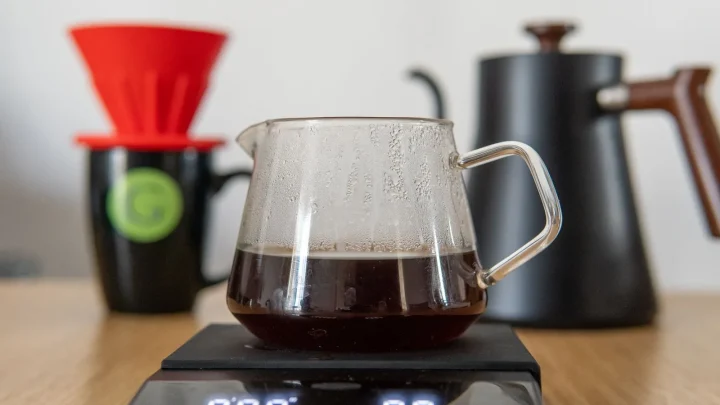
Weigh both ends. A $20 pocket scale that reads to 0.1g removes all the guesswork here, and it’s the single best purchase a struggling home barista can make. The full logic behind these numbers lives in our piece on espresso brew ratios.
The order I actually change things
Chasing three variables at once is how people spend a Saturday and end up more confused than they started. Change one, taste, then move on.
Here’s the sequence I run on the bench, top to bottom.
- Confirm beans are fresh – roasted within the last 3 weeks, rested at least 4 days.
- Grind one step finer and pull again. Re-taste before anything else.
- If still sour, raise brew temp toward 204°F.
- If still sour, stretch the ratio out to 1:2 or slightly beyond.
- Only then look at dose, distribution, and tamp consistency.
Log every change on a sticky note by the machine: grind setting, dose, yield, time. Three shots in, you’ll see the pattern. Memory lies; a scribbled note doesn’t.
When it isn’t the dial-in at all
Sometimes the sour won’t budge no matter how fine you grind, and that’s your signal to look past the settings.
Stale beans are the usual culprit. Past about three weeks off roast, coffee loses the aromatics that read as sweetness, and everything skews flat and sharp. No temperature or ratio tweak fully rescues a tired bag.
Very light, dense roasts are the other one. Some Nordic-style light roasts are so hard to extract that a home grinder physically can’t get fine enough – those genuinely need a higher temperature and a longer, stretched ratio, sometimes 1:2.5 or beyond, just to reach the sweet spot. There’s a good background read on how espresso extraction works if you want the chemistry.
Get the fundamentals dialed and most sour shots come around inside a bag of beans. If you want the whole workflow start to finish, our walkthrough on pulling a proper shot ties the grind, temp, and ratio pieces together.
Grind finer, get the water hot enough, and give the shot room to run. That green-apple bite turns into something you’ll actually want a second cup of.
Frequently asked questions
Sour on its own almost always means under-extraction - the shot pulled the bright acids but stopped before reaching the sugars that balance them. Grind finer, raise your brew temperature toward 204°F, and stretch the ratio. Bitterness only shows up when you overshoot the other direction.
In most cases, yes. A finer grind slows the water down and pulls more solubles out of the puck, which brings the sweetness forward and mellows the acidity. Move in one or two clicks at a time and taste between each pull so you don't overshoot into bitter.
Aim for 200–204°F (93–95°C). Cooler water can't dissolve the sugars fast enough, which leaves the shot sharp and sour. Lighter roasts usually want the top of that range, while darker roasts sit a little lower.
They can. Past roughly three weeks off roast, coffee loses the aromatic compounds that register as sweetness, so the cup skews flat and sharp no matter how carefully you dial in. Buy in smaller amounts and use the beans within about two to three weeks of the roast date.
Yes, if the shot is already under-extracted. A ristretto stops early - around a 1:1.5 ratio - which can cut off before the sweetness fully develops. Stretching to a standard 1:2 pulls more sugar across and often fixes the sourness on its own.
You don't strictly need one, but a $20 scale that reads to 0.1 grams removes almost all the guesswork. Weighing your dose and yield lets you hit a precise ratio and repeat it, which is the fastest path from a sour shot to a balanced one.