Key takeaways
- Weigh two things every shot: the dose going in (usually 18g) and the yield coming out (36g), roughly a 1:2 ratio.
- Channeling is the number-one cause of sour, watery shots I diagnose on the bench, and it is a prep problem, not a machine fault.
- A good extraction time for a double is 25 to 32 seconds; faster or slower tells you to adjust the grind.
- Learn six terms first: dose, yield, ratio, puck, tamp, and channeling. The rest fall into place from there.
I get a lot of machines dropped on my bench with a note that says something like “shots taste bad, please fix.” Nine times out of ten there’s nothing wrong with the machine. The owner just got lost in the vocabulary and started changing five things at once.
Espresso has its own private language, and most of it gets thrown at beginners with zero translation. Dose, yield, ratio, channeling, the dreaded gusher. It sounds like a foreign menu.
So here’s the glossary I wish someone had handed me twelve years ago. Plain definitions, in the order they actually matter, with the numbers I use every day at the bench.
The four words that decide every shot
If you only learn a handful of terms, learn these. Everything else is commentary.
Dose
The dose is how much dry ground coffee you put in the basket, measured in grams. For a standard double basket I aim for 18 grams, give or take half a gram.
Buy a cheap 0.1g jewelry scale for around $12 before you buy anything else fancy. Eyeballing the dose is where most bad shots begin.
Yield
The yield is how much liquid espresso ends up in the cup, also in grams. From an 18g dose I’ll usually pull 36g out.
Ratio (brew ratio)
The ratio ties dose to yield. 18g in, 36g out is a 1:2 ratio, and that’s the classic starting point for a modern espresso.
Want it stronger and syrupy? Pull a 1:1.5 (a “ristretto”). Want it longer and lighter? Go 1:3 (a “lungo”). Same machine, different ratio.
Extraction time
This is the clock, from the moment you hit the button to the moment you stop. For a 1:2 double I want 25 to 32 seconds. Way faster means the grind is too coarse; way slower means it’s too fine.
Change one variable at a time. If your shot is off, only touch the grind first, keep dose and yield fixed, and re-taste. Chasing three variables at once is how people spend a whole bag of beans and learn nothing.
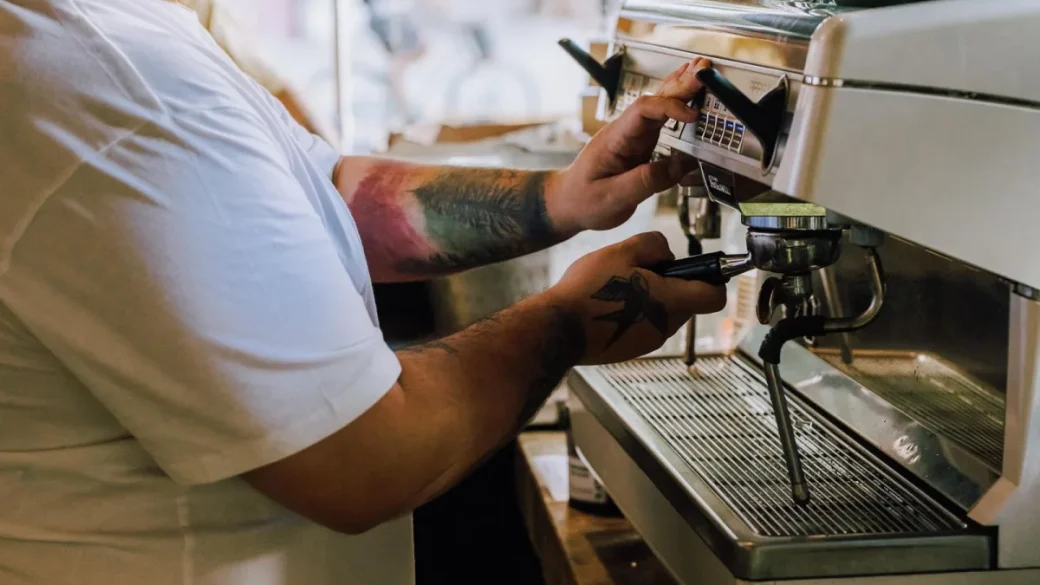
The puck, the tamp, and everything in the basket
Half the terms you’ll meet describe the little disc of coffee itself. Get comfortable with these and machine manuals stop reading like a physics exam.
Puck
The puck is the compressed bed of coffee grounds sitting in the basket during and after the shot. A healthy spent puck comes out as a firm, damp disc. If yours is a wet soup, that’s a symptom worth reading, usually too little coffee or too coarse a grind.
Tamp
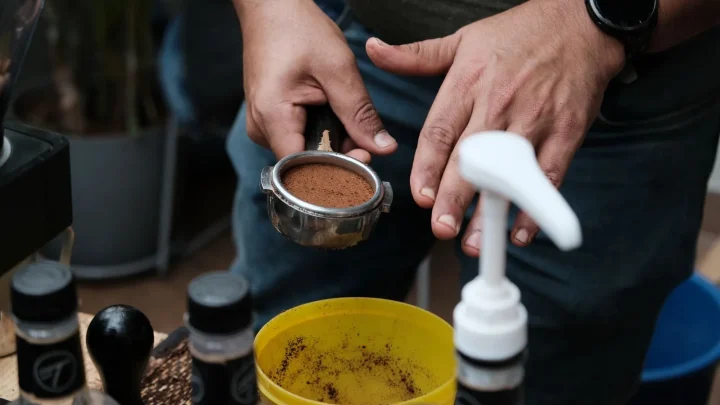
Tamping is pressing the grounds flat and level before you brew. You’re not trying to crush them into concrete. Around 15 to 20 pounds of force, applied straight down and level, is plenty.
Level matters far more than hard. A tilted tamp sends water racing down the low side.
Portafilter and basket
The portafilter is the handled metal holder you lock into the machine. The basket is the perforated metal cup that drops inside it and actually holds the coffee. Baskets are sized by capacity, so a “double basket” holds roughly 18g. There’s a fuller breakdown in our piece on espresso machine parts explained for beginners if you want to match names to the metal in your hand.
Group head
The group head is the fixed metal fitting the portafilter locks into, where hot water meets the coffee. On a Gaggia Classic or a Breville Bambino it’s the chrome piece up front, and it’s the part I clean gaskets on most often.
That rubber ring inside the group head is the “group gasket.” It hardens and shrinks over about 12 to 18 months of daily use, which is why an older machine starts leaking around the portafilter. A replacement gasket is usually $5 to $10.
When things go wrong: fault words
These are the terms that bring machines to my bench. Learn them and you can diagnose most bad shots from your kitchen without calling anyone.
Channeling
Channeling is water finding a crack or weak spot in the puck and blasting straight through it instead of soaking evenly. The result is a shot that’s sour and thin because most of the coffee never got touched.
A fault I see constantly, and it’s almost always prep: an uneven tamp, clumpy grounds, or a dose that doesn’t match the basket. It is not a broken machine.
If your shots taste inconsistent from one pull to the next, suspect channeling before you suspect the machine.
Under-extraction
Under-extraction means water rushed through too fast and pulled out too little. It tastes sour, sharp, and salty, and the shot often looks pale. The fix is usually a finer grind or a slightly higher dose.
Over-extraction
The opposite. Water dwelled too long or ran too slow, dragging out bitter, dry, ashy flavors. Coarsen the grind or shorten the yield.
Gusher and choke
A “gusher” sprays out fast and blond, the classic sign of grind that’s too coarse. A “choke” is when the machine strains and barely drips because the grind is too fine and the puck is basically sealed shut. Both are grind problems, not faults.
Pressure, crema, and the physics you can taste
A few terms describe what the machine is doing to the water. You don’t need an engineering degree, but knowing these helps recipes make sense.
Nine bars
Espresso is defined by pressure, and the industry standard is around nine “bars,” which is nine times atmospheric pressure. That’s the number that separates espresso from drip coffee, and it’s why crema forms at all. I wrote a whole breakdown of what nine bars of pressure means in espresso if you want the why behind the number.
Crema
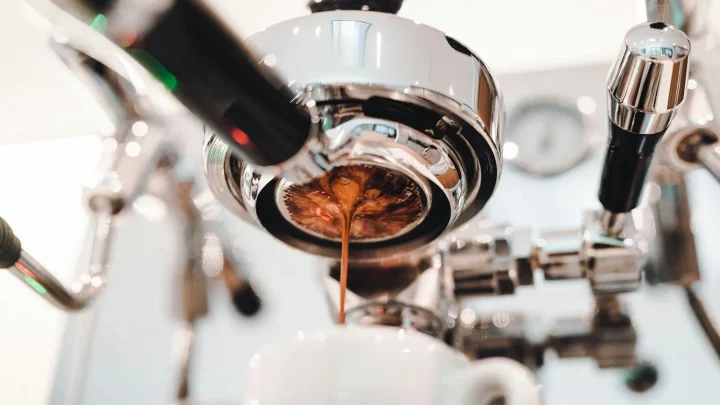
Crema is the reddish-brown foam that sits on top of a fresh shot. It’s carbon dioxide from the beans trapped in tiny bubbles by that pressure. Fresh beans give better crema, and it fades within a minute or two, which is normal, not a defect. There’s more on where it comes from in our explainer on what crema is and why it forms on espresso.
Pre-infusion
Pre-infusion is a gentle, low-pressure soak of the puck before full pressure hits, usually a few seconds. It wets the bed evenly and reduces channeling. Some machines do it automatically; on a manual lever you do it by feel.

Milk and machine terms you’ll meet next
Once the shot is dialed in, the milk-side vocabulary shows up. Here’s the short version.
Steam wand and steaming
The steam wand is the thin metal arm that shoots pressurized steam to heat and froth milk. “Steaming” or “texturing” is the act of turning cold milk into glossy microfoam for a latte or flat white.
Microfoam
Microfoam is milk with bubbles so tiny it looks like wet paint, not dish suds. It’s what lets you pour latte art. Big visible bubbles mean you introduced too much air, too early.
Backflush and blank basket
Backflushing is a cleaning cycle where you use a “blank” (a solid, hole-free basket) to force water and detergent back through the group head. On a machine with a three-way solenoid valve, do a plain-water backflush weekly and a detergent one monthly.
Only backflush with a blank basket if your machine has a three-way valve (most Gaggia, Breville Dual Boiler, and E61 machines do). Single-boiler machines without one, like many entry De’Longhi units, can be damaged by it. Check your manual before you force water backward.
PID
A PID is an electronic temperature controller that holds the boiler within about one degree of your target instead of letting it swing. Some machines ship with one; on a Gaggia Classic it’s a popular $60 to $150 add-on for people chasing consistency.
How to actually use this list
Don’t try to memorize all of this today. Pin down six words first: dose, yield, ratio, puck, tamp, and channeling. That vocabulary alone lets you read almost any recipe and understand why a shot went wrong.
Here’s the routine I hand every beginner who wants a place to start.
- Weigh 18g in, and aim for 36g out.
- Tamp level, not hard.
- Time the shot: you want 25 to 32 seconds.
- Too fast and sour? Grind finer. Too slow and bitter? Grind coarser.
- Change one thing, then taste again.
Run that loop for a week and these words stop being jargon. They become the dials you turn. If you want the wider picture of how the whole thing fits together, our overview on espresso for beginners and how it all works ties the machine, the grind, and the shot into one story. And if you like going down the rabbit hole, the Specialty Coffee Association is the standards body most of these numbers trace back to.
Keep this page bookmarked. Next time a forum post throws “you’re probably channeling from a coarse grind and low dose” at you, it’ll read like a sentence instead of a riddle.
Frequently asked questions
Dose is the weight of dry ground coffee you put into the basket, usually around 18 grams for a double. Yield is the weight of liquid espresso that ends up in the cup, often 36 grams. You measure both in grams on a scale, and the relationship between them is your brew ratio.
Channeling is when water blasts through a weak spot in the coffee puck instead of soaking through evenly, leaving most of the coffee under-extracted. Signs include shots that spray unevenly, pour much faster than expected, or taste sour and thin. It is almost always caused by prep, such as an uneven tamp or clumpy grounds, rather than a broken machine.
No. Finer grind slows the water down and can fix a fast, sour shot, but go too fine and the machine chokes and the shot turns bitter and over-extracted. The goal is a grind that gives you a 25 to 32 second pull for a 1:2 ratio, so you adjust in small steps toward that window rather than always grinding finer.
Around 15 to 20 pounds of downward force is plenty, and being level matters far more than being hard. A tilted tamp creates a low side where water races through, which causes channeling. You are compacting the bed evenly, not trying to crush the grounds into a solid brick.
Crema is the reddish-brown foam on top of a fresh shot, formed by carbon dioxide trapped under pressure. Thin or fading crema usually just means older beans or a lower-pressure machine, and crema naturally disappears within a minute or two. It is a rough freshness indicator, not a reliable measure of how good the shot actually tastes.
Not right away. A PID is a temperature controller that keeps the boiler steady, and a three-way valve is what lets a machine release puck pressure and be backflushed for cleaning. They matter for consistency and maintenance later, but you can pull excellent shots for months while only worrying about dose, yield, grind, and tamp.