Key takeaways
- Dose is the dry ground coffee in the basket, yield is the liquid espresso in the cup, and ratio is yield divided by dose.
- A common starting recipe reads 18g in, 36g out in about 28 seconds, which is a 1:2 ratio.
- Weigh both numbers on a scale to 0.1g accuracy; volume in the cup lies because crema takes up space.
- Ratio is a shorthand baristas use so a recipe works no matter what basket size you own.
Open any bag of specialty coffee, any recipe card taped to a cafe’s espresso machine, any forum post from someone chasing a better shot, and you’ll run into the same little string of numbers. Something like 18g in, 36g out, 28 seconds.
The first time I saw that on a customer’s fridge note, next to their Gaggia Classic, they told me they had no idea what it meant. They’d been copying it because a barista wrote it down for them.
That’s the honest starting point for most people. So before anyone talks about grinding finer or pulling a longer shot, let’s just read those numbers for what they are.
The three numbers you keep seeing
Every espresso recipe is built from three ideas, and two of them are just weights. Dose and yield are measured in grams. Ratio is the relationship between them.
Once you can name each one, a recipe stops looking like a code and starts looking like a sentence. It’s a much friendlier place to begin than fiddling with settings you don’t understand yet. If you want the wider picture of how the whole shot comes together, the overview on espresso for beginners and how it all works pairs well with this.
Dose is what goes in. Yield is what comes out. Ratio is how they compare.
Dose: the dry coffee going in
Dose is the weight of ground coffee you put into the portafilter basket before you pull the shot. Dry grounds, on a scale, in grams.
That’s it. When a recipe says “18g in,” it means 18 grams of ground coffee sitting in the basket.
Home machines usually ship with a double basket that’s happy somewhere between 16 and 20 grams. A single basket holds less, often 7 to 9 grams, though honestly most people never touch the single. The number that fits your basket is printed nowhere useful, which is why a scale matters.
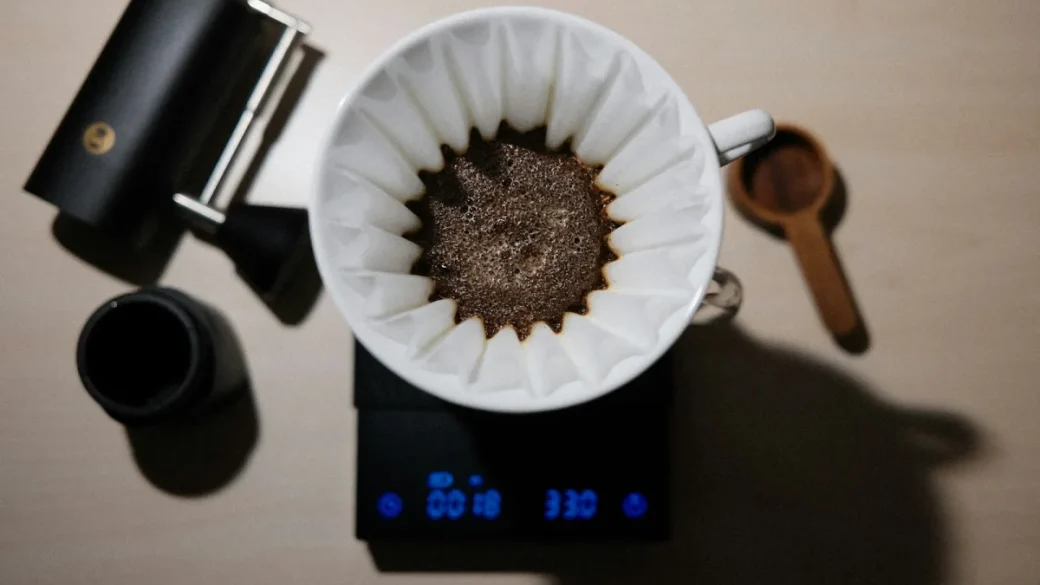
The scoop that came in the box is not a measuring tool you can trust. A level scoop of a light roast and the same scoop of a dark, oily roast can differ by 2 to 3 grams because the beans have different densities. That’s the whole reason baristas weigh instead of scoop.
Why the dose is capped
You can’t just cram in more coffee for a stronger shot. The basket and the group head are built for a certain amount, and there needs to be a few millimeters of headroom between the puck and the shower screen.
Overfill it and the puck scrapes the screen, the machine struggles, and you get a mess. So dose lives inside a fairly narrow window that your equipment decides for you.
Yield: the espresso coming out
Yield is the weight of liquid espresso that ends up in the cup. Also grams, also on a scale.
Here’s the part that trips people up. Yield is measured by weight, not by the line on the shot glass. “36g out” means 36 grams of liquid espresso, crema included.
Old-school recipes used to talk in volume, like “a 2-ounce double.” The trouble is crema is foam, and foam is mostly air taking up space. Two shots that look identical in the glass can weigh quite differently, and weight is what actually tracks how much coffee you extracted.
Put your cup on the scale, zero it (tare), then start the shot and watch the number climb. When it hits your target yield, stop. A cheap $15 kitchen scale that reads to 0.1g does the job fine; you don’t need the $150 barista scale to begin.
That climbing number is also why crema matters more as a sign than as a target. If you’re curious why that golden foam appears at all, the piece on what crema is and why it forms on espresso explains where it comes from.
Ratio: how dose and yield connect
Ratio is just yield divided by dose, written as two numbers with a colon. It’s shorthand, nothing more.
Take 18g in and 36g out. Divide 36 by 18 and you get 2, so the ratio is 1:2. One part coffee to two parts liquid espresso. If you pulled 20g in and 40g out, that’s still 1:2, because the relationship is the same even though the numbers grew.
This is the whole reason baristas talk in ratios instead of fixed grams. A ratio travels. Give someone “1:2” and it works whether their basket takes 16 grams or 20, while a hard number like “36g out” only makes sense next to the dose it came from.
| Ratio | Common name | Rough character | Example |
|---|---|---|---|
| 1:1 | Ristretto | Short, thick, intense | 18g in, 18g out |
| 1:2 | Normale | Balanced everyday shot | 18g in, 36g out |
| 1:3 | Lungo | Longer, lighter, more volume | 18g in, 54g out |
You’ll see the 1:2 range treated as the default across the industry, and it’s the middle option most recipe cards land on. The Specialty Coffee Association and most roasters use it as the reference point for a standard double shot.
Where the timer fits in
You’ll notice recipes usually add a third number, the shot time, often “25 to 30 seconds.” That’s not part of the ratio, but it rides along with it.
Time is a clue about flow. If your 1:2 shot takes 8 seconds, the coffee rushed out too fast; if it takes 50 seconds, it crawled. The time tells you whether the water met enough resistance on the way through, which ties into what 9 bars of pressure actually means during the pull.
Group heads and freshly pulled espresso run hot, easily 195 to 205°F at the water. Don’t rest a bare hand on the portafilter or the cup right after a shot. Give the metal a minute, and keep a towel handy when you knock the puck out.
Reading a recipe out loud
Let’s take a real one and translate it, start to finish. Say a bag of medium-roast beans has this printed on the side: 18g in / 38g out / 30s.
Here’s how you’d read it as a beginner, no adjustments needed:
- Weigh 18 grams of dry grounds into the basket. That’s the dose.
- Put the cup on the scale, tare it, and pull until 38 grams of espresso is in the cup. That’s the yield.
- Glance at the timer and expect it to land near 30 seconds.
- Do the math if you like: 38 divided by 18 is about 2.1, so it’s roughly a 1:2 ratio.
Notice you didn’t change anything. You just measured what the recipe asked for. That’s the skill this primer is about, and it’s genuinely all you need on day one.
A few things worth keeping straight
The single most common mix-up I hear is people thinking yield means the water they poured in. It doesn’t. Yield is the liquid in the cup, and it’s always less than dose plus water because the puck soaks some up and the machine holds some back.
The second is trusting the shot glass markings. Those lines were calibrated for someone else’s crema, on some other machine, years ago. The scale doesn’t have that problem.
If any of the hardware words here feel fuzzy, the rundown of espresso machine parts explained for beginners covers the basket, portafilter, and group head in plain terms.
Get comfortable naming these three numbers and you’ve cleared the real hurdle. Dose in, yield out, ratio between them. Once reading a recipe feels automatic, the day you decide to actually adjust one of them will make a lot more sense, because you’ll know exactly which number you’re moving and why.
Frequently asked questions
By weight, in grams, on a scale. The volume lines on a shot glass are unreliable because crema is foam and takes up varying amounts of space. Two shots that look the same in the glass can weigh differently, so put the cup on a scale and read the grams instead.
A 1:2 ratio is the safe default that most roasters and recipe cards use. That usually looks like 18 grams of dry coffee in and about 36 grams of espresso out. Start there, and only change it once you can hit it consistently.
Yes. When you weigh the shot, the crema is part of the liquid sitting in the cup, so it counts toward your yield number. This is exactly why weighing beats reading a volume line, since crema is mostly air and inflates how full the glass looks.
Because a ratio works no matter what basket size you own. If someone hands you 1:2, you can apply it to a 16g dose or a 20g dose and it still makes sense. A fixed number like '36g out' only means something next to the specific dose it was measured with.
To read and follow recipes accurately, yes. A basic kitchen scale that reads to 0.1 grams costs around $15 and lets you measure both dose and yield precisely. Scoops and shot-glass lines drift too much from bean to bean and machine to machine to trust.
Dose is only the dry ground coffee in the basket. The water is separate and never shows up as a number on your recipe. Your yield ends up smaller than dose plus water because the puck absorbs some liquid and the machine retains a little too.