Key takeaways
- Start with power, water, and a fresh descale before assuming anything is broken. Roughly a third of the machines I open aren't faulty at all, just clogged with scale.
- Match the symptom to the fix: no pressure, no crema, and leaks each have their own likely culprits and their own guide.
- A dead pump or thermal cutout that keeps tripping is usually a 20 to 60 dollar part, not a new machine.
- Descale every 2 to 3 months on hard water. It prevents most of the faults people pay to have repaired.
- If you smell burning plastic or see water near the electronics, unplug immediately and stop testing.
Nine times out of ten, when someone hands me a machine and says it’s dead, it isn’t. It’s thirsty, clogged, or the one switch nobody thinks to check has been off the whole time.
I’ve had a $1,400 dual boiler on my bench that “wouldn’t turn on” because the previous owner had the tank seated a millimeter proud of the microswitch. Five seconds to fix. So before you write yours off, let’s work through it the way I do at the bench, symptom by symptom.
The trick is matching what your machine is actually doing to the right test. A machine that hums but pushes no water is a completely different problem from one that’s silent and cold.
Is it truly dead, or just not brewing?
First question I ask: do any lights come on? Does the pump make noise when you hit the brew button?
If the machine is totally silent and dark, you’re looking at power. Check the outlet with something else, then the plug, then the internal thermal fuse if you’re comfortable opening the case. On De’Longhi and Gaggia models I see a lot of tripped one-time thermal cutouts, a $4 part, usually blown because someone ran the machine dry.
If lights come on but nothing brews, the machine has power and the fault is downstream in the water path or the pump.
Always unplug before you open the case, and give the boiler 30 minutes to cool. These machines hold water at 200°F and above, and some capacitors stay live after shutdown. If you smell burning or see moisture near the control board, stop and unplug at once.
The two-minute power check
- Try a different wall outlet, ideally not on a GFCI that may have tripped
- Confirm the water tank is fully seated and its valve isn’t stuck
- Listen for the pump: a buzz means power is reaching it
- Feel the group head after 5 minutes – warmth means the boiler is heating
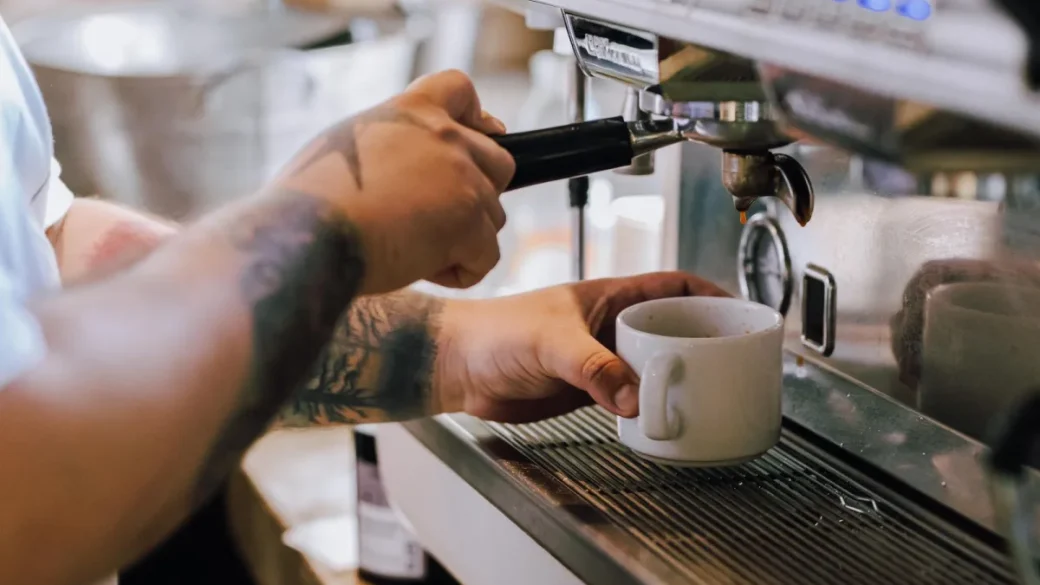
Water goes in but nothing comes out
This is the most common call I get, and it’s almost always one of three things: the pump lost its prime, the machine is scaled shut, or the tank valve is jammed.
Airlock first. If you just refilled an empty tank, the pump can trap air and spin without moving water. Run the hot-water or steam tap with the portafilter removed for 20 to 30 seconds until water flows steadily, then try brewing again. That clears it maybe half the time.
If water still won’t move, scale is the usual suspect. Espresso machines force water through passages narrower than a coffee stirrer, and mineral buildup closes them fast on hard water. A proper Specialty Coffee Association–style water spec keeps this from happening, but most of us are running straight tap.
Run a full descale cycle before you diagnose anything deeper. Citric acid solution costs about $8 a bottle, takes 20 minutes, and fixes more “broken” machines than any part I’ve ever swapped. If flow improves even a little afterward, scale was your problem.
Still nothing? Now you’re into the pump itself. If flow is weak or absent even with a clean water path, walk through the causes in this breakdown of why an espresso machine has no pressure before spending money.
It brews, but the shot is wrong
Plenty of machines “work” and still make bad coffee. The fix here is rarely a part.
Thin, pale shots with no crema
Weak, blonde espresso with no golden layer on top usually points to grind, dose, or stale beans long before it points to the machine. Crema is emulsified oils and CO2, and it needs fresh coffee and real pressure to form.
Work through grind size, dose, and freshness using the causes laid out in this piece on why your espresso has no crema. Dial those in before you suspect a hardware fault.
Gushing or sour shots
Coffee blasting through in 10 seconds means the grind is too coarse or the puck is under-dosed. A shot that stalls and drips means it’s too fine. Aim for roughly 25 to 30 seconds to pull about 2 ounces from a standard double, and adjust grind, not the machine.
Change one variable at a time. The moment you touch grind, dose, and beans all at once, you’ve learned nothing and you’re guessing.
Steam wand or hot water isn’t working
If espresso pulls fine but the steam wand won’t froth, the wand tip is almost certainly clogged with dried milk. Those tip holes are under a millimeter wide.
Soak the tip in warm water, then clear each hole with a pin or the wire that ships with many Breville and Gaggia machines. On single-boiler machines, also remember the design forces you to wait for the steam thermostat to reach temperature, often 20 to 40 seconds after the steam light comes on.
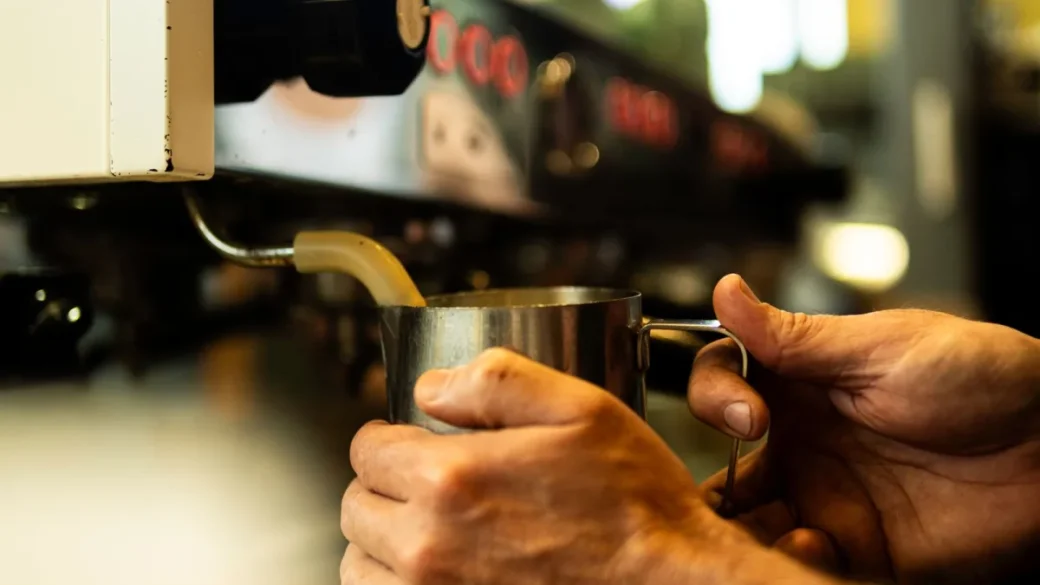
Single-boiler machines can’t brew and steam at the same instant – they switch the one boiler between two temperatures. If your steam feels weak right after pulling a shot, you may just be steaming before the boiler climbed from brew temp (around 200°F) to steam temp (around 250°F).
It’s leaking, tripping breakers, or making odd noises
Water where it shouldn’t be is its own diagnostic tree, and the source matters more than the puddle.
A drip from the group head after a shot is often just normal three-way solenoid relief. Water pooling under the machine, streaming from the base, or leaking mid-brew points to a failed seal, a cracked tank, or a tired gasket. The full walkthrough of where and why espresso machines leak maps each drip location to its likely cause.
A machine that trips your breaker or GFIC every time it heats has an element leaking current to ground, and that one is not a DIY job. Stop using it.
Loud, rhythmic hammering from the pump usually means it’s cavitating on air or straining against scale. A high-pitched screech can be a dying pump. For context on how these machines are built and why they behave this way, the overview of the espresso machine on Wikipedia is a solid primer.
When to fix it and when to let it go
Here’s the honest math I give people, because not every machine is worth saving.
| Symptom | Likely fix | Rough cost | DIY? |
|---|---|---|---|
| Totally dead | Thermal fuse or power cord | $4–$25 | Sometimes |
| No water flow | Descale, then pump | $8–$60 | Yes |
| Weak pressure | Pump or OPV valve | $20–$70 | Often |
| Leaking | Gasket or seal kit | $10–$40 | Usually |
| Trips breaker on heat | Heating element | $50–$120 | No |
If the repair runs past half the cost of a comparable new machine, and yours is an entry-level $150 unit, I usually tell people to replace it. On a $600-plus machine from De’Longhi or similar, almost everything is worth fixing because the parts are cheap relative to the whole.
Do the boring maintenance and most of this never happens. Descale every 2 to 3 months, backflush weekly if your machine takes a blind basket, run soft or filtered water, and wipe the steam wand after every use. I’ve serviced commercial-grade home machines that were 15 years old and ran like new, and the only difference between those and the ones that died at year three was ten minutes of care a week.
Every hands-on guide in this section, in one place:
- Espresso Machine Has No Pressure: Causes
- Why Your Espresso Has No Crema
- Espresso Machine Leaking Water: Where & Why
- Espresso Machine Not Heating Up: What to Check
- Espresso Machine Pump Loud or Not Priming
- Steam Wand Won't Froth Milk: Diagnosing Why
- Espresso Machine Won't Turn On: First Checks
- Breville Barista Express Blinking Lights Meaning
- Portafilter Sneezing After the Shot: Why
- Weak, Watery Espresso Shots: Tracing the Cause
- Espresso Gushing Out Too Fast: What's Wrong
- No Water Coming Through the Group Head
- Group Head Dripping Between Shots: Causes
- Gaggia Classic Not Building Pressure: Diagnose
Frequently asked questions
Nine times out of ten it's an airlock or scale. Remove the portafilter and run the hot-water or steam tap for 20 to 30 seconds to purge trapped air, which fixes a freshly refilled tank about half the time. If water still won't move, run a full descale cycle before assuming the pump has failed.
A working pump makes an audible buzz when you press brew. If you hear that buzz but get no flow even after descaling and clearing an airlock, the pump is likely the fault. A dead-silent pump on a machine that otherwise has power, or a loud screeching one, both point to a pump replacement, usually a $20 to $60 vibratory pump on home machines.
That almost always means the heating element is leaking current to ground, a genuine electrical fault. Do not keep using the machine or reset the breaker repeatedly. Element replacement runs $50 to $120 and is not a beginner repair, so have it done by someone comfortable with mains-powered heating circuits.
Yes, and it's the single most common cause I see. Espresso machines push water through channels narrower than a coffee stirrer, and mineral scale closes them off, causing weak flow, no pressure, and eventually a machine that won't brew at all. Descaling every 2 to 3 months on hard water prevents most of it.
If the repair costs more than half the price of a comparable new machine, replacement usually makes sense on entry-level units under $150. On machines above $600, almost every repair is worth doing because gaskets, pumps, and valves are cheap relative to the whole machine. A leaking gasket kit is $10 to $40; a new mid-range machine is not.
The wand tip is clogged with dried milk. Those holes are under a millimeter across and cake up fast if the wand isn't wiped and purged after each use. Soak the tip in warm water and clear each hole with a pin or the cleaning wire that came with the machine, and it should froth normally again.