Key takeaways
- A machine that lights up but stays cold has power but a broken heat path, so start at the thermal fuse, not the heating element.
- Test parts in order of likelihood and price: thermal fuse ($4), thermostat ($8-15), then the element ($30-70).
- A thermal fuse reads near 0 ohms when good and open (OL) when blown, and blown fuses usually mean an underlying overheat cause.
- Descale a scaled thermoblock every 4-8 weeks with hard water before condemning the heating element.
- Unplug and wait 30 minutes before opening any boiler machine; a hot boiler holds pressurized water above 200 F.
A machine that’s stone dead is easy. No lights, no pump, no life, and you’re chasing a power problem. The one that fools people is the machine that wakes up perfectly normal, pump hums, panel glows, and then just sits there at room temperature forever.
That specific fault, an espresso machine not heating while everything else works, lands on my bench maybe twice a week. And nine times out of ten it’s one of four or five components, tested in a very particular order.
I’ll walk you through that order the same way I’d work it myself, cheapest and most likely first.
First, confirm it’s actually a heating fault
Before you unplug anything or reach for a screwdriver, rule out the boring stuff. I’ve had customers ship me a machine that turned out to be working exactly as designed.
Give it a full 3 to 5 minutes from a cold start. A thermoblock machine like a De’Longhi Dedica hits brew temp in under 40 seconds, but a boiler machine such as a Gaggia Classic Pro genuinely needs a few minutes and the “ready” light can be misleading.
Quick sanity checks
- Is the machine on a wall outlet, not a power strip or extension cord? Heating elements pull 1000 to 1400 watts and starve on undersized cords.
- Did you accidentally leave it in steam-only or an eco/standby mode? Some Breville models drop to a low-power sleep after 20 minutes.
- Is the ready light coming on but the water still cold from the group? That’s a different problem, and my write-up on why a machine powers on but won’t brew properly covers those cases.
If you’ve given it real time and the boiler or block is still cold to the touch, now it’s a heating fault. Time to open it up.
Unplug the machine and let it sit 30 minutes before removing any panels. A boiler machine can hold water above 200 F under pressure, and mains-voltage terminals sit right next to that boiler. If you’re not comfortable near live 120V connections, this is a fair place to call a tech.
The thermal fuse: cheapest part, most common culprit
This is where I start on every cold-but-powered machine, and it’s right more often than any other single cause.
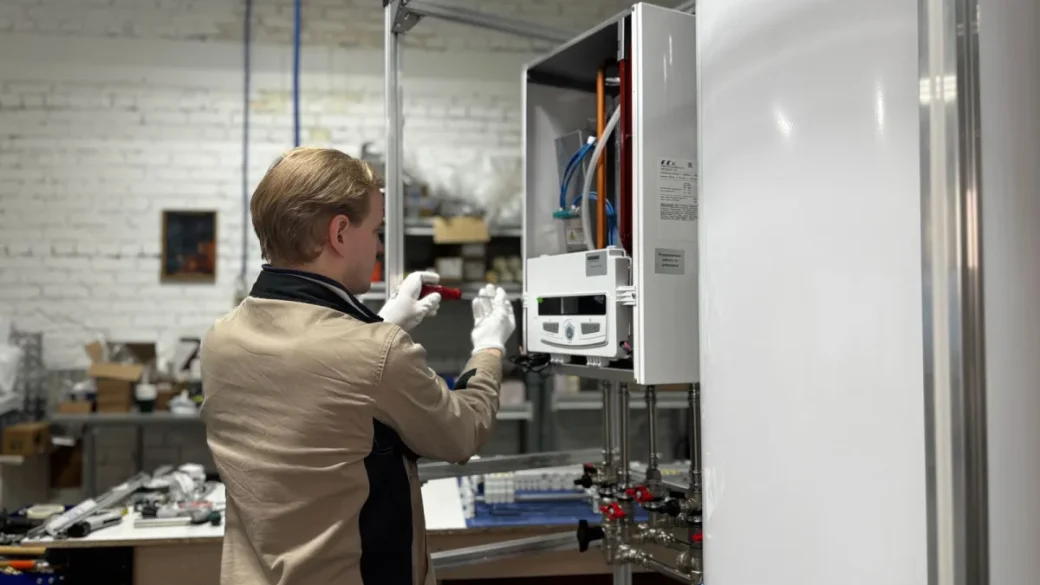
A thermal fuse (sometimes called a thermal cutout or one-shot fuse) is a small metal-bodied component clamped against the boiler or wired inline near the element. Its whole job is to blow permanently if the machine ever overheats. When it goes, the element gets no power, but the control board, pump and lights all keep working, which is exactly the symptom you’re seeing.
How to test it
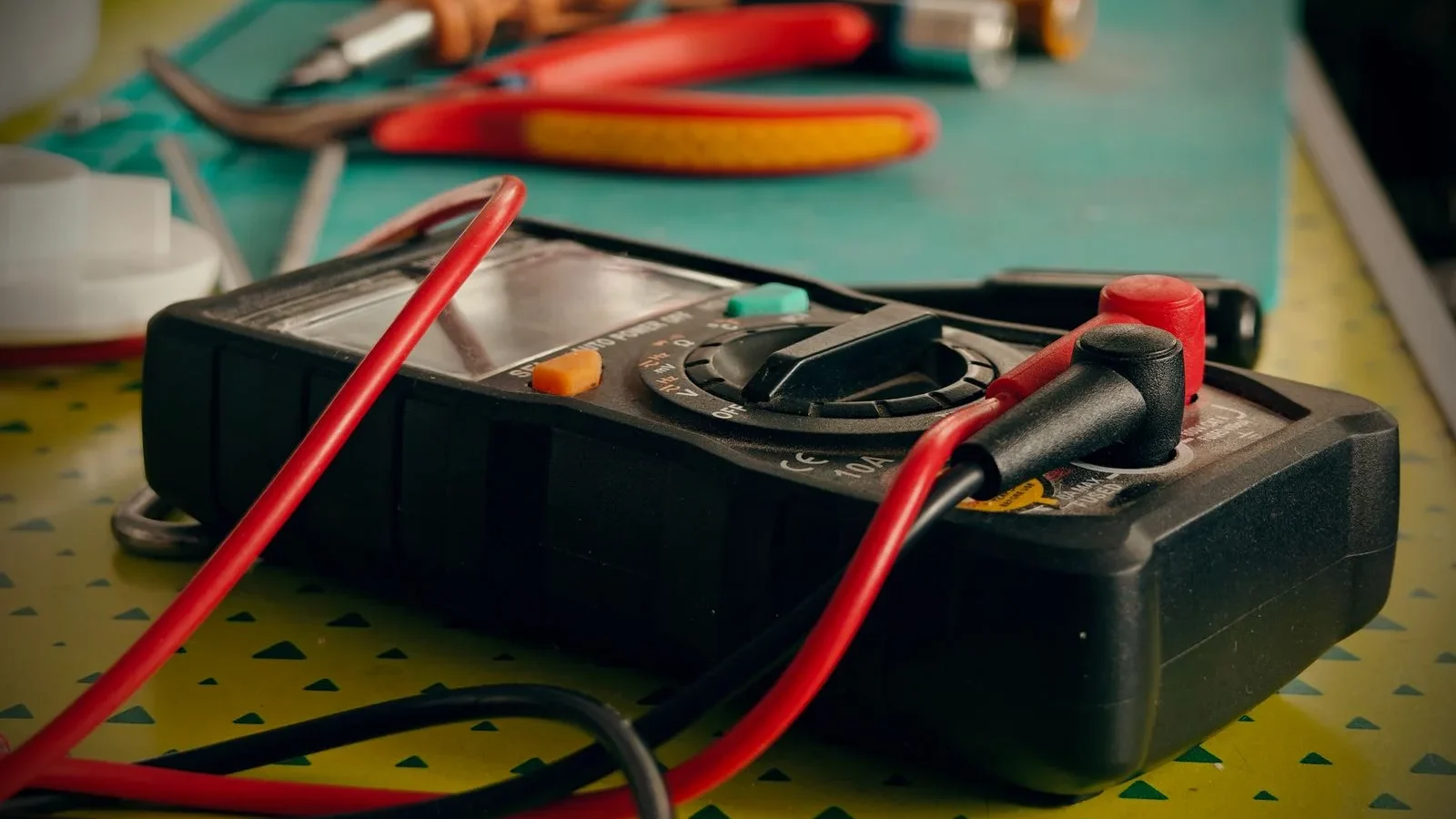
Set a multimeter to continuity or the lowest ohms range. Pull the two spade connectors off the fuse and probe across its terminals.
- Good fuse: reads near 0 ohms, or the meter beeps.
- Blown fuse: reads OL (open line), infinite resistance. No beep.
A replacement runs about $3 to $6. On a Gaggia Classic it’s a 216 C or 184 C cutout depending on the year, and it must match the original temperature rating exactly.
A thermal fuse rarely dies of old age. It blows because something else let the boiler run too hot, usually a failed thermostat that stopped cutting power. Replace the fuse, but check the thermostat in the next step or you’ll just cook the new fuse in a week.
Thermostats and the safety loop
Most home machines use one or two bimetal thermostats that click open and closed to hold temperature. A brew thermostat, and on boiler machines a separate steam thermostat, feed power to the element through the safety loop.
If a thermostat fails open, the element never sees power and the machine stays cold. If it fails closed, the boiler overheats and takes out the thermal fuse, which loops you right back to the previous section.
Testing a bimetal thermostat
Test it cold, at room temperature, with the machine unplugged. A brew thermostat should read closed (near 0 ohms) when cold. If it reads open cold, it’s dead. Steam thermostats run hotter set points but the same logic applies.
Genuine replacements are cheap, roughly $8 to $15 each. I always replace both the failed thermostat and the thermal fuse together, since a nickel’s worth of parts saves a second teardown.
Cold machine, working pump, working lights? The heat path is broken, not the brain. Follow the wires from the plug to the element and something in that chain is open.
The heating element or thermoblock
Only after the fuse and thermostats check out do I suspect the element itself. It’s the most expensive part in the chain, so I never condemn it first.
Boiler machines use a heating element cast into or bolted onto an aluminium boiler. Thermoblock and thermocoil machines, common in Breville and many De’Longhi units, heat water on demand as it passes through a metal block. Either way you can test resistance.
Reading the element
Disconnect the element leads and measure across its two terminals. A healthy 120V, 1200W element reads roughly 10 to 14 ohms. An open reading (OL) means a broken internal element, and that’s a replacement.
Also check from either terminal to the metal body. Any continuity to the body means the element is shorting to ground, which is unsafe and will trip a GFCI outlet. If you understand why the boiler and element sit at the heart of the machine, the wiring makes a lot more sense.
Before you spend $30 to $70 on a boiler or thermoblock, scale it out. On a scaled thermoblock I’ve seen resistance test fine yet the machine barely heats because mineral buildup insulates the water path. A 30-minute descale has saved more than a few elements from the recycling bin.
Scale, the slow killer
Hard water is the quiet reason plenty of machines “stop heating.” They don’t fail outright, they just get slower and weaker until the water never reaches brew temp.
Limescale coats the inside of a boiler or thermoblock and acts like a blanket. The element works fine, the water just can’t pick up the heat fast enough. If you’re on hard water and haven’t descaled in six months, this is your first suspect, ahead of even the thermal fuse.
Run a proper descaler or a citric acid solution, about 30 grams per liter, through the machine and let it dwell 20 to 30 minutes. On a badly scaled unit I’ll do two passes. The Specialty Coffee Association has solid material on water hardness and why it wrecks equipment over time.
Scale problems rarely travel alone. The same buildup that kills heating often shows up as a weak or dead pump, so if you’re also seeing no pressure at the group head, treat the whole machine to a deep descale and check both symptoms together.
Putting the checklist in order
Here’s the exact sequence I follow, and roughly what each step costs if it turns out to be the problem.
| Check | What a fault looks like | Typical part cost |
|---|---|---|
| Descale (hard water) | Heats slowly, never reaches temp | $8 descaler |
| Thermal fuse | Reads OL, element dead, lights fine | $3 to $6 |
| Brew/steam thermostat | Open when cold | $8 to $15 |
| Wiring / spade connectors | Loose, burnt, or corroded terminal | $2 in crimps |
| Heating element / thermoblock | Reads OL or shorts to body | $30 to $70 |
Work top to bottom. By the time you reach the element, you’ve spent maybe $10 in parts and ruled out three cheaper causes. That’s the whole point of the order.
One last thing worth knowing: a heating fault and a temperature that’s just slightly off are different animals. If your machine heats but the shots taste flat, that’s more likely a brewing issue, and I’d point you toward the reasons behind a shot pulling with no crema rather than the parts above. Same goes if you spot water pooling under the machine, which is its own trail worth following in the piece on where espresso machines leak and why.
Get the diagnosis order right, keep your multimeter handy, and most no-heat machines are back making coffee for the price of a bag of beans.
Frequently asked questions
On a machine that lights up and runs the pump but stays cold, a blown thermal fuse is the most common culprit I see. It cuts power to the heating element while leaving the lights and pump working. Test it with a multimeter on continuity: a good fuse reads near 0 ohms, a blown one reads OL. Replacements are only a few dollars.
Give a thermoblock machine at least 40 to 60 seconds from cold and a boiler machine a full 3 to 5 minutes. Boiler machines take real time and the ready light can come on before the group is truly hot. If it's still cold to the touch after that, you have a genuine heating fault.
Yes, and it's underrated. Heavy scale coats the boiler or thermoblock and insulates the water from the element, so the machine heats slowly or never reaches brew temperature. If you're on hard water and haven't descaled in months, run a descaler with a 20 to 30 minute dwell before you suspect any electrical part.
Testing resistance with the machine unplugged is safe if you're careful. Unplug it, wait 30 minutes for the boiler to cool and depressurize, then measure across the element terminals, which should read roughly 10 to 14 ohms on a 120V unit. Never probe a plugged-in machine, and if you're not comfortable near mains-voltage terminals, take it to a technician.
A thermal fuse almost never fails on its own; it blows because the boiler overheated. The usual cause is a thermostat that stopped cutting power and let the boiler run too hot. Replace the failed thermostat at the same time as the fuse, or the new fuse will cook again within days.
It depends on which part failed. A thermal fuse is $3 to $6, a thermostat $8 to $15, and a full heating element or thermoblock $30 to $70. Because you test cheapest-first, most no-heat repairs land under $20 in parts plus your time.