Key takeaways
- Time your shot: a proper double should take 25-32 seconds. Under 15 seconds means something is bypassing the puck.
- Fix the free stuff first. Grind two settings finer and add 1-2 grams of dose before you suspect the machine.
- A gasket that has gone hard and glossy lets water shoot around the puck instead of through it. Replacement rubber is $8-15.
- A pump that used to pull 9 bar and now reads 4-5 is a mechanical failure, not a brewing problem.
- Distribute and tamp level at roughly 30 lb. A channel in the puck reads exactly like a fast, gushing shot.
You pull the lever, and instead of that slow, honey-thick trickle, the cup fills in about nine seconds with something the color of weak tea. Pale, foamy, gone before you’ve set the milk jug down.
A fast pour is one of the most common complaints that lands on my bench, and the machine gets blamed first almost every time. Nine times out of ten it isn’t the machine at all. But the tenth time is real, and knowing which camp you’re in saves you from either wasting beans or ignoring a seal that’s about to flood your counter.
The trick is to read the pour as a symptom. Water always takes the path of least resistance, and a gusher is water finding a shortcut. Your job is to find where that shortcut is.
Time the shot before you touch anything
Grab your phone and time a shot from the moment you hit the button to the moment you stop it. This one number tells you more than any part swap.
A standard double, pulling around 36 grams of liquid from an 18-gram dose, should take somewhere between 25 and 32 seconds. That window is the target the Specialty Coffee Association and most roasters build their recipes around.
If you’re finishing in under 15 seconds, you have a problem worth chasing. Here’s roughly how the timing maps to the cause:
| Shot time | What it usually means |
|---|---|
| 25-32 sec | Dialed in. Leave it alone. |
| 18-24 sec | Slightly fast. Grind a touch finer. |
| 10-17 sec | Grind too coarse, dose too low, or a channel in the puck. |
| Under 10 sec | Suspect a seal, a worn gasket, or lost pump pressure. |
If the shot runs faster than you can count to fifteen, the water isn’t going through the coffee. It’s going around it.
Grind and dose: the fixes that cost nothing
Before I open a single machine, I check the two things the owner controls. Espresso is brewed under roughly 9 bar of pressure, and that resistance comes almost entirely from a correctly ground, correctly dosed puck. Get either wrong and water blows straight through.
Grind size
Espresso needs a genuinely fine grind, finer than most people expect the first time. If your shots gush, go two or three steps finer and pull again.
Watch for the pour to slow and darken. A good espresso stream looks like warm honey dripping off a spoon, not water from a tap.
Change one variable at a time. Adjust the grind, pull a shot, taste and time it, then decide. If you move grind and dose and tamp all at once, you’ll never learn what actually fixed it.
Dose
An underfilled basket leaves headroom, and headroom means the puck never gets properly compressed against the shower screen. If your 18-gram basket only has 15 grams in it, water will find the gap.
Weigh your dose on a cheap 0.1-gram scale. A decent one runs $15 to $25 and pays for itself in wasted beans within a month.

Channeling: when the puck cracks under pressure
This is the sneaky one. Your grind and dose can be perfect, but if the puck has a weak spot, water bores a hole straight through it and everything else stays dry.
You’ll often see it as a shot that starts fine, then suddenly speeds up and sprays to one side. Pull the basket after and look for a pinhole or a crater. That’s your channel.
Channeling comes from uneven distribution or a crooked tamp. Rake the grounds level in the basket, tap the side gently to settle them, then tamp straight down with steady pressure, around 30 pounds. Level matters far more than force.
A worn or dented basket causes channeling too. If the holes at the bottom are unevenly enlarged or the basket is warped, replace it. Precision baskets from IMS or similar run $20 to $35 and often outperform the stock one that shipped with the machine.
The group gasket: the seal everyone forgets
Now we’re into the machine itself. The portafilter locks into a rubber ring called the group gasket, and its whole job is to force water down through the coffee rather than letting it escape around the rim.
The first time I opened one of these on a five-year-old machine, the gasket had gone rock hard and glossy, almost like plastic. A fresh gasket is soft and grips the portafilter with a satisfying resistance. A dead one lets the basket sit loose.
How to spot a failing gasket
- The portafilter now locks well past the 6 o’clock position, sometimes all the way to 7 or 8, where it used to stop near center.
- You see water weeping or spitting from the edge of the portafilter during a shot.
- The pour is fast and you can hear hissing around the group.
- The rubber looks shiny, cracked, or has coffee grounds embedded in it.
A machine that leaks around the head while pouring is often the same fault showing two faces at once. If you’re chasing drips as well as a fast pour, our walkthrough on where espresso machines leak water and why covers the overlap in detail.
Gaskets are cheap. A replacement for a Gaggia Classic, a Breville, or most De’Longhi models runs $8 to $15, and swapping one is a 15-minute job with a flathead screwdriver and a bit of patience. Pop out the shower screen, pry the old gasket free, and press the new one in with the flat side out.
Unplug the machine and let it cool for at least 30 minutes before touching the group head. The boiler and shower screen sit at brewing temperature, around 200 F, and the group holds pressurized hot water. Never open anything on a machine that’s still warm or plugged in.
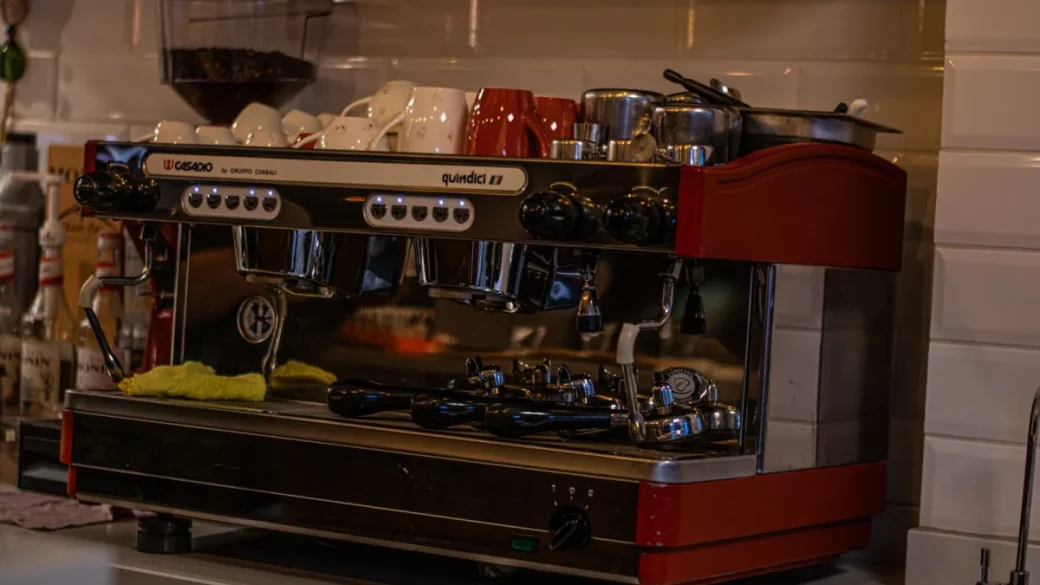
Lost pump pressure: the real machine fault
If your grind is fine, your dose is right, the puck comes out clean, and the gasket is healthy, and it’s still gushing, now I start to believe the machine.
Most home machines use a vibratory pump rated to deliver 9 bar at the puck. When that pump weakens with age, or the internal pressure relief valve, the OPV, drifts out of spec, the water pushes through with far less force. Low pressure reads as a thin, fast, crema-poor shot.
You can confirm this with a portafilter-mounted pressure gauge, sometimes called a blind basket gauge, for about $30 to $40. Lock it in, pull a shot, and read the dial. A healthy machine holds near 9 bar. If yours climbs to only 4 or 5, the pump or OPV is the culprit.
Pump replacement on a Gaggia or Rancilio is a $30 to $50 part and an afternoon of work. An OPV adjustment costs nothing but a screwdriver, if your machine has an adjustable one. This is the same failure family behind a machine that makes weak shots across the board, which I break down in the piece on what causes an espresso machine to lose pressure.
Scale buildup can mimic low pressure by restricting flow elsewhere, though it more often makes shots slow rather than fast. If you’re in a hard-water area and haven’t descaled in six months, run a descale cycle before you condemn the pump. It’s the cheapest diagnostic you own.
Reading the crema as a second clue
The pour speed and the crema tell the same story from two angles. A fast shot almost always arrives with thin, pale, fast-dissolving crema, because espresso crema is emulsified oils and dissolved gases that only form under real pressure and real contact time.
Gush the water through in ten seconds and there’s no time to build that layer. If your crema vanishes before you can look at it, that’s confirmation the pour is too fast, not a separate problem. I go deeper on that relationship in the article on why your espresso has no crema.
Working through it in order
When a fast shot lands in front of me, I don’t guess. I go cheapest to most involved, because the free fixes solve this the vast majority of the time.
Grind finer. Weigh the dose up. Distribute and tamp level. Pull again and time it. If it’s now in the mid-twenties, you were done before you ever picked up a screwdriver.
Only when clean technique still gushes do I open the machine, and even then I check the gasket before I ever suspect the pump. If none of this lands your shot back in the 25-to-32-second window, the fuller diagnostic tree in our overview of common espresso machine problems and fixes will help you rule out the parts I haven’t covered here. Start with a timer, trust the number, and let the water tell you where it’s escaping.
Frequently asked questions
For a standard double pulling around 36 grams of liquid, aim for 25 to 32 seconds. Anything under 15 seconds signals that water is bypassing the coffee rather than brewing through it. A shot that finishes in under 10 seconds almost always points to a seal or pressure fault rather than just a grind issue.
Yes. Coffee degasses as it ages, and beans several weeks past roast lose the CO2 that creates resistance in the puck. Older beans often pour faster and flatter, so if your grind and dose haven't changed but shots suddenly speed up, check the roast date before blaming the machine.
A failing group gasket usually shows itself physically: the portafilter locks far past center, and you'll see water weeping or spitting around the rim during the shot. A weak pump leaves the seal intact but drops the pressure, which you confirm with a blind-basket pressure gauge reading well below 9 bar. Check the gasket first because it's the cheaper and more common failure.
It ruins the taste. A gushing shot is under-extracted, so it pulls the sour, sharp acids from the coffee without the sweetness and body that come from proper contact time. It will taste thin, sour, and watery, and no amount of milk or sugar fully hides it.
Increase your dose by a gram or two, then distribute and tamp dead level at around 30 pounds. If clean technique still gushes, inspect the group gasket for hardening, then test pump pressure with a gauge. Work from the free fixes toward the mechanical ones so you don't replace a pump when a level tamp would have solved it.
Absolutely, and it's easy to miss. A channel is a hole water bores through a weak spot in the puck, letting it rush through while the rest stays dry. It comes from uneven distribution, a crooked tamp, or a worn basket, and it produces a fast, one-sided, spraying pour even when your grind and dose are otherwise perfect.