Key takeaways
- Aim for roughly 50–100 ppm total hardness and 40–70 ppm bicarbonate - that window gives you sweetness without a flat, muted cup.
- Water that's too soft (near-zero minerals) extracts harsh and sour; water that's too hard mutes acidity and eventually scales your boiler.
- A $12 TDS meter tells you your starting point; anything reading 300+ ppm from the tap is worth treating.
- Mixing distilled water with a mineral concentrate or a remineralizing pack gives repeatable results for around $0.10 a liter.
- Change one variable at a time - swap your water for a week before you touch grind or dose.
I get a lot of machines on the bench with the same complaint: “It used to taste amazing, now every shot is sour and thin.” The owner has already changed beans, bought a new grinder, and watched a dozen videos on dose and tamp.
Nine times out of ten, nobody has looked at the water.
A Gaggia Classic that made syrupy shots in one apartment can turn thin and sharp after a move across town, and not a single part has changed. The tap did. That’s the part people miss, so let’s talk about what’s actually happening inside the group when water meets ground coffee.
Why does water matter more than my beans?
Espresso is about 90% water by weight. You’re tasting the water as much as the coffee, so its chemistry sets the ceiling for everything else.
Coffee flavor lives in soluble compounds – acids, sugars, and the heavier bitter fractions. Water’s job is to pull those out in the right ratio during the 25–30 seconds a shot runs. Minerals dissolved in the water change how eagerly it grabs each type of compound.
Two minerals do most of the work. Magnesium and calcium (together, your “hardness”) act like magnets for flavor and boost extraction. Bicarbonate (your “buffer” or alkalinity) neutralizes acids and softens the cup.
Hardness pulls flavor out. Bicarbonate tames the acids. Get the balance wrong and no grind adjustment will save the shot.
According to the Specialty Coffee Association, the sweet spot for brewing sits around 50–100 ppm total hardness with a bicarbonate level near 40–70 ppm. Those numbers aren’t sacred, but they’re a genuinely useful target to build around.
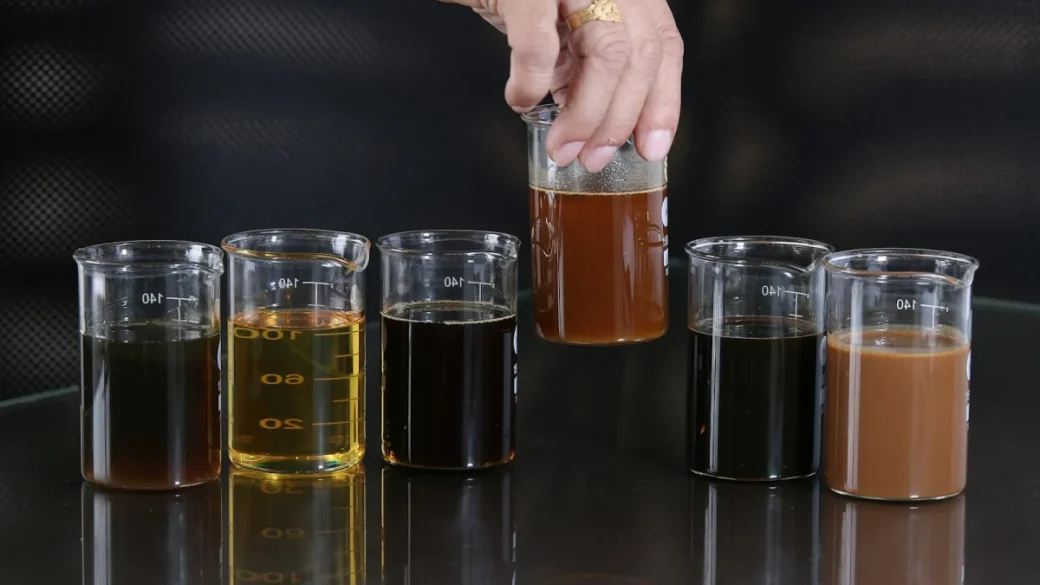
What does the wrong water actually taste like?
This is where it stops being chemistry and starts being something you can taste on a Tuesday morning.
Too soft, too pure
Reverse-osmosis or distilled water with almost no minerals sounds clean, but it extracts badly. With nothing to grab the sugars, you get a shot that’s sharp, sour, and hollow – bright acidity with no body behind it.
People assume that sourness means they under-extracted and they grind finer, chasing their tail for weeks. If your shots taste like a squeeze of lemon on an empty stomach, read through Fixing Sour Espresso: Causes and Cures before you blame your technique – soft water is a suspect people rarely check.
Too hard, too buffered
Now flip it. Heavily buffered water – the kind you get from a lot of municipal supplies – neutralizes the delicate fruit acids before they ever reach your tongue.
The result is a flat, muddy, “cardboard” shot. It’s not bitter exactly, just muted and lifeless. If your espresso feels dull no matter how you dial it, that’s often high alkalinity flattening everything out, and it can read as the same dead quality you’ll recognize from Bitter Espresso? How to Tame Over-Extraction.
Hardness and alkalinity are different measurements. A bottled water can be moderately hard yet very high in bicarbonate, which is why “hard water” alone doesn’t tell you how a shot will taste. You need both numbers.
How do I find out what’s in my water?
You can’t fix what you haven’t measured, and this part costs almost nothing.
A basic TDS meter – total dissolved solids – runs about $12 to $15 online. Dip it in your tap water and it gives you a rough ppm reading in two seconds. It won’t split hardness from alkalinity, but it tells you your starting point.
- Under 50 ppm TDS: water is very soft – expect sour, thin shots and consider remineralizing.
- 50–150 ppm: you’re in a good working range for most machines.
- 150–300 ppm: usable, but watch for muted flavor and start thinking about scale.
- Over 300 ppm: treat it, both for taste and for your boiler’s lifespan.
For a proper read, a GH/KH aquarium test kit costs around $10 and gives you general hardness and carbonate hardness as separate numbers. That’s the same data pros use, dressed up for fish tanks.
What’s the best water for espresso at home?
This is the question everyone actually wants answered, and the honest reply is: it depends on where you’re starting.
If your tap is decent
Some cities have genuinely good coffee water straight from the faucet, in that 60–120 ppm range with moderate alkalinity. If yours reads well on the meter, a simple activated-carbon filter to strip chlorine is all you need. A Brita-style pitcher at around $25 handles that fine.
Chlorine is the enemy of flavor even when the mineral content is perfect. It reads as a faint swimming-pool note and dulls aroma. Carbon filtration removes it without touching the minerals you want.
If your tap is rough
Very hard, very soft, or heavily chlorinated tap water is better rebuilt than filtered. The most repeatable method I’ve found is starting from a near-zero base – distilled or RO water – and adding minerals back.
You can buy remineralizing concentrates (a couple of dollars a bottle, months of use) or dose your own with food-grade Epsom salt and baking soda. The DIY route works out to roughly $0.10 per liter and gives you the same water every single time, which matters more than hitting a perfect number.
Consistency beats perfection. Water that reads 80 ppm every day will let you dial in a bag of beans and trust your adjustments. Water that swings from 40 to 200 ppm with the seasons will have you re-dialing constantly and never knowing why.
Once your water is stable, the rest of the variables finally behave. Your grind adjustments do what you expect, which is exactly the predictability that Espresso Grind Size: Getting It Just Right assumes you already have.
Does the wrong water damage the machine too?
Taste is the headline here, but I’d be doing you a disservice not to mention the hardware, because I see the damage weekly.
Hard water leaves scale – calcium carbonate – inside the boiler and on the heating element. On a single-boiler machine like a De’Longhi Dedica or a Gaggia Classic, I’ve pulled elements caked in a 2–3 mm chalky crust after 18 months of untreated 350 ppm water.
That crust insulates the element, so your brew temperature drifts, recovery slows, and eventually the thermal fuse trips or the element burns out. A replacement element plus labor runs $80 to $140, versus a $6 bag of descaling powder used every couple of months.
Never run pure distilled or fully de-ionized water through a machine with a heating element long-term without adding minerals back. Ultra-pure water is aggressive and can slowly corrode brass and copper internals. Always remineralize to at least 30–40 ppm before it goes near the boiler.
The irony is that the same water that scales your boiler often makes flat coffee, and the same ultra-soft water that protects against scale makes sour coffee. That tension is exactly why I frame this around taste first – the mineral level that tastes right also happens to sit in the safe zone for most machines.
| Water type | Typical TDS | Taste in the cup | Scale risk |
|---|---|---|---|
| Distilled / RO (untreated) | 0–10 ppm | Sour, thin, hollow | Very low (but corrosive) |
| Remineralized RO | 60–100 ppm | Sweet, balanced, full | Low |
| Good tap + carbon filter | 80–150 ppm | Clean, well-rounded | Low–moderate |
| Hard municipal tap | 250–400+ ppm | Flat, muted, “cardboard” | High |
Where to start this week
Don’t overhaul everything at once. Grab a TDS meter, test your tap, and write the number down.
If you’re above 250 ppm or below 50, buy a gallon of distilled water and either a remineralizing pack or a small box of Epsom salt and baking soda. Pull the same shot you always pull, changing nothing but the water, and taste them side by side.
Most people are genuinely startled by the difference – more sweetness, more body, acids that read as fruit instead of vinegar. Once the water’s sorted, everything else you’ve learned about pulling a shot, from dose to timing, finally lands the way it’s meant to. If you want to line the rest of it up, walk back through How to Pull the Perfect Espresso Shot with your new water in the tank and see how much easier dialing in becomes.
Water is the cheapest upgrade in the whole setup, and it’s the one almost nobody tries first. Fix it, and half the problems you were chasing quietly disappear.
Frequently asked questions
Sometimes, but check the label first. Many spring waters are very high in bicarbonate, which flattens flavor even when the mineral total looks reasonable. Look for something in the 50–100 ppm hardness range with low alkalinity, or test a bottle with a cheap TDS meter before committing to it.
On its own, yes, over time. Pure distilled or de-ionized water is aggressive and can slowly corrode brass and copper boiler parts, and it also makes sour, hollow shots. Always add minerals back to at least 30–40 ppm before running it through a machine with a heating element.
It depends on what your tap needs. A carbon pitcher filter removes chlorine and improves taste, which helps if your mineral content is already good. It won't meaningfully reduce hardness or scale risk, so if your tap reads 300+ ppm you'll need RO or a proper softening approach, not just a pitcher.
Test your water first. If your TDS reads under about 50 ppm, ultra-soft water is a strong suspect because it can't extract sugars properly. Try the same shot with remineralized water for a week before you start grinding finer or adjusting dose, since chasing grind won't fix a water problem.
Aim for roughly 50–100 ppm total hardness with bicarbonate around 40–70 ppm. That range gives you enough minerals to pull sweetness and body without muting the acids or scaling your boiler. Consistency day to day matters even more than hitting an exact figure.
No, the same balanced water works for both. Milk masks a lot of subtle flavor differences, so water chemistry shows up most clearly in straight shots and lighter roasts. If you dial in with good water for espresso, your lattes and cappuccinos will taste right by default.