Key takeaways
- Grind size controls flow rate, and flow rate controls how much flavor water pulls from the coffee.
- A shift of a few microns can swing a shot from sour to bitter without you touching anything else.
- Fresh, hard beans need a finer grind than stale ones, so the setting is never fixed forever.
- Fixing grind first solves most 'bad espresso' problems before you blame the machine or the pressure.
A customer brought me a two-year-old Gaggia Classic last winter, convinced the pump was dying. Every shot gushed out in eight seconds, thin and sour, and he’d already spent $60 on a replacement pump that changed nothing.
The pump was fine. His grinder was set two notches too coarse.
I see this every few weeks. People chase pressure gauges and descaling routines and PID kits, and the actual problem is sitting in the burr grinder they treat as an afterthought. So let’s talk about why grind size matters in espresso more than almost anything else you can adjust.
What is grind size actually controlling?
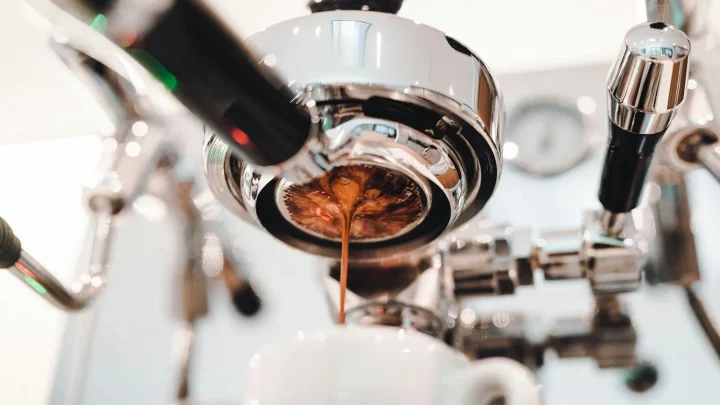
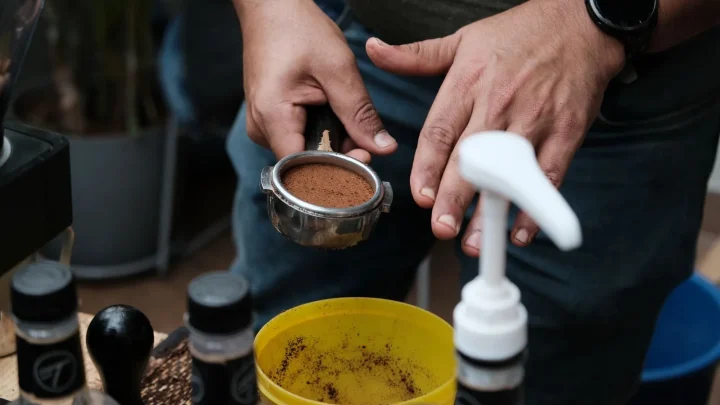
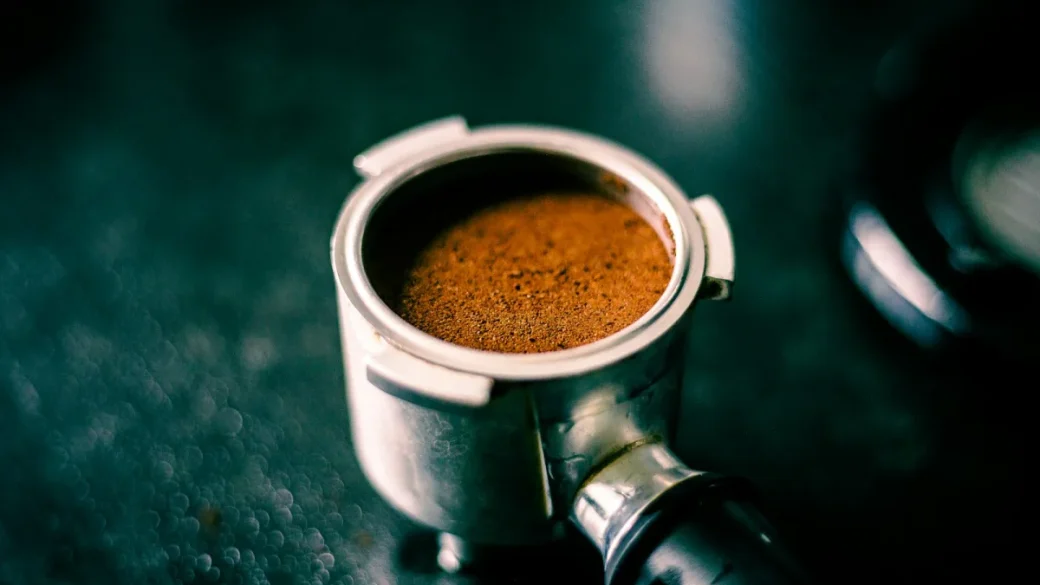
Espresso is water forced through a compacted bed of coffee. Grind size sets how tightly that bed resists the water.
Grind finer and you create more surface area and smaller gaps between particles. Water has to fight harder to get through, so it moves slower and stays in contact with the coffee longer. Grind coarser and water races through wide channels, barely touching the grounds on its way out.
That contact time is the whole game. It decides how much of the coffee’s soluble material ends up in your cup, which is what people mean when they say “extraction.”
Grind size is the throttle. Everything else is fine-tuning.
If you’ve read our overview on how espresso actually works, this is the lever that sits underneath all of it. The Specialty Coffee Association pegs a healthy espresso extraction somewhere around 18–22% of the coffee’s mass dissolving into the shot, and grind is your primary tool for landing in that window.
Why does grind matter more than pressure or temperature?
Here’s the part that surprises people. Your machine’s pressure and temperature have a much narrower useful range than grind does.
Most home machines pull around 9 bars, and that number barely moves from shot to shot. Brew temperature on a decent setup sits near 200°F (93°C) and drifts maybe a couple of degrees. Those are steady inputs.
Grind, though, is wildly sensitive. On a Baratza Encore ESP or a Eureka Mignon, one click on the adjustment collar can change your shot time by three or four seconds. That’s an enormous swing from a tiny movement.
The gap between a grind that pours in 18 seconds and one that pours in 32 seconds might be less than the width of a human hair at the burr. Grinders work in microns, and espresso lives in a tight band of them.
Because grind moves the result so dramatically, it swamps the smaller effects of everything else. You can obsess over dialing your machine to exactly 9.0 bars, but if the grind is wrong, none of that matters. Curious what that pressure figure even means? We break it down in our piece on what 9 bars of pressure means in espresso.
The flow-rate connection
Flow rate is just how fast the shot comes out, and grind is the main thing that sets it. A good double shot usually pulls roughly 36 grams of liquid in 25 to 30 seconds.
Too fast means the grind is too coarse and the water didn’t grab enough flavor. Too slow means it’s too fine and the water sat too long, dragging out the harsh stuff. Watch the flow, and you’re really watching your grind.
What does the wrong grind actually taste like?
You don’t need a refractometer to read your grind. Your tongue does it for free.
A shot that runs too fast, from grind that’s too coarse, tastes sour, thin, and salty. It’s under-extracted, meaning the water skipped past the good stuff and left it in the puck.
A shot that crawls out, from grind that’s too fine, tastes bitter, ashy, and dry. It’s over-extracted, and the water pulled out the bitter compounds that should have stayed behind.
| Grind is… | Shot behaves… | Tastes like… | What’s happening |
|---|---|---|---|
| Too coarse | Gushes in under 20s | Sour, thin, salty | Under-extracted |
| Dialed in | 25–30s, steady flow | Sweet, balanced, syrupy | Good extraction |
| Too fine | Drips, over 35s | Bitter, dry, ashy | Over-extracted |
This is why grind is the first thing I check when someone says their espresso “just tastes bad.” Nine times out of ten the machine is healthy and the grind is off.
Why can’t I just set the grind once and forget it?
This is the frustrating truth that makes grind feel like a moving target. The right setting today may be wrong next week, and nothing on your machine changed.
Coffee is a physical product that shifts as it ages. Beans release CO2 for weeks after roasting, and that gas affects how water flows through the puck.
Freshness moves the target
Fresh beans, say three to seven days off roast, are gassy and resist water more. You’ll often need to grind slightly coarser to hit your time. Two weeks later the same bag has calmed down, and suddenly your old setting runs too fast, so you grind finer to compensate.
Roast level and bean density matter too
A dense, light-roast Ethiopian behaves nothing like an oily dark-roast Italian blend. Harder beans generally want a finer grind to slow the water down. Switch bags and you’re re-dialing, every time.
Keep a cheap notebook by your grinder. Jot the bean, the roast date, your grind setting, and the shot time. After a month you’ll spot patterns and stop re-dialing blind every time you open a new bag.
Humidity plays a role as well. On a muggy summer day in a WAMP-hot kitchen, grounds clump and flow changes, and I’ve watched a shot slow by four seconds with zero setting changes.
Why does the grinder itself matter so much?
Not all “grind size” is equal. A cheap blade grinder chops beans into random chunks, big shards next to fine dust, and that inconsistency wrecks espresso.
Water follows the path of least resistance. When your grounds are uneven, water bores channels through the fine spots and races past the coarse ones, so you get sour and bitter in the same shot. This is called channeling, and it’s a grind-consistency problem, not a machine problem.
A proper conical or flat burr grinder produces particles in a tight size range. That uniformity is what lets water pass evenly through the whole bed. It’s why a $180 Baratza with a stock $99 machine will out-shot a $600 espresso maker fed by a $25 blade grinder.
Always unplug the grinder before clearing a jam or brushing out the burr chamber. Those burrs spin fast and don’t care what’s between them. I’ve seen more than one sliced fingertip from someone “just quickly” poking at a stuck bean with the power on.
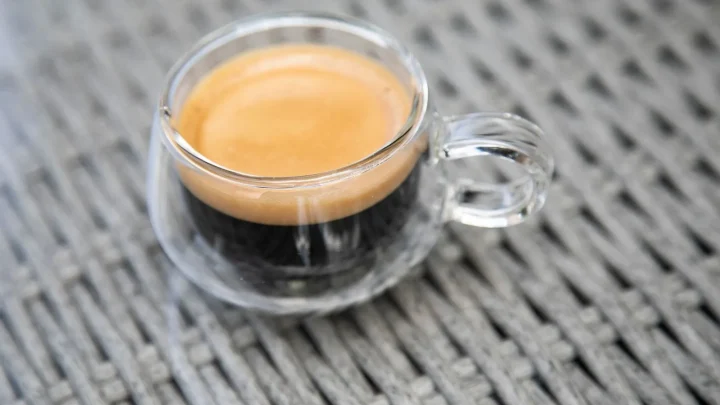
Consistency is also why crema forms properly, since even extraction builds that reddish-brown foam evenly. If you want the full story there, see our explainer on what crema is and why it forms on espresso. And if the terms “burr,” “portafilter,” and “puck” are still fuzzy, our rundown of espresso machine parts explained is worth a read alongside this.
How I think about grind on the bench
When a machine lands on my bench with a “bad espresso” complaint, grind is my first suspect, before I ever open the case. Here’s the mental checklist I run.
- Is the shot timing way off, under 20 or over 35 seconds? That’s grind before anything else.
- Is the grinder a burr or a blade? A blade grinder is often the entire diagnosis.
- How old are the beans, and how old is the grind setting they’re using?
- Does the taste match the flow, sour-and-fast or bitter-and-slow?
- Only after all that do I check pressure, temperature, and the pump.
The reason this order works is simple. Grind explains more bad shots than every mechanical fault combined, and it costs nothing to test. You just move the collar and pull again.
So before you spend $60 on a pump you don’t need, spend two minutes on your grinder. Adjust one notch, pull a shot, taste it, and pay attention to the clock. That single habit will teach you more about espresso than any gauge on the front of the machine, and it’s the thing separating a frustrated home setup from one that quietly makes great coffee every morning. Espresso, as the long history of the drink shows, has always been a craft of small adjustments, and grind is the biggest one you hold in your hand.
Frequently asked questions
Move one click or one small notch at a time and pull a full shot before judging. Grind is so sensitive that a single step can swing your shot time by three or four seconds. Jumping several settings at once means you overshoot and can't tell what actually changed.
For espresso, yes. Blade grinders chop beans unevenly, which causes channeling and gives you sour and bitter flavors in the same shot. A basic burr grinder around $150 to $200 will improve your espresso more than upgrading the machine itself.
Almost always because the beans aged. Fresh beans off-gas CO2 and resist water more, while older beans let water through faster. A setting that was perfect on day four can run too fast by day fourteen, so you grind a touch finer to bring the shot time back.
In most cases, yes. As long as you tamp level and consistent, the exact force matters far less than getting the grind right. Grind sets the overall resistance of the puck; tamping just evens it out. Fix grind first, then keep tamping steady.
A common target is roughly 25 to 30 seconds for about 36 grams of liquid from a double basket. If it pours faster, grind finer; if it drags past 35 seconds, grind coarser. Use time as a rough guide, then let taste make the final call.
Often, yes. Bitterness usually means over-extraction from grinding too fine, so going one step coarser speeds the shot up and pulls fewer harsh compounds. If coarsening makes it sour instead, you've gone too far and need to split the difference.