Key takeaways
- Buy a burr grinder before anything else - pre-ground coffee is the single biggest reason beginner shots taste sour or bitter.
- Purge and wipe the steam wand within 5 seconds of every use; dried milk is the number one repair I see on home machines.
- Dose by weight (16-18g in, 30-36g out) instead of eyeballing the basket - a $20 scale fixes most channeling.
- Backflush weekly with plain water and monthly with detergent to stop group-head seals from failing early.
- Descale on schedule for your water hardness; scale kills boilers and pumps far faster than any other single cause.
Most of the machines that land on my bench aren’t broken in the way their owners think. The pump still works. The boiler still heats. What died was the coffee, killed slowly by a handful of habits picked up in the first month of ownership.
I’ve spent twelve years pulling apart Gaggia Classics, Breville Barista Express units, and the occasional heartbreak of a neglected De’Longhi Dedica. The pattern almost never changes.
So this is the stuff I wish someone had told the person before they handed me a $400 machine caked in old milk. None of it is hard. All of it is avoidable.
Skipping the grinder and blaming the machine
If you buy one thing after the machine, make it a burr grinder. Not a blade chopper, not a bag of supermarket pre-ground.
Pre-ground coffee for espresso is almost always too coarse and already stale. It’s been off-gassing since the day it was bagged, and espresso needs a grind fine enough to build resistance against roughly nine bars of pump pressure. If you want the detail on why that number matters, I unpacked it in what 9 bars of pressure means in espresso.
A decent entry grinder like a Baratza Encore ESP or a DF54 runs $150 to $250. That feels like a lot next to a $300 machine, but the grinder is where flavour actually gets made.
A shot that pours in 4 seconds like water is almost always a grind that’s too coarse. One that drips for 50 seconds and tastes ashy is too fine. You’re aiming for the sweet spot in between, and only a grinder with fine adjustment lets you find it.
Eyeballing the dose and tamp
Two scoops and a firm press. That’s how most people start, and it’s why their shots taste different every single time.
Dose by weight, not by eye
A standard double basket wants somewhere around 16 to 18 grams of ground coffee going in, and you’re looking for roughly 30 to 36 grams of espresso coming out. A cheap kitchen scale that reads to 0.1g costs about $20 and removes the single biggest variable in the whole process.
Without it, you’re guessing. And guessing means you can never tell whether a bad shot was the grind, the dose, or just bad luck.
The tamp is about level, not muscle
New owners tend to lean on the tamper like they’re trying to crush the counter. You don’t need 40 pounds of force. You need the puck flat and even.
An uneven tamp lets water carve a channel straight through the soft spot, and everything else runs around it. That channeling is why one side of your basket comes out bone dry while the other is a swamp.
Level beats hard. A gently tamped flat puck pulls a better shot than a crooked one you’ve bruised your palm on.
Treating the steam wand like it can wait
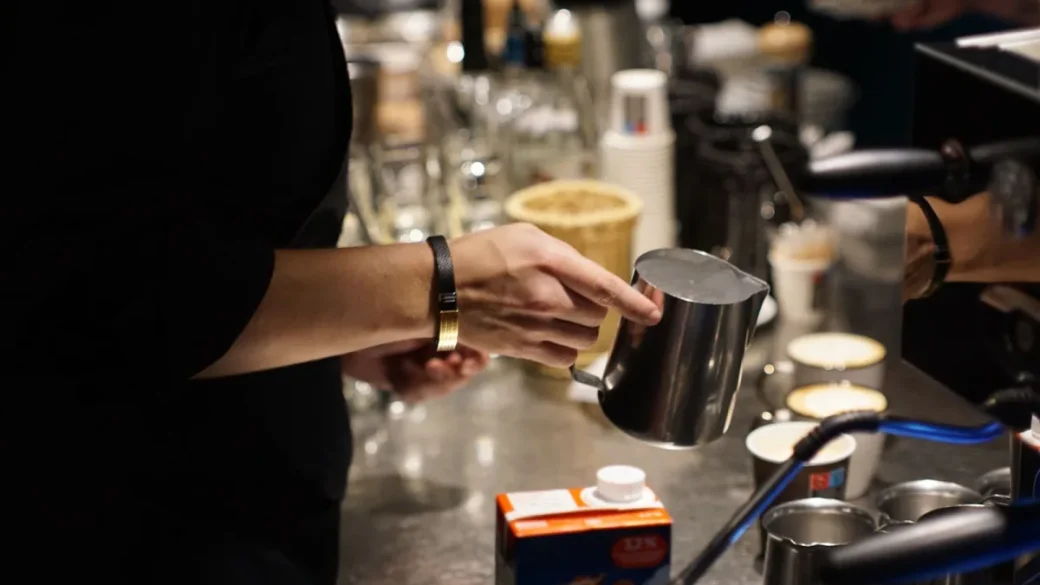
This is the one that keeps me in business. I’d guess 40 percent of the repairs I do trace back to a neglected steam wand.
Milk is protein and sugar. Left on hot brass, it bakes into a hard crust that clogs the wand tip and creeps back into the steam valve. Once it’s inside the valve, that’s a strip-down job, not a wipe.
Always purge the wand into the drip tray before and after steaming, and wipe it with a damp cloth within about 5 seconds while the residue is still soft. The wand and tip run well above boiling, so keep your fingers on the cloth, never the brass.
If milk texture itself feels like a mystery, the airy stuff on top of a good latte comes from the same physics that builds a good crema. There’s a nice primer on that over in what crema is and why it forms on espresso.
Never learning what the parts actually do
You don’t need to be a technician. But knowing a portafilter from a group head from a shower screen changes how you treat the machine.
I’ve met owners who ran their machine for two years without knowing the shower screen unscrews for cleaning. It was a solid black disc of old oil by the time I saw it. Five minutes with a screwdriver and a soak would have prevented it.
If any of those words are fuzzy, the rundown in espresso machine parts explained for beginners is worth ten minutes of your time. It’s also handy to understand the basic flow of water and pressure, which the espresso for beginners overview of how it all works lays out cleanly.
Pop your shower screen and group gasket every few weeks for a look. A group gasket costs about $8 and takes ten minutes to swap. A seized, corroded group head from years of neglect is a bench job that can run $80 or more in labour.
Ignoring cleaning until something breaks
Espresso machines are one of the few appliances where daily coffee oils actively work against you. Skip the maintenance and the machine tells you, usually at the worst moment.
Backflushing
Any machine with a three-way solenoid valve, which covers most Gaggias and Brevilles, needs backflushing. Plain water with a blind basket once a week, and a proper espresso detergent like Cafiza once a month. It clears oil out of the group and keeps the solenoid firing cleanly.
Descaling
Scale is the quiet killer. Hard water leaves mineral deposits inside the boiler and pump that choke flow and eventually crack things. The Specialty Coffee Association and most makers, including Breville, recommend descaling on a schedule tied to your water hardness.
- Backflush with water weekly, detergent monthly
- Wipe and purge the steam wand every single use
- Descale every 1 to 3 months depending on water hardness
- Empty and rinse the drip tray before it grows a science experiment
- Run a shot of water through the group each morning to stabilise temperature
| Task | How often | What it prevents |
|---|---|---|
| Wipe steam wand | Every use | Clogged tip, seized steam valve |
| Water backflush | Weekly | Oil buildup in the group |
| Detergent backflush | Monthly | Failing three-way valve |
| Descale | Every 1 to 3 months | Scaled boiler and dead pump |
Chasing latte art before the shot is right
I get it. The rosetta looks amazing on video. But pretty milk poured over a sour, under-extracted shot is still a bad coffee.
Get one thing dialled at a time. Nail a consistent 18g-in, 36g-out shot that pours in about 28 seconds and actually tastes sweet. Then worry about milk texture. Then, much later, worry about pouring hearts.
The owners who fall in love with home espresso are the ones who treat those first few weeks as tasting, not performing.
Where to point your attention first
If you only fix two things this week, make them the grinder and the steam wand. The grinder decides whether your coffee can ever taste good, and the wand decides whether I see your machine on my bench in eighteen months.
Everything else on this list is smaller, but it compounds. A weighed dose, a level tamp, a monthly backflush, a descale on schedule. None of it is glamorous, and all of it is the difference between a machine that lasts a decade and one that quietly dies before its third birthday.
Start slow, change one variable at a time, and taste as you go. The good news is that none of these mistakes are permanent, and every one of them is easier to fix than to repair.
Frequently asked questions
A burr grinder, without hesitation. Even a modest $150 model like a Baratza Encore ESP will out-perform any pre-ground coffee, because espresso needs a fresh, adjustable grind to build proper pressure. Spending machine money on a good grinder is the best value move you can make early on.
Far softer than most people assume. You're aiming for a flat, level puck, not maximum force, so around 20 to 30 pounds of gentle pressure is plenty. A crooked tamp causes channeling and ruins the shot far more often than a light one does.
In my experience it's almost always neglected cleaning rather than a mechanical fault. Baked milk in the steam valve and scale in the boiler are the two most common killers, and both build up invisibly over months. Regular wiping, backflushing and descaling prevent the majority of repairs I see.
Watch the shot time. A double should take roughly 25 to 30 seconds to pour 30 to 36 grams; a gusher in under 10 seconds means the grind is too coarse, while a slow 50-second drip means it's too fine. Adjust the grinder in small steps and re-taste each time.
It depends entirely on your water hardness. Soft-water areas might only need it every three months, while hard water can demand it monthly. If you notice slower flow or longer heat-up times, you've likely waited too long already.
Yes, especially while you're learning. A $20 scale that reads to 0.1 grams removes guesswork from your dose and yield, so when a shot tastes off you can trust it was the grind rather than an inconsistent amount of coffee. Once you're dialled in you can rely on feel more, but early on it's the cheapest consistency you can buy.