Key takeaways
- Run a double basket (16-18g) as your default; it holds temperature and forgives grind error far better than a single.
- Singles hold roughly 7-9g in a wafer-thin puck under 5mm deep, which channels and sours if your grinder isn't near-perfect.
- Match dose to basket: a single dumped into a double basket leaves 8-10mm of headspace and wrecks the puck seal.
- Weigh your dose to +/-0.2g and pull to a 1:2 ratio in 25-30 seconds before blaming beans or machine.
Open up a portafilter that a customer swears is “broken” and nine times out of ten the machine is fine. The problem is sitting in the basket.
I had a De’Longhi on the bench last month, owner convinced the pump was dying because every shot ran sour and thin. He was dosing 8 grams into a double basket. That’s not a pump fault. That’s a puck drowning in empty space.
The single-versus-double basket question sounds like trivia. It isn’t. It quietly decides whether you spend Sunday mornings sipping coffee or swearing at a machine.
What’s actually different between the two baskets
Both baskets sit in the same portafilter. They look almost identical at a glance. The difference is depth and hole pattern.
A single basket holds roughly 7 to 9 grams of ground coffee. The puck it forms is shallow, often under 5mm deep, and it tapers toward the bottom. A double holds 16 to 18 grams in most home baskets, sometimes up to 21g in an aftermarket VST or IMS.
That depth is the whole story. Water hitting a taller, denser puck meets even resistance across the bed. Water hitting a wafer-thin single finds the path of least resistance and blasts straight through.
“Double” refers to the coffee dose, not the number of shots. A double basket makes roughly 36-40g of espresso in the cup, which you can split into two small cups or pour into one drink. It is not two separate brews.
The name confuses people constantly. A single basket does not mean a single shot in the sense most people expect. It means a smaller dose, and in practice on home machines it’s the harder, fussier option.
Why doubles are simply easier to dial in
Here’s the part nobody tells you when you buy the machine. The single basket that ships in the box is the hardest thing in the kitchen to get right.
A single puck is so shallow that grind consistency has to be near perfect. Most home grinders under $300 aren’t. A Baratza Encore or a stock Breville burr set produces enough fines and boulders that a thin puck develops channels almost immediately.
A double gives the coffee bed more depth to self-correct. Small inconsistencies in the grind get averaged out across a taller column. The margin for error roughly doubles, and that’s not a figure of speech.
The temperature factor
More coffee mass also holds heat better. A 9g single loses temperature fast as cool water hits it, which pushes shots toward the sour, under-extracted end. If your singles taste sharp and lemony, that thermal drop is often why, and it’s the same root cause behind a lot of sour espresso shots.
An 18g double carries more thermal mass and rides out the brief temperature dip between pre-infusion and full pressure. The shot stays in the sweet spot longer.
If you only learn one thing: run the double as your default and treat the single as a specialty tool, not your everyday basket.
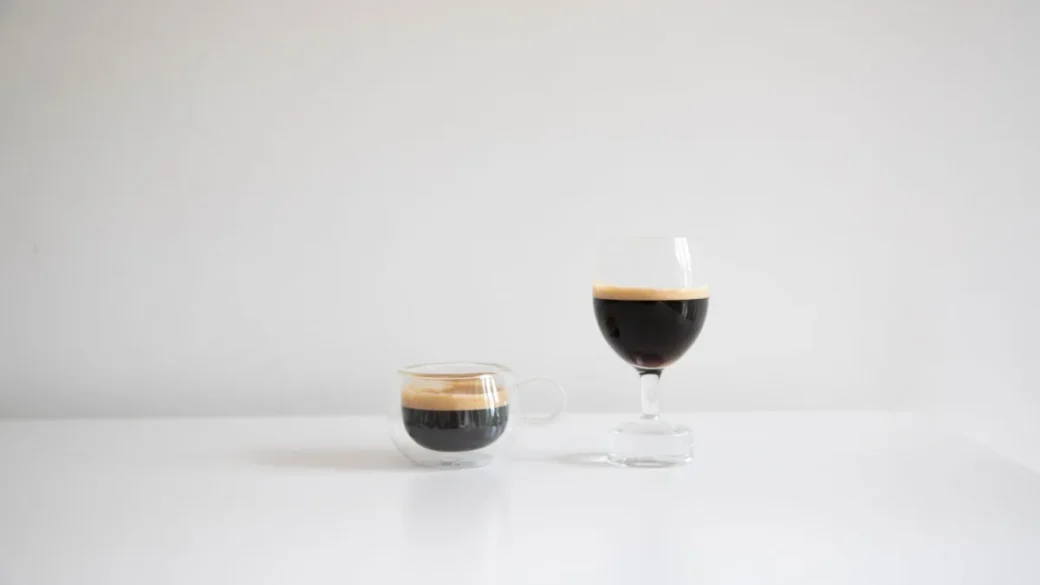
The dosing math, basket by basket
Dose is where most people go wrong, and the fix is a $20 scale that reads to 0.1g. Weigh every dose until it’s second nature.
| Basket | Typical dose | Yield (1:2) | Shot time | Headspace risk |
|---|---|---|---|---|
| Single | 7-9g | 14-18g | 20-25s | High if grind is off |
| Double | 16-18g | 32-36g | 25-30s | Low, forgiving |
| Aftermarket double (VST/IMS) | 18-21g | 36-42g | 27-32s | Low, precise |
The ratio to aim for is 1:2. Eighteen grams in, thirty-six grams out, in about 27 seconds. Get that repeatable before you start chasing subtle flavor tweaks.
Headspace: the silent killer
This is the mistake from the bench story. Dose a single amount into a double basket and you leave 8 to 10mm of empty space above the puck.
When you lock the portafilter in, the group head’s shower screen should sit close to the tamped puck. Too much headspace and the puck moves, the water pools, and you get channeling and a bitter, uneven pull. That over-extracted edge is exactly the flavor covered in taming an over-extracted, bitter shot.
Do the coin test. Tamp your puck, place a coin on top, lock in the portafilter, then remove it. If the coin has an imprint from the shower screen, your dose is right for that basket. No imprint means too much headspace, use more coffee or a shallower basket.
When a single basket actually makes sense
I’m not telling you to throw the single away. It has real uses, they’re just narrow.
Reach for a single when you genuinely want one small, lower-caffeine cup and don’t want to waste beans. It’s also useful for tasting a new coffee at a smaller volume, or when someone in the house drinks a solo ristretto.
- You want a single small cup, not two shots’ worth
- You’re conserving expensive beans while tasting
- Your grinder is genuinely dialed and consistent
- You’re comfortable weighing to 0.1g every time
If those don’t describe you, the single will fight you. There’s no shame in leaving it in the drawer for months at a stretch.
Never run a shot with an empty or badly under-dosed basket to “test” pressure. Water blasts through with almost no resistance and can spit scalding coffee and steam back up around the portafilter. Always dose to the basket before locking in.
Matching grind to the basket you chose
Switching baskets means re-dialing your grind. A lot of frustration comes from people swapping baskets and expecting the same grind setting to work.
A single needs a slightly coarser grind than you’d expect because the shallow puck offers less resistance. A double, with its deeper bed, wants your standard fine espresso grind. If you’re unsure where to start, the fundamentals in dialing espresso grind size apply to both, but the target numbers shift with basket depth.
Espresso as a method relies on forcing near-boiling water through compacted grounds at around 9 bars of pressure, as the general definition of espresso lays out. That pressure needs a properly filled basket to push against, or it finds the gaps instead.
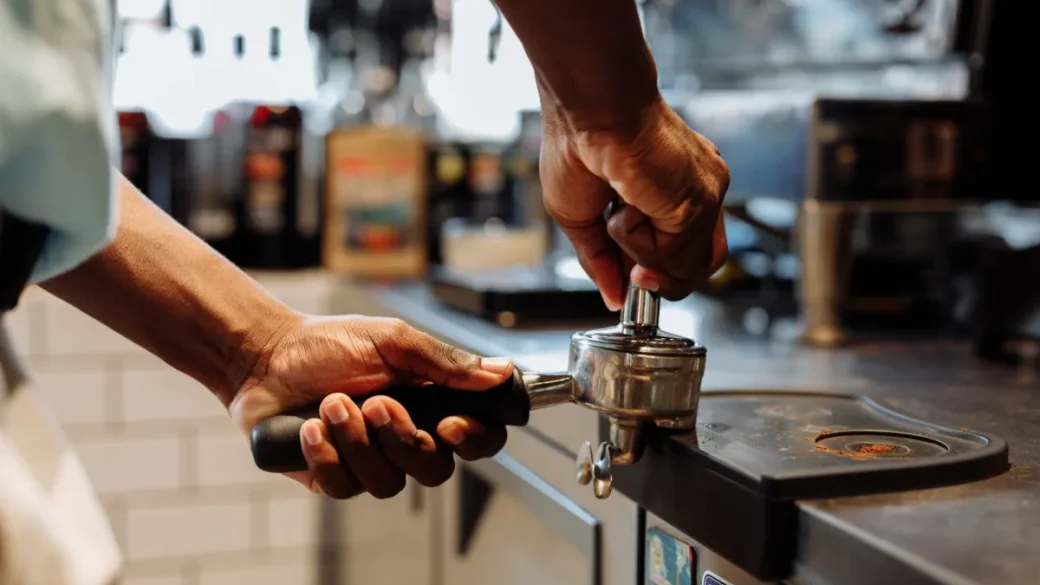
Whichever basket you land on, keep the workflow identical every time. Same dose, same tamp pressure, same yield target. Consistency in the process is what lets you actually read what the coffee is telling you.
What I’d tell you to do this weekend
Pull the single out and set it aside. Put the double basket in, weigh 18 grams, tamp level, and aim for 36 grams in the cup in 27 seconds.
Do that three mornings in a row and you’ll feel the difference in how much steadier the shots run. Once the double is second nature and your grinder is behaving, then experiment with the single if you’re curious.
Most of the “my machine is broken” calls I get are really “my basket and my dose don’t match” calls. Fix that pairing first and you’ll solve problems you didn’t know you had. For the full sequence from grind to cup, the walkthrough on pulling a proper espresso shot ties all of this together.
Weigh your dose. Match it to the basket. Everything downstream gets easier.
Frequently asked questions
Yes, noticeably. The deeper coffee bed in a double averages out grinder inconsistencies and holds temperature better, so small errors don't ruin the shot. A single's shallow puck channels the moment the grind is slightly off, which is why most home baristas struggle with it.
A single typically holds 7 to 9 grams, while a standard double holds 16 to 18 grams. Aftermarket precision baskets like VST or IMS can take 18 to 21 grams. Always weigh the dose rather than eyeballing it, since even a gram off changes the shot.
You can, but it usually pulls poorly. A single dose in a double basket leaves 8 to 10mm of headspace above the puck, which lets the coffee bed move and water pool, causing channeling and bitter, uneven extraction. Use the basket sized for your dose.
A 9g single has little thermal mass, so it loses heat quickly as cooler water hits it, pushing the shot toward under-extraction and sourness. The 18g double holds heat better and stays in the extraction sweet spot longer. Preheating the portafilter helps singles, but a double is the simpler fix.
Yes. A shallow single puck offers less resistance and generally wants a slightly coarser grind, while a deeper double bed takes your standard fine espresso setting. Re-dial the grinder whenever you swap baskets rather than assuming one setting works for both.
Tamp your puck, set a coin on top, lock in the portafilter, then remove it. If the shower screen leaves an imprint on the coin, your dose fills the basket correctly. No imprint means too much headspace, so add coffee or use a shallower basket.