
Key takeaways
- A clicking sound with no grind almost always means a jammed burr, not a dead motor - unplug and clear the chamber before anything else.
- Set your grind to the coarsest setting before disassembly; it releases pressure on the burrs and makes the jam pop free.
- Small stones and stray staples in beans are the number-one cause of a hard stall - inspect the burr set every time.
- Run 15-20g of rice or grinder-cleaning tablets monthly to stop oily fines from cementing the burr chamber.
- If the motor hums but won't turn even with a clear chamber, suspect a stripped gear or seized bearing - a $40-90 repair, not a new machine.
A Breville Barista Express lands on my bench maybe twice a month, and the complaint is almost always the same: “It just clicks now.” The owner assumes the motor burned out and they’re already pricing a replacement.
Nine times out of ten the motor is perfectly healthy. Something small and hard is wedged between the burrs, or the grind got cranked so fine the burrs locked solid.
A stalled or clicking built-in grinder is a symptom, not a death sentence. Read what it’s telling you and you can usually fix it in twenty minutes with a coin and a toothbrush.
What the clicking and stalling actually mean
The click you hear on a Breville, Gaggia, or De’Longhi grinder is the drive gear skipping. The motor is turning, but the upper burr won’t rotate, so a spring-loaded clutch slips and clacks to protect the gearbox.
That’s a mechanical block, not an electrical failure. It means the burr set can’t move because something is in its way.
Three sounds, three different problems
- Rapid clicking, no grinding: a bean fragment or foreign object is jammed in the burrs.
- Motor hums, drum won’t spin: grind set too fine, or fines have packed solid around the burr.
- Dead silence, no hum at all: now you may have a thermal cutout tripped, a hopper safety switch not seated, or a genuine electrical fault.
Those first two are the ones I see constantly, and both are DIY territory. If your machine has stopped pulling shots entirely alongside this, it’s worth ruling out the wider issues in this overview of espresso machine problems and fixes before you commit to a teardown.
Unplug the machine before you touch the grinder. These motors draw real current and the burrs are sharp enough to open a fingertip. I’ve stitched myself once reaching in on a “dead” grinder that wasn’t dead – it just needed the hopper reseated.
Clear a bean jam in the burr chamber
This is the fastest fix and the one to try first. A single flat-sided bean or a bit of stone can stall the whole set.
Step one: back the grind all the way off
Turn your grind adjustment to the coarsest number – on a Barista Express that’s setting 30, on many De’Longhi automatics it’s the widest hopper mark. Coarsening the grind lifts the upper burr away from the lower one and releases clamping pressure on whatever is stuck.
Nine times out of ten, backing off to coarse and running a short pulse pops the jam on its own.
Step two: pull the hopper and top burr
Empty the beans, twist the hopper off, and lift out the removable upper burr carrier. Most Sage and Breville units use a small locking handle you rotate counterclockwise.
Look at the burr teeth under a light. You’re hunting for a wedged bean, a coffee-bag staple, or a tiny stone – green coffee ships with more grit than people realize, and one small stone will lock a burr instantly.
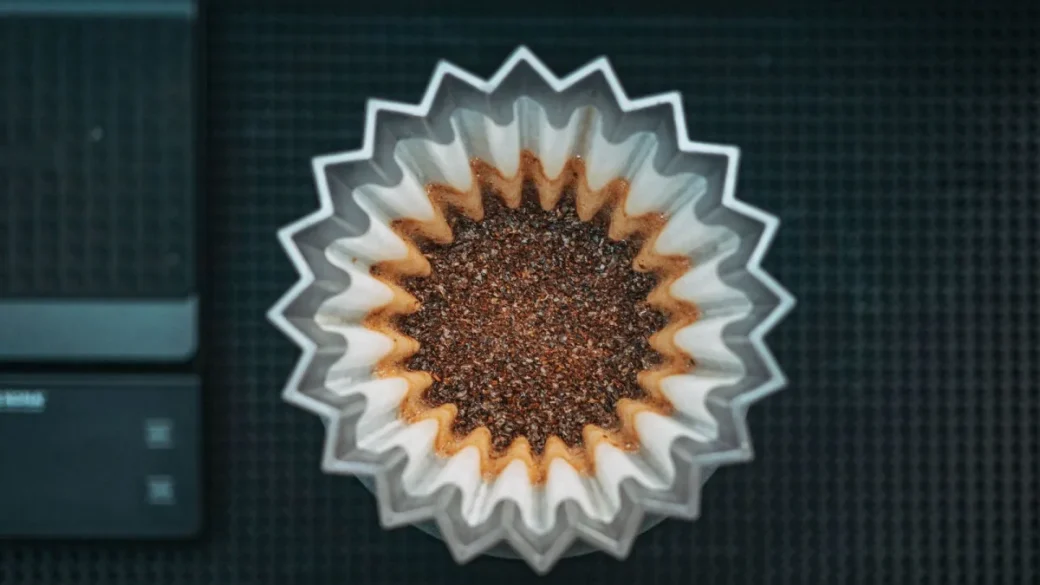
Keep a stiff toothbrush and a chopstick on the bench. The chopstick reaches down into the lower burr throat to nudge out debris without you putting a finger near the teeth. A puff from a $12 camera air blower clears packed fines in seconds.
When it’s packed fines, not a foreign object
Oily dark-roast beans shed fine dust that, over a few months, cements into a hard cake around the burr chamber. The grinder doesn’t jam suddenly here – it gets sluggish, then one morning the motor just hums.
Pull the burrs and you’ll see a grey-brown crust filling the gaps between the teeth. That crust is stopping rotation.
Brush both burrs dry – never wet, water plus coffee oil makes a paste that dries harder than before. A soft brass or nylon brush and that air blower will clear 90% of it. For the stubborn ring at the base, a wooden coffee stick works the seam without scratching the burr coating.
If your grinder hums but won’t turn, assume it’s clogged before you assume it’s broken. Chambers clog far more often than motors die.
Grinder-cleaning tablets like Grindz or Full Circle run about $15 for a jar and clear oils that brushing misses. Run 15-20g through on a medium setting once a month, then grind a small dose of beans afterward to flush the residue. Plain white rice works in a pinch on steel burrs, but skip it on ceramic – it can chip the edge.
The grind-too-fine stall
People chasing a slow, syrupy shot keep dialing finer until the burrs are almost touching. On a busy morning the chamber fills with beans, the motor tries to start under full load, and it stalls before it can build momentum.
You’ll hear a heavy hum and maybe that protective click. The fix costs nothing.
Coarsen the grind by five or six steps, clear any beans sitting in the throat, and let the motor start unloaded. Then dial back finer a step at a time. If you needed to grind that fine to get any resistance at all, your real problem is likely elsewhere in the puck or pump – a chronically fast, thin shot often traces back to the causes covered in why an espresso machine builds no pressure.
Reassembly and the alignment step people skip
Getting the burr back in wrong is the second call I get – “I cleared it, now it grinds like gravel.” Almost always the upper burr didn’t seat flat.
Seat it, then set your zero
Drop the upper burr carrier straight down and rotate until it clicks into its locking position. It should sit flush with no wobble; if it rocks, a chunk of the old cake is still in the seat.
Then re-zero your grind. With the hopper off and the burr in, turn the adjustment finer until the burrs just barely kiss and you hear a faint chirp, then back off two steps. That’s your new fine limit.
| Symptom | Most likely cause | Typical fix cost |
|---|---|---|
| Rapid clicking, no grind | Bean or stone jammed in burrs | $0 – clear it yourself |
| Motor hums, drum won’t turn | Packed fines or grind set too fine | $0-15 (cleaning tablets) |
| Weak, uneven grind after cleaning | Upper burr not seated flat | $0 – reseat |
| No hum, no light | Hopper safety switch or thermal cutout | $0-25 (switch) |
| Hums with clear chamber, still won’t spin | Stripped drive gear or seized bearing | $40-90 repair |
When it really is the motor or gearbox
If the chamber is spotless, the grind is coarse, the hopper switch is seated, and the thing still hums without turning – now you’re into hardware. On Breville units the usual culprit is a stripped nylon drive gear, a $12-25 part, or a seized bearing.
That’s an hour on the bench with a set of Torx bits, or a $40-90 job at a shop. Compare that against a $700 replacement machine and the repair almost always wins.
A jammed grinder that you catch early rarely reaches this stage. Clear the burrs the first time it clicks, run cleaning tablets monthly, and inspect your beans for grit, and most built-in grinders outlast the pump. While you’ve got the machine apart, it’s worth glancing at whether it’s leaking water anywhere and whether your shots still pour with proper crema – grinder health and extraction quality are tied together tighter than most people expect. If you want the background on how grind size drives the whole process, the espresso entry on Wikipedia lays out the fundamentals well, and grinder maintenance specs from makers like Breville are worth a bookmark for your exact model.
Frequently asked questions
That click is the drive clutch slipping because the burrs can't rotate. Something is physically blocking them - usually a wedged bean fragment or a small stone from the coffee. Unplug the machine, back the grind off to its coarsest setting, remove the hopper and upper burr, and clear the chamber.
Yes, and it's common. When the burrs are set nearly touching and the chamber fills with beans, the motor stalls under load before it can build momentum. Coarsen the grind by five or six steps, clear the throat, and let it start unloaded, then dial finer one step at a time.
Plain white rice works fine on steel burrs and helps knock loose oily fines. Do not use it on ceramic burrs, since the hard grains can chip the cutting edge. Dedicated cleaning tablets like Grindz are safer across the board and run about $15 a jar.
No. Water combined with coffee oil forms a paste that dries harder than the original clog and can rust steel burrs. Always clean the chamber dry with a stiff brush, a wooden stick, and an air blower. Only wash removable plastic hopper parts with water, and dry them fully before refitting.
If the burrs are clear, the grind is coarse, and the hopper safety switch is seated, you're likely looking at a stripped drive gear or a seized bearing. On most built-in grinders that's a $12-25 part and about an hour of work, or a $40-90 shop repair - far cheaper than replacing the machine.
Brush the burrs and chamber every two to four weeks depending on how oily your beans are, and run cleaning tablets monthly. Dark, oily roasts clog fastest. Regular cleaning stops fines from cementing into the hard cake that causes most sudden stalls.