Key takeaways
- Persistent bitterness after you've ruled out grind and beans usually points to over-temperature brew water (200 F and up) or a pressure problem forcing a slow, over-extracted shot.
- Test brew temperature at the group with a cheap thermometer or Scace-style device before replacing any parts - most 'bitter' machines run 3 to 8 degrees F too hot.
- A stuck or failing pressurestat, a scaled thermostat, or a worn brew valve can all skew heat and pressure enough to burn the shot.
- Descale every 2 to 3 months in hard water; scale is the single most common reason a machine drifts hot and starts pulling bitter.
- A faulty OPV or a leaking group can drop or spike pressure, stretching contact time and dragging out the harsh compounds.
A customer dropped off a two-year-old Gaggia Classic Pro last spring, convinced the machine was ruined. Every shot tasted like burnt grapefruit, he said, and he’d already burned through three bags of fresh beans and two grinders trying to fix it.
The beans were fine. The grind was fine. His machine was running its brew water at 207 F – a good 7 degrees hotter than it had any business being.
That’s the thing about bitterness. When it won’t go away no matter what you do at the grinder, the machine is usually the one shouting at you.
Is bitter espresso always a grind or bean problem?
No – and that assumption is exactly why people waste money. Grind and dose are the first suspects, absolutely. But once you’ve gone coarser, dropped the dose, and switched to a lighter roast and the cup is still harsh, you’ve moved past the coffee.
Bitterness is a taste signature of over-extraction. You pull too much out of the puck, and the harsh, high-molecular-weight compounds that should stay behind end up in your cup. Two machine faults cause that: water that’s too hot, or contact time that’s too long because pressure is wrong.
The Specialty Coffee Association puts the ideal brew temperature range around 195 to 205 F. A few degrees past that and you’re cooking the grounds instead of extracting them.
Sourness is the mirror image – under-extraction, usually from water too cool or a shot pulled too fast. If you’re chasing bitterness, you want to rule out the hot end of that same scale.
So before I touch a screwdriver, I confirm the coffee side is genuinely clean. If it is, I treat the bitterness as a fault code the machine is handing me.
How does brew temperature cause bitter espresso?
Heat is the number one bitter espresso cause I see on the bench, and it hides well because most home machines have no temperature display at all.
A single-boiler machine like the Classic or a De’Longhi Dedica heats water and holds it with a thermostat. When that thermostat drifts, or scale insulates the boiler wall, the machine overshoots. I’ve measured basic thermostats running 8 to 10 degrees F over their rated setpoint on scaled machines.
Water at 200 F pulls a balanced shot. Water at 208 F pulls a shot that tastes like an ashtray, even with perfect beans.
Testing it without guessing
You don’t need lab gear. A cheap probe thermometer taped to the group outlet gets you within a couple degrees. For real numbers I use a Scace-style portafilter device – around $200 – but a $15 thermometer will tell you if you’re way off.
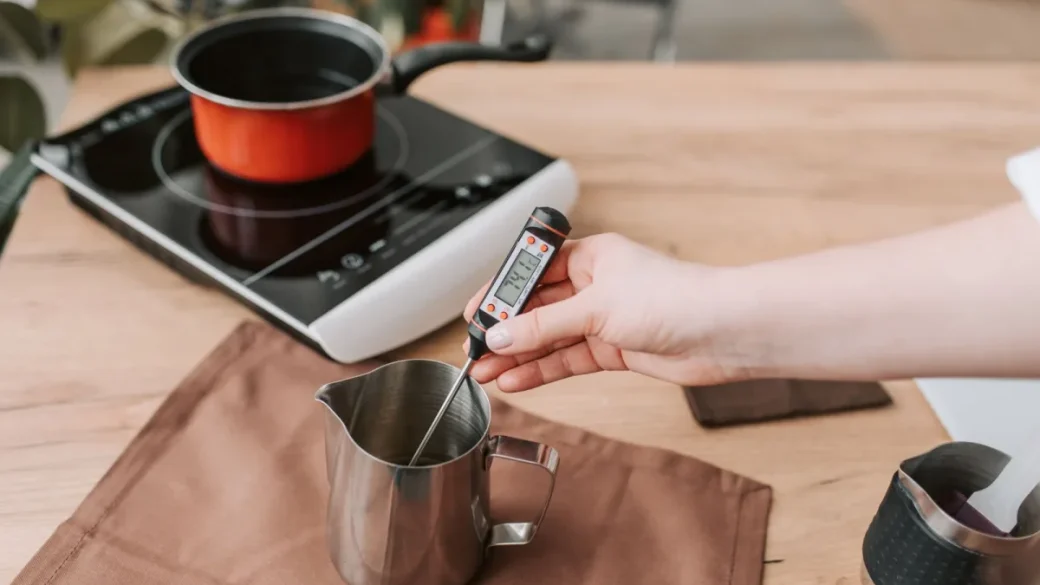
Run a blank shot into the thermometer with no coffee, watch the peak, and compare against 200 F. If you’re reading 205 and up consistently, there’s your bitterness.
On single-boiler machines, temperature-surf: flush a few ounces through the group right before you pull, so you’re brewing on the downslope of the heating cycle rather than the peak. It won’t fix a broken thermostat, but it can shave 3 to 5 degrees off an overshooting machine and make a bitter shot drinkable while you source parts.
The usual temperature culprits
- Scale build-up on the boiler, insulating the wall and causing overshoot
- A failing brew thermostat or thermal fuse reading incorrectly
- A PID that’s lost its calibration or is set too high (on machines that have one)
- Leaving the machine on for hours so the boiler heat-soaks well past setpoint
That last one catches people out. A machine left on all morning runs hotter than one you fired up 20 minutes ago, and the shots at 11am taste worse than the shots at 8am for no reason the owner can see.
Can low or high pressure make espresso bitter?
Yes, and this is the cause people miss most. Pressure and extraction time are linked – mess with one and you drag out the other.
Espresso is meant to run at roughly 9 bar at the puck. If your pump or pressurestat is pushing well over that, or if a restriction is choking flow, contact time stretches out and the water keeps pulling long after it should have stopped. Long contact time means over-extraction means bitter.
Right temperature, wrong time, still bitter. Extraction is heat multiplied by contact – get either one too high and the cup pays for it.
On the flip side, a shot that chugs out slowly because of a partial blockage or a weak, stuttering pump also sits on the puck too long. Same result in the cup. If your machine feels like it’s straining, or the flow is uneven, pressure is worth investigating – start with our breakdown of what causes an espresso machine to lose pressure.
Parts that skew pressure
A worn or misadjusted over-pressure valve (OPV) is the classic. From the factory many machines ship at 11 to 12 bar, and dialing the OPV back to 9 bar is one of the most common mods I do – it takes 15 minutes and often cures a bitter machine outright.
Beyond that, a scaled or sticking pressurestat on a boiler machine, a tired vibration pump, or a gummed-up brew valve can all hold pressure where it shouldn’t be. If you’re also seeing water where it shouldn’t be, a leak at the group or boiler seals often ties into the same pressure fault.
Anything involving the OPV, boiler, or pressurestat means live mains and hot water under pressure. Unplug the machine, let it cool completely, and discharge any stored pressure before you open the case. If you’re not confident around mains wiring, this is a job for a technician – a $120 repair beats an emergency room visit.
How do I tell a temperature fault from a pressure fault?
The taste alone won’t split them – both read as bitter. You separate them by testing one variable at a time, the same way I work through a bench diagnosis.
| Symptom | Points toward temperature | Points toward pressure |
|---|---|---|
| Shot time | Normal 25 to 30 sec, still bitter | Runs long (40 sec+) or stutters |
| Blank-shot temp reading | 205 F or higher at the group | Reads a healthy 198 to 202 F |
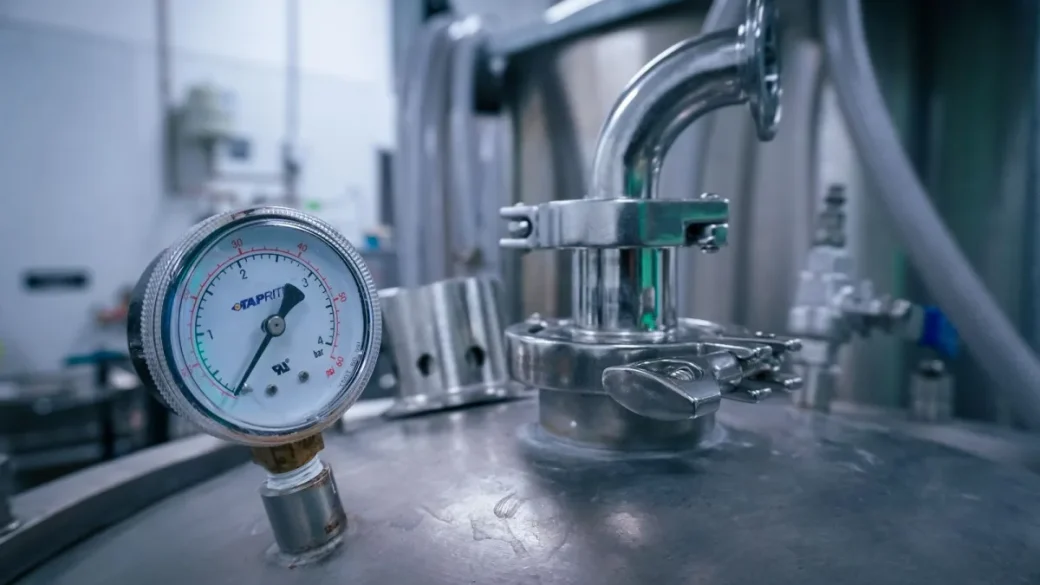
| Pressure gauge | Sits around 9 bar | Spikes past 11 or sags under load |
| When it started | Gradual, worse after long warm-ups | Sudden, or after a part failed |
Work the table top to bottom. If temperature checks out clean and the shot still tastes scorched, move to pressure. Nine times out of ten one column lights up clearly.
For a wider view of how these faults connect to other symptoms, our overview of common espresso machine problems and fixes maps out where temperature and pressure sit in the bigger picture.
Does scale really change the taste that much?
More than anything else on this list. Scale is calcium and magnesium from your water baking onto the boiler and lines, and it does two nasty things at once.
It insulates the boiler wall so the thermostat overshoots, pushing you into that over-temperature zone. And it narrows the flow path, which nudges pressure and contact time. One deposit, two bitter-making faults.
In hard-water areas I tell people to descale every 2 to 3 months. Soft water, maybe twice a year. A bottle of descaler runs $10 to $15 and 30 minutes of your time – cheaper and faster than any part I’d fit.
Bitterness and thin, pale crema often show up together on a scaled machine, because the same restriction that skews temperature also disrupts flow. If your crema has vanished alongside the harsh taste, our notes on why espresso loses its crema cover the overlap.
Where to point the screwdriver first
Start with the cheapest, most likely cause and work up. Descale first, always – it’s the one fix that costs almost nothing and clears the most faults. Give it a full cycle, then pull a shot and taste again.
Still bitter? Tape a thermometer to the group and take a blank-shot reading. If you’re running hot, you’re looking at a thermostat, a PID setting, or more scale you didn’t reach. If temperature is clean, check pressure and set the OPV to 9 bar.
I’ve had machines come in for a $200 diagnosis that walked out fixed by a $12 descale and a five-minute OPV tweak. The mechanics of these machines aren’t magic – they’re heat and pressure in a box, and bitterness is just one of them telling you it’s off. Read the signal, test the variable, and you’ll spend money on the right part instead of another bag of beans that was never the problem.
Frequently asked questions
When the coffee side genuinely checks out, the machine is the next suspect. Persistent bitterness almost always means brew water running too hot (above about 205 F) or contact time stretched too long by a pressure fault. Test your brew temperature with a probe thermometer before you spend more on beans or grinders.
Aim for roughly 195 to 205 F at the group, with about 200 F being a safe target for most coffees. Above 205 F you start scorching the grounds and pulling out harsh, bitter compounds. A single-boiler machine left on for hours can drift several degrees past setpoint, so shots later in the day often taste worse.
Often, yes. Scale insulates the boiler so it overshoots temperature and also restricts flow, which lengthens contact time. Both push you toward over-extraction and bitterness. A $10 to $15 descale every 2 to 3 months in hard water is the cheapest fix and clears the most common cause I see.
Test one at a time. Take a blank-shot temperature reading at the group; if it's 205 F or higher, that's your bitterness. If temperature is clean but the shot runs long or the pump strains, look at pressure and set the over-pressure valve to 9 bar. Both faults taste bitter, so you have to measure to tell them apart.
It's a common and straightforward mod, but it involves opening a machine that runs on mains power and holds hot water under pressure. Always unplug, let it cool fully, and release stored pressure first. If you're not comfortable working near mains wiring, have a technician do it - it's usually a quick, inexpensive job.