Key takeaways
- Rule out texturing first: purge the wand into an empty jug - if the steam itself is weak or spitting, the fault is in the machine, not your technique.
- A blocked steam tip is the single most common cause. Soak in citric or Cafiza, then clear each hole with a 0.4mm needle or a fine pin.
- Scale on a thermoblock or in a small boiler kills steam output within 6–12 months on hard water - descale every 2–3 months if you skip a softener.
- Weak steam that arrives late or fades mid-jug usually points to boiler temperature or a tired steam valve, not the tip.
There’s a sound a healthy steam wand makes. A low, tearing roar when you crack the valve fully, and a jet strong enough to spin a full jug of milk into a whirlpool in about five seconds. When that sound goes soft – a polite hiss, a sputter, a jet that can’t push the milk around – most people blame their pitcher angle.
Nine times out of ten on my bench, it isn’t the angle.
Weak or absent steam is a machine symptom, and it usually leaves fingerprints. Once you learn to read them, you can separate a cheap fix from a real repair in about two minutes, before you’ve wasted a single carton of milk.
First, prove it’s the machine and not you
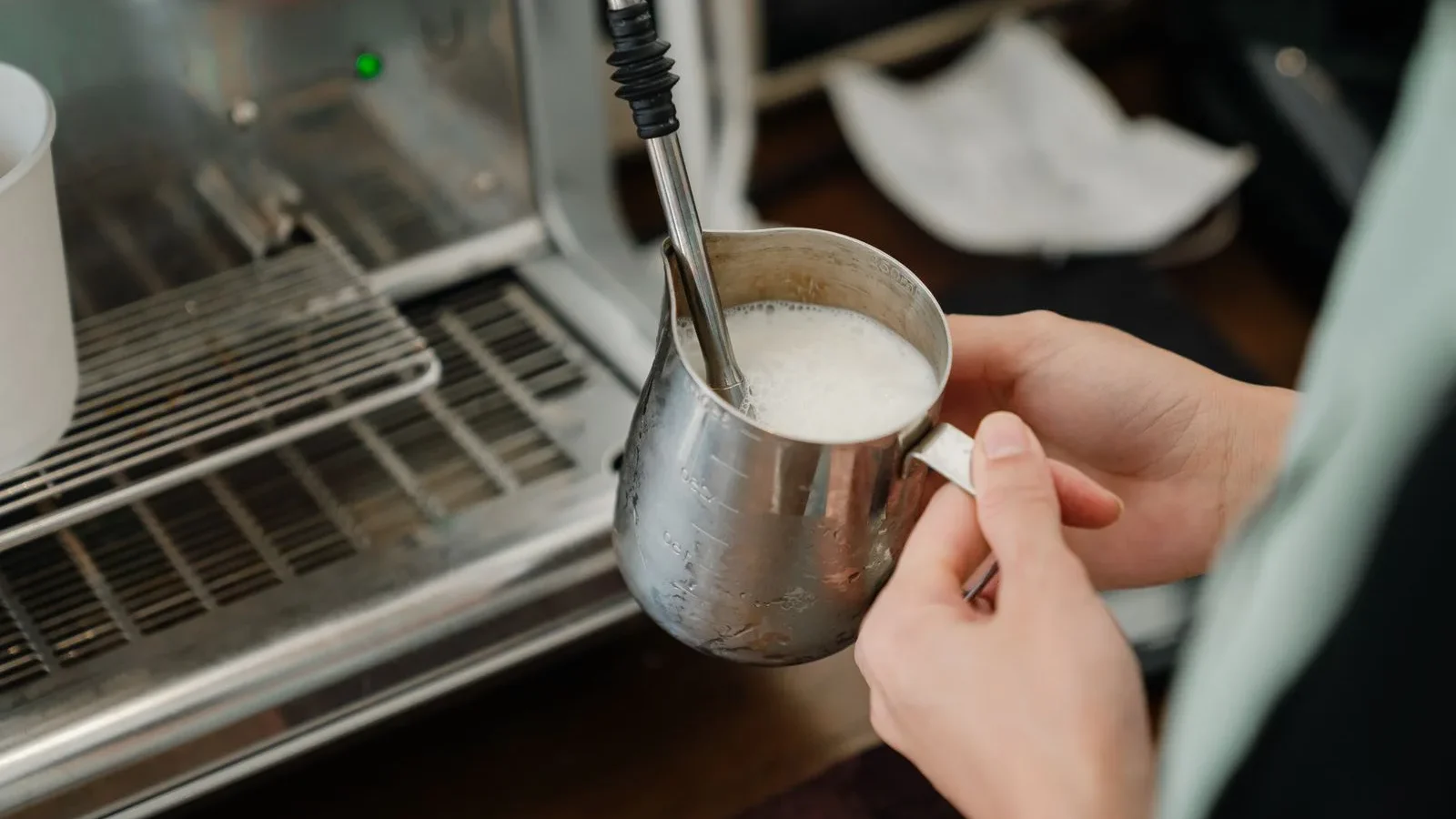
Before touching a screwdriver, do one thing: purge the wand into an empty, dry jug with no milk in it. Open the valve all the way and watch.
Good steam is dry and violent. It should blast out in a tight, hard jet that you can feel snapping the air a few inches away. If that jet is weak, wet, spitting water, or arrives late and then fades, the fault lives in the machine – no amount of pitcher technique will fix it.
If the jet is strong and dry but your milk still won’t texture, that’s a different article. Weak steam and bad foam are two separate problems, and confusing them wastes hours.
A machine in “steam mode” needs a higher boiler temperature than brewing – roughly 250–300°F versus around 200°F for extraction. If your steam is weak the instant you switch modes, the boiler may simply not have finished heating. Wait for the ready light, then purge again.

The blocked tip: the fault I see constantly
If I had to bet on one cause sight-unseen, it’s a clogged steam tip. Milk proteins bake onto the inside of those little holes every time you steam and forget to purge afterward. Over weeks, the holes shrink; eventually one or two seal completely.
A four-hole tip running on two holes steams at maybe half strength, and the jet often skews off to one side. That sideways jet is a dead giveaway.
How to clear it
Unscrew the tip – most Breville, Gaggia, and De’Longhi tips thread off by hand or with a small wrench. Drop it in a cup of hot water with a teaspoon of citric acid or a Cafiza tablet for 20 minutes.
Then hold it to the light. You’ll see which holes are blocked. Clear each one with a 0.4mm cleaning needle, a spare bristle from a wire brush, or a straightened staple – anything that fits without forcing the hole wider.
- Soak the tip in citric acid or Cafiza for 15–20 minutes
- Poke each hole clear with a 0.4mm pin – do not drill or widen
- Purge the wand for 2 seconds every single time before and after steaming
- Wipe the wand with a damp cloth while it’s still warm
If you can’t find a proper needle, a single strand pulled from a stainless dish scrubber is almost exactly 0.4mm. Keep one taped inside your machine’s drip tray cover for emergencies.
Scale: the slow killer on hard water
If your steam has been fading gradually over months rather than dying suddenly, suspect limescale. On a thermoblock machine – the kind that heats water on demand, common in sub-$400 units – scale narrows the internal channel that feeds the wand. Less water reaches the flash-heating zone, so you get less steam.
On hard water with no softener, I’ve seen thermoblocks choke down noticeably within 6 to 12 months. Small single-boiler machines last a little longer but follow the same curve.
Descaling is a $10 fix. Run a citric-acid or commercial descaler solution through both the brew path and the steam path – most people forget the steam side entirely, which is exactly where the scale that’s killing your froth lives. The Specialty Coffee Association publishes water standards that explain why hardness above about 4 grains per gallon accelerates this so badly.
Descale every batch of milk you’ll never taste: two or three times a year on soft water, every 6–8 weeks on hard.
If descaling brings the steam back even slightly, you’ve confirmed the diagnosis – and you should keep doing it on schedule. If it does nothing, move on. Related pressure symptoms often travel together; if your machine also brews thin, our breakdown of why an espresso machine has no pressure covers the overlap.
Weak steam that starts fine, then dies
This one has a specific signature: the first two or three seconds are strong, then the jet collapses mid-jug. That pattern points away from the tip and toward the boiler or the valve.
Undersized or under-temp boiler
Small single-boiler machines store only a few ounces of steam-ready water. Texture a large 12-ounce latte and you can physically run the boiler out of pressure before the milk is done. The fix isn’t a repair – it’s steaming smaller volumes or waiting a beat for the boiler to recover between attempts.
A tired steam valve or worn seal
Steam valves live a hard life – high heat, constant thermal cycling. The internal seal or O-ring hardens, cracks, and starts leaking pressure back into the machine instead of out the wand. You’ll sometimes hear a faint hiss from inside the body even with the wand closed.
Valve rebuild kits run $8–$20 for most Gaggia Classic and De’Longhi models. It’s a 30-minute job with a set of hex keys, and it’s genuinely satisfying. If you also spot water pooling under the machine, cross-check our notes on where espresso machines leak water – a failing steam seal is a common culprit for both symptoms at once.
A steam boiler holds pressurized, near-boiling water. Before you open any valve or panel, switch off, unplug, and let the machine cool for at least 30 minutes. Never loosen a boiler fitting while the machine is hot or powered – a scald from live steam is a hospital visit, not a bad morning.
Matching the symptom to the cause
Here’s the cheat sheet I keep in my head when a machine lands on the bench with a froth complaint.
| What you observe | Most likely cause | Rough cost / effort |
|---|---|---|
| Jet skews sideways, half-strength | Partially blocked tip | $0, 20 min soak |
| Gradual fade over months | Scale in steam path | $10 descaler |
| Strong then collapses mid-jug | Small boiler / low temp | Free, technique |
| Faint hiss inside, weak everywhere | Worn steam valve seal | $8–$20 rebuild kit |
| No steam at all, no heat sounds | Failed thermoblock / thermal fuse | $40+ or replace |
That last row is the one nobody wants. A dead thermoblock or a blown thermal fuse means no steam whatsoever, often paired with no brew heat. On budget machines the repair cost frequently exceeds the machine’s value.
If your machine shows broader signs of trouble beyond the wand, start with the full espresso machine problems and fixes overview to place this symptom in context. A wand that won’t steam is sometimes the first visible sign of a heating system on its way out.
What good steam should actually deliver
Once the machine is healthy again, calibrate your expectations so you know when it’s truly fixed. A working home wand should spin a 6-ounce jug of cold milk into glossy microfoam in 10–15 seconds, with the milk topping out around 140–150°F – hot enough to sweeten, not so hot it scalds.
If you’ve cleared the tip, descaled the path, and rebuilt the valve, and the steam is roaring again but your foam is still flat or bubbly, then – and only then – is it worth looking at your technique or your milk. Cold whole milk froths best; the fat and protein give espresso drinks their body. And thin, greasy foam sometimes shares a root cause with a shot pulling wrong, which is why the reasons behind espresso with no crema are worth a read once the steam side checks out.
Fix the machine first, blame the barista second. Do it in that order and you’ll spend a lot less on wasted milk – and a lot less time frustrated at a jug that was never going to spin.
Frequently asked questions
Purge the wand into an empty, dry jug with no milk. If the steam jet is weak, wet, or spitting, it's a machine fault. If the jet is strong and dry but the milk still won't texture, the problem is your technique, your milk, or your pitcher angle.
Wet, spitting steam usually means the boiler hasn't reached steam temperature yet - around 250–300°F. Wait for the ready light and purge for two seconds first. If it still spits after that, the boiler thermostat or steam valve may be failing to hold temperature.
Yes, and it's one of the most common causes of gradual steam loss. Scale narrows the internal channels feeding the wand, especially on thermoblock machines. On hard water without a softener, steam output can drop noticeably within 6 to 12 months. Descaling the steam path - not just the brew path - often restores it.
Wipe and purge the wand after every single use, and deep-soak the tip in citric acid or Cafiza every one to two weeks. Milk proteins bake into the tiny holes fast, and a tip running on half its holes steams at roughly half strength with a jet that skews to one side.
That signature usually means a small or under-temperature boiler running out of steam-ready water, which is common on single-boiler machines when texturing large volumes. Steam smaller amounts, or wait for the boiler to recover between attempts. If it happens even with small jugs, suspect a worn steam valve seal leaking pressure internally.
For most Gaggia Classic and De'Longhi models, yes. Rebuild kits cost roughly $8 to $20 and the job takes about 30 minutes with hex keys. Always unplug the machine and let it cool for at least 30 minutes first - a steam boiler holds pressurized, near-boiling water.