Key takeaways
- A single shot is roughly 7-9g of coffee in a single basket; a double is roughly 14-18g in a double basket.
- The words "single" and "double" describe the dose and basket, not automatically the drink volume in your cup.
- Most home machines ship with a double basket, so "a shot" on a Breville or Gaggia usually means a double by default.
- A triple basket exists too (around 21g) and needs a taller basket plus sometimes a deeper portafilter.
- Match your basket to your dose within about 2g, or you'll fight channeling and bad extraction all day.
Someone brings me a machine and says the espresso “got weak overnight.” Nine times out of ten nothing broke. They swapped the basket in the portafilter and started brewing a single dose in a basket built for a double.
That one swap changes everything about how the water moves through the coffee. And it’s why so many people are confused about what a single and a double shot even are.
So let’s settle it properly, by dose and by basket, because those two things are the whole definition.
What “single” and “double” actually describe
Here’s the part that trips people up. The terms don’t primarily describe what ends up in your cup. They describe how much dry ground coffee you load, and which filter basket holds it.
A single shot is a smaller dose in a smaller basket. A double shot is roughly twice the dose in a deeper basket built to hold it. That’s the definition, before you ever talk about ounces or milliliters in the cup.
The dose ranges I see in the real world:
| Shot | Typical dry dose | Basket | Common liquid yield |
|---|---|---|---|
| Single | 7-9 g | Single basket | ~30-40 ml |
| Double | 14-18 g | Double basket | ~50-70 ml |
| Triple | 20-22 g | Triple basket | ~75-90 ml |
Notice the double isn’t just “more coffee.” It’s a different physical basket with more depth so the puck can be the right thickness. Put 9g in a double basket and the puck is a sad little wafer sitting at the bottom, far below the shower screen.
The word “shot” on its own is ambiguous. When a cafe menu says “espresso,” in most of the world that pour is already a double by default. Ask three baristas what “a shot” means and you’ll get two answers.
It’s about the puck geometry, not just the grams
The reason baskets and doses have to match comes down to how a puck extracts. Espresso is water pushed at around 9 bars of pressure through a compressed bed of coffee. If you want the detail on that pressure figure, I broke it down in what 9 bars of pressure means in espresso.
For that pressure to build evenly, the puck needs to sit close to the shower screen with a thin, consistent air gap above it. Too much gap and water pools, channels form, and extraction goes patchy.
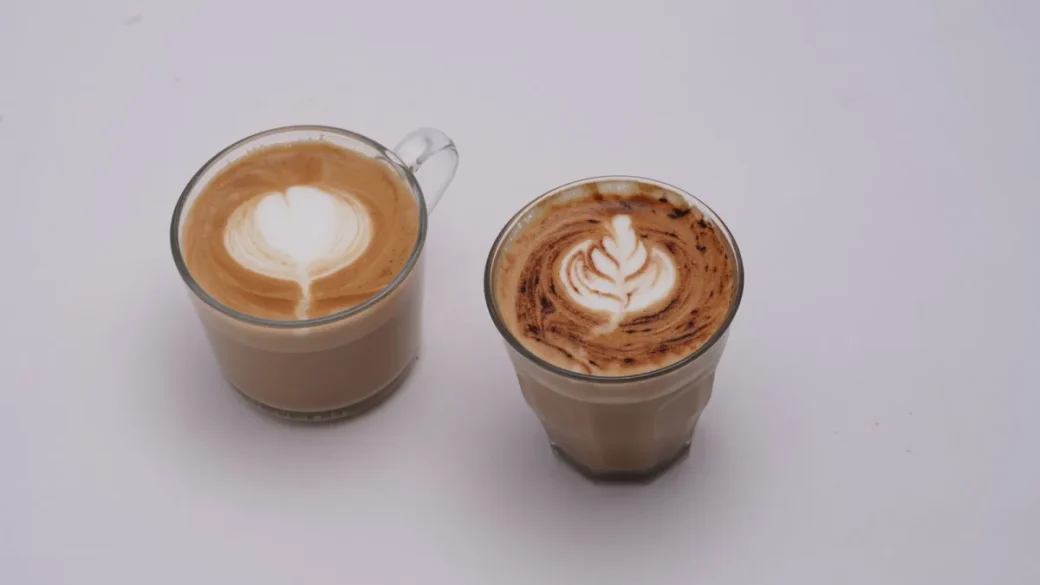
A single basket has a narrow, tapered bottom to keep a 7g dose deep enough to reach the screen. A double basket is straighter-walled and deeper for 14-18g. They are engineered for different volumes of grounds, full stop.
Match the dose to the basket within about 2 grams. Everything else in the shot is downstream of getting that right.
Why singles are genuinely harder to pull
I tell people this constantly: a good single is fussier than a good double. That skinny tapered single basket punishes any unevenness in your grind or tamp. The bed is shallow, so channeling shows up fast.
A double basket is more forgiving. The deeper puck gives the water more coffee to work through, which smooths out small mistakes. That’s a big reason most home baristas quietly abandon singles.
What comes in the box with your machine
This is where the confusion becomes a service call. Most home machines ship with the double basket already installed, and a single basket rattling around in the accessory bag.
On a Breville Bambino or Barista Express, the “1 cup” and “2 cup” baskets in the box are actually a single-wall and a pressurized double, and the machine’s default single-button pour targets the double. A Gaggia Classic Pro ships the same way, double as standard. So when a first-time owner presses the one-cup button, they are usually already pulling a double.
Flip your baskets over and count the holes, or just eyeball the depth. The shallower, narrower one is your single. If you only ever see one basket in the machine, it’s almost certainly the double, and that’s fine to leave in permanently.
If you want the wider picture of how these parts fit together, I keep a plain-English rundown in espresso machine parts explained for beginners, and the whole brewing sequence is walked through in espresso for beginners.
Pressurized vs non-pressurized: a second axis
Here’s a wrinkle that muddies the single-vs-double question for beginners. Many entry machines include pressurized baskets, sometimes called dual-wall. These have a single tiny exit hole hidden behind a second wall.
Pressurized baskets fake the resistance a real puck would create, so a coarse grocery-store grind still produces crema. A single-wall basket, by contrast, demands a proper grind and dose. Both come in single and double sizes, so you can have a pressurized double or a non-pressurized single.
Don’t try to drill out a pressurized basket to convert it. I’ve seen people do it and end up with a spraying, uneven mess and a thin, torn puck. A real single-wall basket costs about $8-15. Buy the right part instead of modifying the wrong one.
The crema you get from a pressurized basket is largely aerated foam from that pressure trick, not the emulsion of oils a true puck produces. If you’re curious why real crema forms and what it tells you, that’s covered in what crema is and why it forms on espresso.
Which one should you actually use at home?
For 90% of home setups, my honest answer is: pull doubles and stop overthinking it. The double basket is more forgiving, it’s what your machine defaults to, and you can always pull a double and drink half.
Reach for a single when you specifically want a smaller, lighter drink and you have a grinder dialed in enough to handle the tighter margins. Reach for a triple only if you own the taller basket and, on some machines, a compatible portafilter with the extra depth.
A quick sanity check before you brew:
- Confirm which basket is in the portafilter, single or double
- Weigh your dose so it matches that basket within about 2g
- Level and tamp flat, around 15-20 kg of pressure
- Watch the pour start between 5 and 12 seconds after the pump kicks in
- Aim your total shot time in the 25-32 second window
The word “espresso” itself refers to the pressurized brewing method, not a fixed volume. You can read the background on the history and definition of espresso, and the Specialty Coffee Association publishes the brewing standards a lot of cafe recipes trace back to.
The two-second test that ends the confusion
Next time you’re unsure what you’re holding, don’t guess from the button on the front. Pop the basket out of the portafilter and look at it.
Shallow and tapered inward means single, and you dose around 7-9g. Deeper and straighter means double, and you dose around 14-18g. Match the grams to that shape and your extraction problems mostly disappear before they start.
That’s the entire relationship. Single versus double was never really about the cup. It’s dose and basket, working as a pair, and once you see them that way the rest of espresso gets a lot less mysterious.
Frequently asked questions
Roughly, yes, because caffeine scales with the amount of coffee you use. A single at 8g and a double at 16g means the double has close to double the dose and so close to double the caffeine. Extraction and roast affect the exact figure, but the ratio holds well enough for practical purposes.
You can, but it usually brews badly. A 9g dose in a double basket makes a thin puck that sits far below the shower screen, so water channels and extraction turns sour and uneven. Use the single basket for single doses so the puck reaches the right depth.
Most home machines ship with the double basket installed and treat it as the standard, sometimes without including a single at all. If you only see one basket, it's almost always the double. You can buy a matching single-wall single basket for around $8-15 if you want the option.
They're the same thing. "Doppio" is simply the Italian word for double, so a doppio is a double espresso pulled from a double basket. Menus use the term to signal a full double rather than a single, since a plain "espresso" is often already a double.
Not by itself. A bigger basket holds more coffee, which makes more liquid espresso, but the strength depends on your brew ratio, the grams of coffee versus grams of liquid out. A well-pulled single and a well-pulled double can taste nearly identical in intensity if the ratios match.
Turn it over and look at the underside. A non-pressurized single-wall basket has many fine holes across the whole bottom; a pressurized dual-wall basket has a smooth outer shell hiding a single pinhole. Pressurized baskets forgive a bad grind but produce foamier, less authentic crema.