
Key takeaways
- A single espresso shot is the base for nearly every milk drink, so ratio is the only thing that separates a latte from a cortado.
- A cortado runs about 1:1 espresso to milk, a flat white 1:3, and a latte 1:4 or higher.
- Cappuccino is defined by texture, not just ratio: equal thirds of espresso, steamed milk, and dense foam.
- Serving size, not shot count, is the biggest reason two cafes' 'lattes' taste different.
- Pull the shot first, texture the milk second, and match milk temperature to the drink (around 140F, never past 160F).
Every week a customer sets a machine on my bench and, somewhere in the conversation, admits they don’t actually know the difference between the drinks they’re trying to make. They bought a Breville or a Gaggia to pull a “real latte,” and they’re not sure a latte and a flat white aren’t the same thing with a different accent.
They’re not embarrassed by the machine. They’re embarrassed by the menu.
So here’s the thing nobody tells you standing in line: almost every drink on that board is the same espresso shot. What changes is how much milk goes in, and how that milk was treated. Once you see the ratios, the whole menu stops being a code.
I’ll walk the common drinks from most milk to least, give you the makeup for each, and flag where cafes quietly cheat. If you’re brand new to any of this, the beginner overview of how espresso works is a good place to start before you fuss over ratios.
First, the one thing they all share: the shot
A standard single espresso is roughly 25 to 30 ml of liquid pulled from about 7 to 9 grams of ground coffee. A double, which is what most people actually drink, runs 50 to 60 ml from 18 to 20 grams. That’s your foundation.
Everything below is that shot plus milk. The espresso doesn’t change much from drink to drink. The milk does all the talking.
If you’re curious why the shot needs real pressure to taste like anything, the piece on what 9 bars of pressure means covers it. And that golden-brown layer on top has a name and a job, which I get into in the crema explainer.
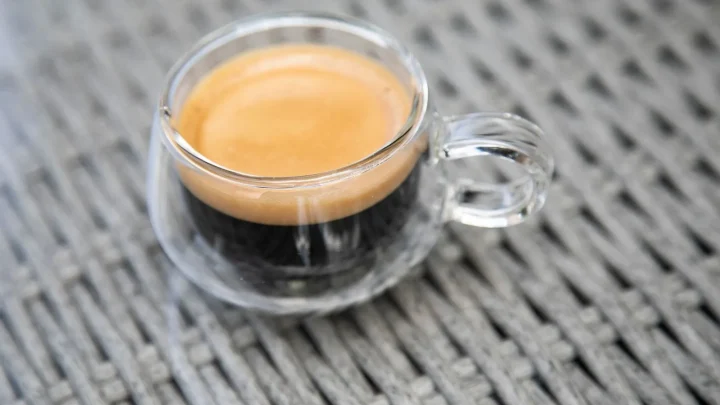
Espresso is a brewing method, not a roast or a bean. The standard definition of espresso is coffee forced through finely ground coffee under pressure. That’s the whole reason one shot can anchor drinks this different.
Latte: the most milk, the mildest drink
A caffe latte is a double shot with a lot of steamed milk and just a thin cap of foam on top. Ratio-wise you’re looking at roughly 1 part espresso to 4 or 5 parts milk.
In a typical US cafe that means one or two shots buried under 8 to 12 ounces of milk. This is why a latte tastes the softest of the bunch. The coffee is there, but it’s outnumbered.
Where lattes go wrong at home
The number one fault I see: people steam a huge volume of milk and drown a single shot. The drink comes out flat and milky, and they blame the beans.
Pull a proper double, keep the milk to about 6 ounces if you want to actually taste the coffee, and you’ve fixed 80% of “my latte is weak” complaints.
If you can’t taste the espresso, you didn’t make a weak shot. You made too much milk.
Flat white: same idea, tighter and stronger
A flat white is a double shot with steamed milk at roughly 1:3, served in a smaller cup, usually 5 to 6 ounces. The milk is textured thinner than a latte’s, more of a glossy, paint-like microfoam than a foamy head.
Because there’s less milk over the same two shots, the coffee comes through louder. That’s the entire point of the drink.
People argue endlessly about flat white versus latte. Honestly, the practical difference is volume: a flat white is a small, strong latte with better-textured milk. Order one when a latte feels too watery for you.

Cappuccino: defined by foam, not just ratio
This is the drink people get most wrong, because a cappuccino isn’t about how much milk. It’s about the texture split.
The classic build is thirds: one third espresso, one third steamed milk, one third dense foam. That foam cap is the signature. A real cappuccino should feel almost pillowy, and the foam should hold a spoon for a second.
| Drink | Espresso : Milk | Typical size | Foam |
|---|---|---|---|
| Latte | 1:4 to 1:5 | 8–12 oz | Thin, ~1 cm |
| Flat white | 1:3 | 5–6 oz | Minimal microfoam |
| Cappuccino | 1:1 milk to foam over the shot | 5–6 oz | Thick, dense |
| Cortado | 1:1 | 3.5–4.5 oz | Very little |
| Macchiato | 1 shot + dollop | 2–3 oz | Just a mark |
The home cappuccino trap
Getting that dense foam takes air introduced early in steaming, in the first two or three seconds, before you drop the wand tip deeper to heat and roll the milk. Most beginners never let air in, so they make a flat white and call it a cappuccino.
Listen for a light hissing or tearing sound at the start of steaming. That sound is air going in, which builds foam. Once the pitcher is warm to the touch, drop the tip below the surface and let the milk spin silently to smooth it out.
Cortado: even espresso, even milk
Here’s the one people came to this page for. A cortado is a double shot cut with an equal amount of warm, barely-foamed milk. That’s it. Roughly 1:1, usually served in a 3.5 to 4.5 ounce glass.
The Spanish word “cortado” means “cut,” and that’s exactly what the milk does. It cuts the espresso’s sharpness without hiding it. You still taste the coffee front and center, just rounded off.
A cortado is my go-to test drink when someone brings a machine in. If the shot is bad, a cortado exposes it instantly because there isn’t enough milk to hide behind.
A Gibraltar is basically a cortado served in a specific Libbey Gibraltar glass. Same drink, different name that stuck because of the cup a San Francisco cafe used. Don’t overthink it.
The tiny ones: macchiato and piccolo
A traditional espresso macchiato is a single or double shot “stained” with a small dollop of foamed milk, maybe half an ounce. It’s espresso-forward and small, served in a 2 to 3 ounce cup.
Note this is nothing like the caramel macchiato at a big chain, which is essentially a flavored latte. Same word, completely different drink.
A piccolo latte splits the difference: a single ristretto shot topped with steamed milk in a small glass, around 4 ounces. Think of it as a mini flat white for when a full one is too much.
What actually changes the drink in your cup
Two cafes can hand you a “latte” that tastes wildly different, and it’s almost never the beans. It’s these three things.
- Serving size: a 16 oz latte and an 8 oz latte both have two shots, so the big one is far milkier.
- Milk temperature: milk steamed to around 140F tastes sweet; push past 160F and it goes flat and scalded.
- Foam texture: the same milk can be silky microfoam or dry, bubbly foam depending on wand technique.
Steam wands and the water inside them run well above boiling. Always purge the wand for a second before and after steaming to clear condensed water, and never wipe the tip with a bare hand right after use. I’ve treated more than one steam burn that started with “I just grabbed it quick.”
How to actually use this at the counter or the machine
Order by ratio, not by name. If you want to taste coffee, go smaller and less milk: cortado, flat white, macchiato. If you want a comfort drink, go bigger and milkier: latte, big cappuccino.
At home the sequence never changes. Pull the shot first while your milk waits cold in the pitcher, then texture the milk to match the drink you’re building. Foam-heavy for cappuccino, glossy and thin for a flat white or cortado.
The Specialty Coffee Association keeps solid reference standards for milk drinks if you want to go deeper on the numbers. And if half the parts I mentioned, portafilter, steam wand, group head, are still fuzzy, the machine parts breakdown will get you oriented.
Learn the five or six ratios above and you’ll never be stuck reading a menu again. The names are just marketing on top of the same honest shot.
Frequently asked questions
Both are espresso and steamed milk, but the ratio and size differ. A latte runs about 1:4 or 1:5 espresso to milk in an 8 to 12 ounce cup, while a flat white is roughly 1:3 in a 5 to 6 ounce cup with thinner microfoam. The flat white tastes stronger because the same two shots aren't diluted by as much milk.
Not quite. A cortado is equal parts espresso and milk, about 1:1, with almost no foam, served in a 3.5 to 4.5 ounce glass. A small latte still has far more milk than espresso and a thin foam cap, so the cortado tastes noticeably more coffee-forward.
You're probably not introducing air early enough. Foam builds in the first two or three seconds of steaming, when the wand tip is near the milk surface and you hear a light tearing sound. If you keep the tip submerged the whole time, you heat the milk without aerating it and end up with a flat white.
Almost all of them start from the same base: a double shot of about 50 to 60 ml from 18 to 20 grams of coffee. What changes between a latte, flat white, cortado, and cappuccino is the amount and texture of the milk, not the espresso itself.
Aim for around 140F for the sweetest taste. Milk gets noticeably sweeter as it warms toward that point, then goes flat and scalded past about 160F. A cheap probe thermometer or just steaming until the pitcher is uncomfortably warm to hold both work fine.
No, and this trips people up constantly. A traditional espresso macchiato is a shot marked with just a small dollop of foam, served in a 2 to 3 ounce cup, and it's very coffee-forward. The caramel macchiato at large chains is essentially a flavored latte with a lot of milk and syrup.