Key takeaways
- A portafilter is the removable handle-and-basket that holds ground coffee and locks into the group head; the metal cup you fill is a separate part called the basket.
- Single-spout, double-spout, and bottomless (naked) portafilters do the same job differently: two spouts split shots, a bottomless one shows you the whole puck.
- Seat it firmly to the 6 o'clock position or just past; you want snug, not gorilla-tight, and never lock a dry portafilter onto a hot machine repeatedly.
- A standard commercial-style portafilter is 58mm across the basket; pressurized baskets suit pre-ground coffee, non-pressurized suit fresh grinding.
- Keep the basket and threads clean; old coffee oils in the spouts are the number-one cause of drips that get blamed on the machine.
The first thing I hand a nervous new owner when they bring in a machine is the portafilter, and about half of them hold it like they’re not sure which end is up. That’s fair. It’s the one part of an espresso machine you touch every single time, yet nobody explains it before you’re standing there with a bag of beans.
So let’s fix that. This is the piece that decides whether your coffee even reaches the cup.
I’ve had thousands of these on my bench over 12 years, and once you understand what it’s doing, it stops being intimidating.
What is a portafilter, actually?
A portafilter is the handled metal fixture that holds your ground coffee and clamps into the machine’s group head so water can pass through it under pressure. The name is a mash-up of “portable filter” – it’s the removable filter carrier.
Pick one up and you’re holding three things at once: a handle (usually plastic or wood over a steel core), a stout metal body with two lugs sticking out the sides, and a removable metal cup called the basket that drops into the top.
People use “portafilter” and “basket” as if they’re the same part. They aren’t. The portafilter is the whole assembly; the basket is the perforated cup you scoop coffee into. You can swap baskets in seconds, and you will, because different baskets hold different doses.
If you’re still mapping out the machine as a whole, the portafilter is one piece of a larger system. A quick read of Espresso Machine Parts Explained for Beginners puts it in context alongside the boiler, pump, and group head.
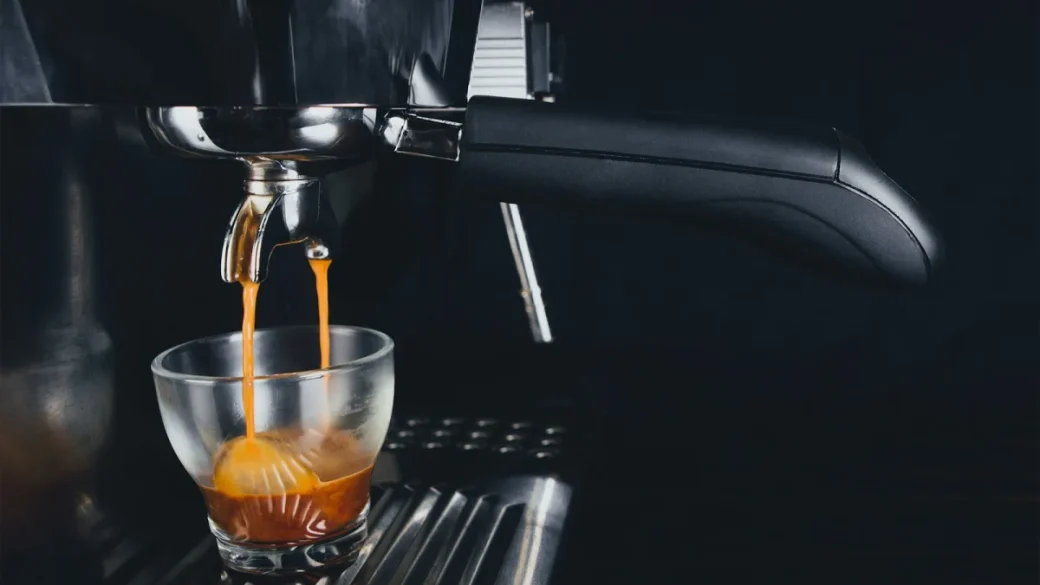
The parts, one by one
Break it down and there’s not much to fear. Four components do all the work.
The handle
Just a grip, but a surprisingly important one. On a hot machine the group head runs around 200°F (93°C), and a well-insulated handle keeps your palm off anything that temperature. If yours ever feels warm through the grip, the plastic collar has likely cracked – a $12 replacement on most Gaggia and Breville units.
The lugs (ears)
Those two tabs on the sides are the lugs. They slide under the group head’s locking ring and cam into place as you rotate. They’re doing real structural work: a good pump pushes water at 9 bars of pressure, roughly 130 psi, and the lugs are what hold everything sealed against that force.
The basket
The perforated cup where the coffee lives. Baskets are sized by dose – a common single is 7–9 grams, a double 14–18 grams, a triple more. The floor is drilled with hundreds of tiny holes that let brewed espresso out while keeping grounds in.
The spouts
The nozzles underneath that channel coffee into your cup. This is where portafilters differ most, so they get their own section.
The portafilter carries the coffee; the basket shapes the coffee; the spout delivers it. Three jobs, one tool.
Spouts: single, double, and bottomless
The bottom of the portafilter tells you a lot about how it wants to be used.
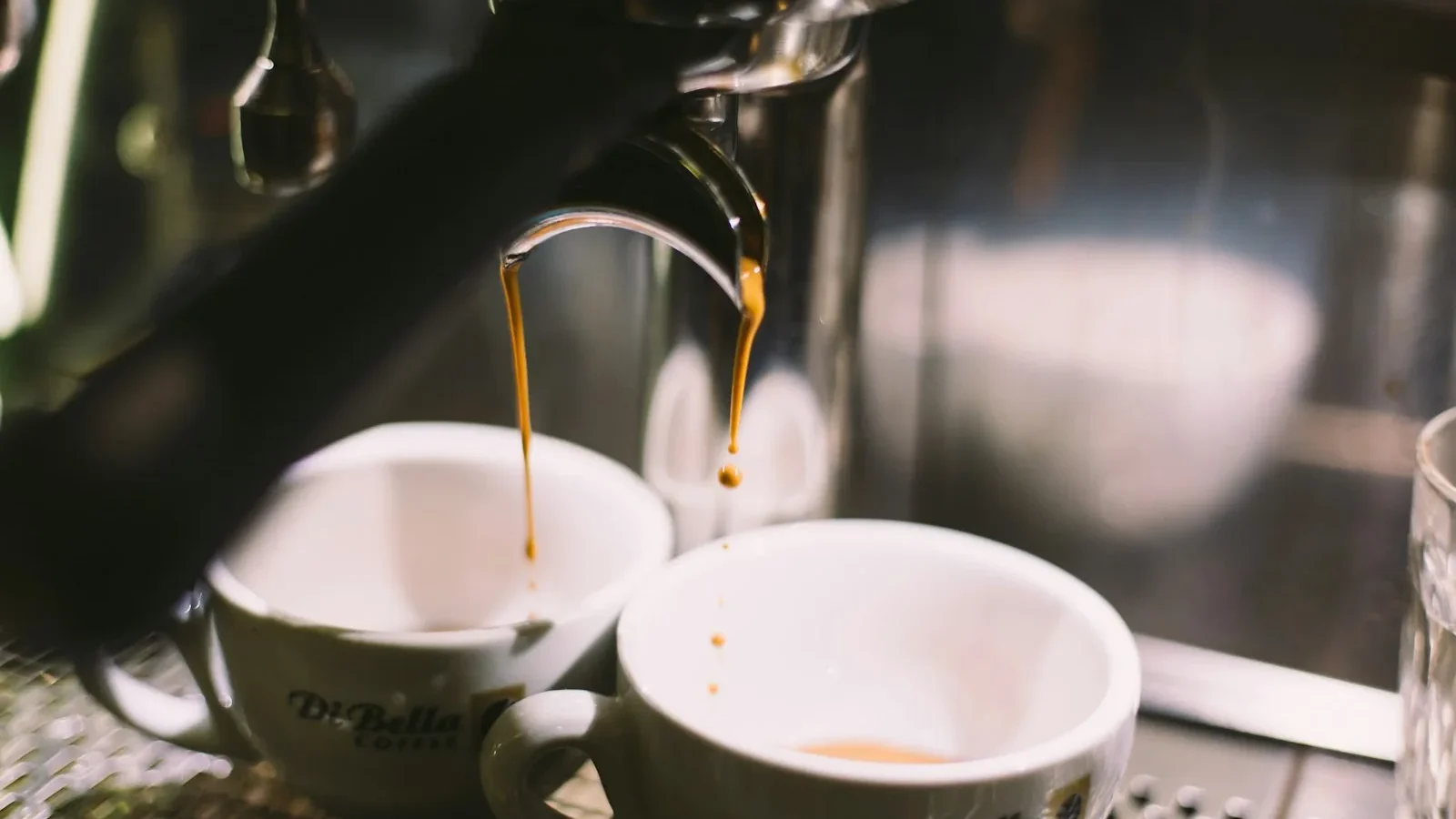
A double-spout portafilter has two nozzles side by side and is what ships with almost every home machine. It splits the flow so you can pull two cups at once, or land one shot cleanly in a single vessel.
A single-spout version narrows to one nozzle, meant for smaller single-shot baskets. You see these less often at home now.
Then there’s the bottomless, or naked, portafilter. Someone has machined the entire spout assembly off, leaving the bare underside of the basket exposed.
Why anyone removes the spout
A bottomless portafilter lets you watch the extraction directly. You see exactly where coffee comes through the puck, which is honest feedback you can’t get any other way. It also means one less part hiding old coffee oils.
The trade-off is mess. If your puck prep is off, a bottomless will spray coffee sideways across your counter – a vivid, staining lesson. I usually tell beginners to master the machine on the standard double-spout first, then buy a bottomless (around $25–40 in 58mm) once shots are landing consistently.
Buy a bottomless portafilter that matches your basket size and machine brand exactly. A 58mm naked won’t seat in a 54mm Breville group, and forcing it strips the locking ring – a repair I quote at $60–90 in labor alone.
Pressurized vs non-pressurized baskets
Since the basket lives inside the portafilter, it’s worth knowing which kind you have. This one trips up more beginners than anything else.
A non-pressurized (single-wall) basket is a plain drilled cup. It relies entirely on your grind and puck to create resistance, and it rewards fresh, properly ground coffee with better flavor and richer crema.
A pressurized (dual-wall) basket has a second wall with a single tiny hole that forces the machine to build pressure regardless of your grind. It’s forgiving – great for pre-ground supermarket coffee – but it fakes the crema and caps how good the shot can get.
| Feature | Non-pressurized | Pressurized |
|---|---|---|
| Best for | Fresh, self-ground beans | Pre-ground / store-bought |
| Grind sensitivity | High | Low, very forgiving |
| Crema quality | Real, from the coffee | Artificially created |
| Typical price | $15–30 | Often included free |
Machines like the entry-level Breville Bambino and many De’Longhi models ship with pressurized baskets to make the first month easier. Nothing wrong with that – just know you can graduate to a non-pressurized basket for the same portafilter when you’re ready.
How to seat it correctly
Locking a portafilter in is a two-second motion once it’s muscle memory. Here’s the sequence I teach on the bench.
- Fill and level your basket first, off the machine – never dose while it’s locked in.
- Wipe any loose grounds off the rim and the group gasket; stray grounds break the seal.
- Line the lugs up with the gaps in the group head’s locking ring.
- Push up gently, then rotate right until the handle sits at roughly the 6 o’clock position.
- Feel for firm resistance – snug, not cranked. If you’re straining, something’s misaligned.
New machines seat around 5 o’clock and drift toward 7 as the rubber group gasket wears. When yours goes well past 7, the gasket is due – a $6 part and a 15-minute job on most home units.
Never yank a portafilter out mid-shot or the instant it finishes. There’s still trapped pressure behind the puck for a second or two, and pulling early can spit near-boiling water and grounds. Wait for the flow to fully stop, then release.
Keeping it happy
The portafilter is also the part people neglect until it misbehaves. The good news is that upkeep is trivial.
Knock the spent puck out after each session and rinse the basket under hot water. Once a week, pull the basket out and clean the threads and the inside of the spouts – old coffee oils build up in there and go rancid, and that’s the real source of most “my machine tastes bitter” complaints I get.
Every month or so, drop the basket and portafilter body into a espresso-cleaner solution (Cafiza and similar, about $10 a tub) for a soak. If you want the full picture of how all this fits together before your next shot, Espresso for Beginners: How It All Works walks through the whole cycle from bean to cup.
Treat this handle well and it outlives most of the machine around it. I still have a solid Gaggia portafilter on my own bench that’s older than some of my apprentices – same basket, same lugs, still pulling clean shots.
Frequently asked questions
No, though the terms get used interchangeably. The portafilter is the whole assembly: handle, metal body, lugs, and spouts. The basket is the removable perforated cup that sits inside it and actually holds the ground coffee. You can pop the basket out and swap it in seconds.
Measure the inside diameter of the basket in millimeters. Most commercial-style and prosumer home machines use 58mm, while many compact home units like Breville's smaller models use 54mm or 51mm. Always match replacement baskets and bottomless portafilters to that exact size, since they are not cross-compatible.
Usually it is too much coffee in the basket, stray grounds on the rim, or a swollen group gasket. Wipe the rim, level your dose, and try again. If it consistently locks far past the 7 o'clock position, the rubber group gasket has worn and needs replacing, which is a cheap 15-minute fix.
Use the pressurized (dual-wall) basket if you are using pre-ground coffee or just starting out, because it forgives an imperfect grind. Switch to the non-pressurized (single-wall) basket once you have a grinder and want real crema and better flavor. Both fit the same portafilter.
Yes, and many people do to keep it hot, but leave it in only if it is clean and empty or you are pulling shots back to back. Leaving a spent, wet puck locked against a hot group head all day bakes on oils and hardens the gasket. Knock out the puck and rinse if you are done for a while.
Not to make good espresso. A bottomless portafilter is a diagnostic and learning tool that lets you see exactly how coffee flows through the puck, which helps you spot uneven extraction. Beginners are usually better served mastering the standard double-spout first, then adding a bottomless later for around $25 to $40.