Key takeaways
- Always work from the OEM part number stamped on the old component, not the machine model, before you buy anything.
- Genuine Gaggia and Rancilio group gaskets run $6-$12 from specialist sellers; a $2 mystery gasket is the false economy that brings machines back.
- Breville locks most repair parts behind its own store or authorized sellers, so budget accordingly and avoid third-party clones.
- Buy consumables like gaskets, screens and O-rings in small kits so you are not down for a week waiting on shipping.
- Photograph the machine's data plate and the failed part before ordering to cut return trips to zero.
A customer dropped off a Gaggia Classic last spring with a note taped to the top: “New gasket already installed, still leaks.” Someone had fitted a $2 silicone ring off a marketplace listing. It was 1mm too thick and the wrong durometer, so the portafilter never seated square.
I swapped in a genuine 8.5mm Gaggia gasket, and the leak vanished in the time it took to torque the group back down. The part cost him $7. The wrong one cost him a week and a drive across town.
Knowing where to source espresso replacement parts is half the repair. The other half is knowing which part number to type into the search box, because the same machine can hide three different revisions under one model name.
Start With the Part Number, Not the Model
Every espresso machine has a data plate, usually on the underside or the back panel. It carries the model, a service or PNC code, and sometimes a revision letter. That code narrows a search far better than “Breville Barista Express parts.”
De’Longhi and Breville lean hard on internal part numbers (PNCs). A boiler for an EC155 is not the boiler for an EC680, even though both are “De’Longhi espresso machines.”
The best number, though, is the one stamped on the failed part itself. Pull it, read it under good light, and photograph it.
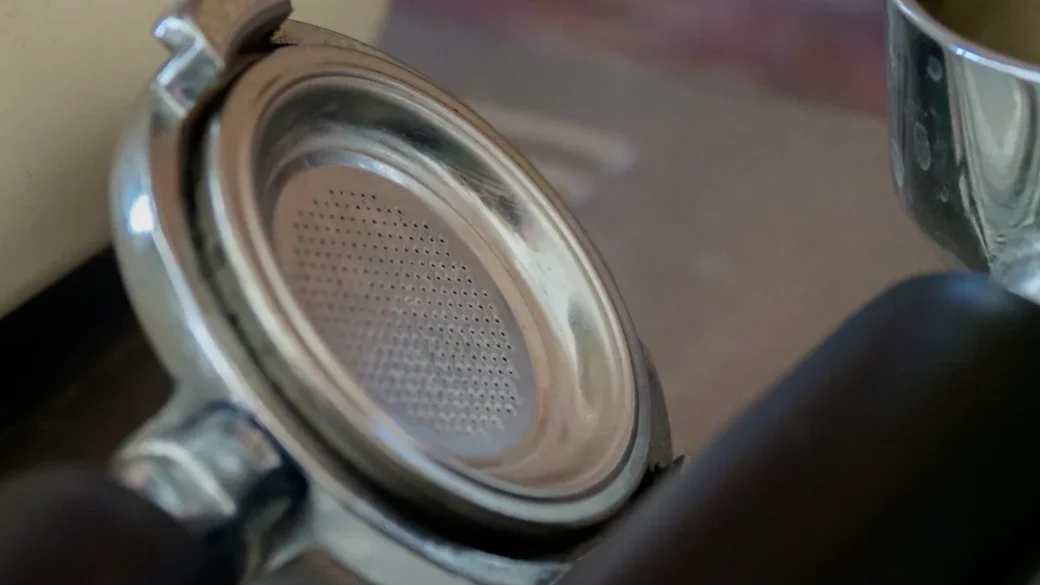
Before you remove anything, take a photo of the old part in place and a second one of any number printed on it. Nine times out of ten that number, dropped into a supplier search, lands you on the exact match faster than the model ever will.
If you want the broader repair context first, our Espresso Machine Repair Guide: Parts & Fixes maps out which components fail and roughly when.
Breville: Buy Direct or From Authorized Sellers
Breville keeps a tighter grip on parts than the Italian brands. For a Barista Express, Barista Pro, or the Dual Boiler, your safest route is Breville’s own store or a listed authorized reseller.
You can find their model directory on the Breville official site, which is worth checking to confirm your exact variant before buying.
What to expect on price
A genuine Breville portafilter runs $35-$55. The 54mm silicone group seal is usually $8-$14. Steam wand tips and O-ring kits land in the $6-$15 range.
You will see cloned Breville gaskets for a couple of dollars. I avoid them. The dimensions drift, and on a machine this tightly toleranced a slightly proud seal throws off puck extraction.
Unplug the machine and let the boiler cool for at least 30 minutes before opening any panel. Breville dual-boiler units hold pressurized hot water, and the thermal fuse sits right where your screwdriver wants to go.
Gaggia and Rancilio: The Specialist Sellers Are Your Friends
This is where sourcing gets genuinely rewarding. Gaggia and Rancilio (think Classic and Silvia) share a huge parts ecosystem with commercial machines, so genuine spares are everywhere and cheap.
Specialist espresso parts retailers stock OEM Gaggia and Rancilio components by the hundred. A genuine group gasket is $6-$12. A brass shower holder, a steam valve rebuild kit, a thermostat, all readily available.
On a Gaggia or a Silvia, if a part wears out, someone sells the genuine replacement for under fifteen dollars. There is almost never a reason to gamble on a clone.
Rancilio Silvia part numbers often start with a prefix you can search directly. The Silvia steam wand O-ring, the group gasket, the brew thermostat, each has a settled OEM number that specialist shops list plainly.
When you do fit a new group gasket, our walkthrough on how to replace a group head gasket at home covers seating depth and the tap-in technique so it sits flush the first time.
Shower screens and O-rings, the consumables
Screens and seals are the parts you replace most. On a Gaggia Classic the shower screen is a $4-$9 stainless disc, and it clogs with oils long before anything mechanical fails.
If yours is scaling over or channeling, the steps in our piece on how to replace an espresso shower screen take about ten minutes end to end.
De’Longhi: Match the PNC and Watch the Sub-Models
De’Longhi’s range is huge and confusingly named. The EC, ECP, Dedica, and La Specialista lines all use different internals, and a “universal” De’Longhi part is often universal to nothing.
Use the PNC from the data plate and cross-check on the De’Longhi official site parts lookup. That confirms whether your EC685 takes the same steam knob as an EC680 (it does) or a different one (sometimes it does not).
De’Longhi Dedica machines use a thermoblock rather than a boiler. Descaling parts and the internal silicone tubing are the common wear items, not gaskets, so your sourcing list looks different from a Gaggia’s.
Genuine De’Longhi water tanks and drip trays run $12-$28. The small O-rings and the brew unit seals are a few dollars each, best bought as a kit.
How I Vet a Supplier Before Ordering
Not every listing that says “genuine” is genuine. Over the years I have settled on a quick checklist that keeps clones out of my toolbox.
- The listing shows an OEM part number, not just a machine model.
- Photos are of the actual part, not a generic render or a stock brand image.
- Material and dimensions are stated (durometer, diameter, thickness for seals).
- The seller carries a full range for that brand, not three random items.
- There is a stated return policy, because sizing mistakes happen.
Authorized brand stores, established espresso-specialist retailers, and appliance-parts distributors that list OEM numbers are my three go-to categories. Marketplace listings with no part number are where I stop reading.
Order seals and gaskets in small multipacks. A group gasket costs pennies more in a three-pack, and having a spare on the shelf means the next leak is a five-minute fix instead of a five-day wait for shipping.
Build a Small Parts Kit So You Are Never Stranded
The parts that fail are predictable. Espresso machines are simple heat-and-pressure devices, and the same handful of consumables wear out across every brand, as the general design on the espresso machine overview makes plain.
| Part | Typical genuine price | Replace roughly every |
|---|---|---|
| Group head gasket | $6-$12 | 12-18 months |
| Shower screen | $4-$9 | 12 months (heavy use) |
| Steam wand O-ring | $2-$5 | As it hardens |
| Portafilter basket | $8-$20 | When holes deform |
| Descaling / valve seal kit | $10-$18 | Every 2-3 years |
Keep those five on a shelf and you cover 80% of home-espresso faults without a single emergency order. For the seals specifically, our notes on replacing O-rings and seals in your machine show which sit where.
A Last Word From the Bench
The cheapest part is the one you buy once. Every clone gasket that shows up on my bench a second time would have cost less as a genuine part the first time.
Photograph the data plate, pull the failed part, read its number, and buy from a seller who speaks in OEM codes. Do that and sourcing stops being a gamble.
Your Gaggia will outlive three of my kitchen kettles if you feed it real parts. Mine has.
Frequently asked questions
Read the number stamped on the failed part itself first, since that is the most precise match. If nothing is legible, use the model and service or PNC code from the data plate on the underside or back of the machine, then confirm it against the manufacturer's parts lookup. Photographing both before you order saves return trips.
For a genuine gasket you can expect $6-$12 depending on brand, with Gaggia and Rancilio at the lower end and Breville a little higher. Clone gaskets sell for as little as $2, but they often differ in thickness or hardness and cause the exact leak they were meant to fix. The genuine part is the cheaper choice once you count the return trips.
Breville routes most repair parts through its own store and a network of authorized sellers, so the open aftermarket is thinner and cloned parts are riskier. Gaggia and Rancilio share components with commercial machines, which floods the specialist market with genuine, inexpensive spares. Budget a bit more and stick to authorized channels for Breville.
A group head gasket, a shower screen, a steam wand O-ring, a spare portafilter basket, and a descaling or valve seal kit cover most home faults. Together they run under $50 and mean you can fix a leak or a clog the same day. Buying gaskets in a small multipack costs almost nothing extra.
De'Longhi sub-models like the EC680 and EC685 share some parts and differ on others, so never assume compatibility from the name alone. Use the PNC from the data plate and check it against De'Longhi's official parts lookup before ordering. When in doubt, match the part number, not the model.
Often yes, because Gaggia and Rancilio home machines share group gaskets, shower holders, and valve components with their commercial cousins. That shared ecosystem is why genuine spares are so cheap and easy to find for these brands. Still confirm the dimensions and OEM number match before you buy.