Key takeaways
- Nine bars at the puck is the espresso standard. A "15 bar" or "20 bar" pump number on the box tells you nothing about cup quality.
- Home boilers rarely need to be bigger. A 300ml single-boiler machine pulls the same shot as a 1.2L one for a one- or two-person household.
- Pressurized dual-wall baskets fake crema and hide grind problems. A real non-pressurized basket is a feature, not a downgrade.
- Skip the extended warranty and water-softener upsell. A $6 descaler and a $30 pressure gauge prevent most of the failures I repair.
- The grinder matters more than the machine's spec sheet. Budget for a proper burr grinder before chasing bar numbers.
Last month a customer set a two-year-old machine on my bench. He’d bought it partly because the box promised “20 bars of Italian pressure,” and now he was sure the pump was dying because every shot came out thin and sour.
The pump was fine. That machine had never once seen 20 bars at the coffee, and it never should. What he’d paid for was a number printed on cardboard, and it had quietly cost him the better grinder he could have bought with the same $400.
I’ve run a repair bench for twelve years. The failures I see aren’t random. They trace straight back to a handful of claims that sound technical but mean almost nothing on the counter.
Myth 1: More bars means better espresso
This is the big one. Walk any appliance aisle and “15 bar,” “19 bar,” even “20 bar” is stamped in the largest font on the box.
Real espresso is brewed at roughly 9 bars of pressure at the coffee puck. That figure has been the accepted standard since the lever machines of the 1960s, and the Specialty Coffee Association still builds its brewing recommendations around it. Nine bars is the target, not fifteen.
So where do the big numbers come from? They’re the maximum pressure the vibratory pump can generate with the outlet blocked, measured with no coffee in the way. Every one of these machines has an over-pressure valve (the OPV) that dumps everything above about 9 to 10 bars back into the tank.
A “20 bar” pump and a “15 bar” pump both hand the puck the same 9 bars once that valve does its job. You are paying for a spec that the machine is engineered to throw away.
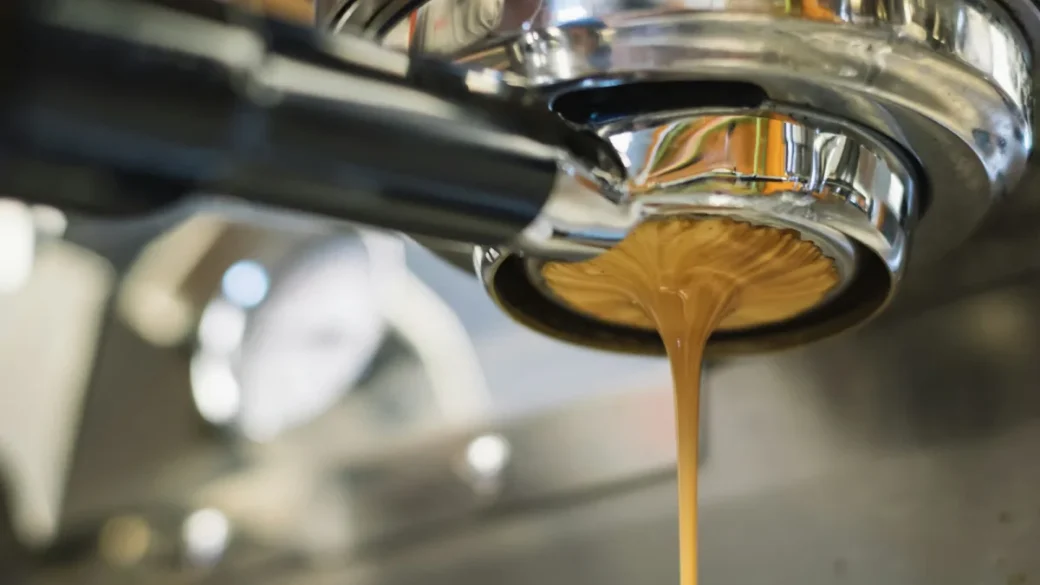
If your machine feels like it pushes too hard and your shots gush, the OPV may be set high from the factory. On a Gaggia Classic I routinely dial it from 12 bars down to 9 with a $30 portafilter gauge. Ten minutes, no parts, a noticeably sweeter cup.
When someone asks me which machine to buy, pump bar rating never enters the conversation. If you want the full framework for that decision, our walkthrough on how to choose a home espresso machine weighs the things that actually move the cup.
Myth 2: A bigger boiler makes better coffee
“1.8 liter boiler.” “20-cup capacity.” These lines sell a lot of machines to people who will pull two shots a morning.
Boiler size is about throughput, not quality. A café running six drinks a minute needs the thermal mass so the temperature doesn’t crash between shots. Your kitchen does not.
A 300ml single boiler on a Rancilio Silvia pulls an identical shot to a 1.2-liter machine when one person is making coffee. The extra mass only earns its keep when you’re steaming milk and brewing back to back for a crowd.
What the big boiler actually costs you
More metal means more scale surface, longer heat-up, and a heftier repair bill. When a 1.8L boiler furs up in a hard-water city, I’m often looking at a $90 to $140 descale-and-gasket job. The little single boiler on the same water is a $25 fix.
Buy the boiler your morning needs, not the one the box brags about. Capacity you never use is just extra scale waiting to fail.
| Household | Boiler that fits | What “more” buys you |
|---|---|---|
| 1–2 drinks/day | Single boiler, ~300ml | Nothing useful |
| 2–4 drinks, some milk | Heat exchanger or dual, ~1L | Steam and brew together |
| Small office / party host | Dual boiler, 1.5L+ | Real back-to-back throughput |
Myth 3: Crema proves it’s a great shot
A thick blanket of crema sells machines in demo videos. It also hides the single most common trick in budget espresso: the pressurized basket.
Pressurized baskets (dual-wall, with a tiny pinhole under the visible holes) force coffee through one restriction so you get foam no matter how bad your grind is. They generate crema artificially. That crema tells you nothing about extraction.
I see people fight sour, hollow shots for months on a machine like a low-end De’Longhi, never realizing the included basket was doing the work a grinder should. Swap to a proper single-wall basket and the same beans suddenly need a real grind dialed in, and the flavor arrives.
Flip your basket over. If the underside is smooth metal with one pinhole, it’s pressurized. If you see the same fine grid of holes as the top, it’s the real thing. A set of genuine single-wall IMS baskets runs about $18 to $30 and is the cheapest upgrade in espresso.
This is why I nudge new owners toward the best first espresso machine for beginners that ships with a proper basket, rather than one leaning on the dual-wall crutch.
Myth 4: A built-in grinder saves you money
All-in-one machines are pitched as the smart buy: grinder and brewer in one box, less counter space, one price. The math rarely holds up.
The grinders built into most sub-$700 combos are small conical burrs tuned for convenience, not espresso range. On a Breville Barista Express the grinder is genuinely decent, and it’s a big reason that model earns its keep. But drop below it and the built-in burr often can’t grind fine or consistent enough for a clean shot.
When that grinder wears or clogs, you can’t replace it without pulling the whole machine apart. I’ve quoted $110 grinder-motor jobs on combos where a standalone $150 grinder would have outlived the machine and moved to the next one.
Never clear a jammed built-in grinder with the machine plugged in. I’ve seen a fingertip caught when a burr suddenly freed and spun. Unplug it, then use the brush, never your fingers or a metal tool near live burrs.
If you’re weighing a combo against a separate setup, the trade-offs in our comparison of the Breville Barista Express vs Barista Pro lay out where the built-in grinder earns its place and where it doesn’t.
Myth 5: The extended warranty and softener upsell protect you
At the register you’ll be offered a three-year protection plan for $60 to $120 and often a branded water-softening filter subscription. Both prey on the fear that espresso machines are fragile.
They’re not fragile. They’re predictable. Nearly every failure I open up is scale or a worn gasket, and both are maintenance items no warranty covers as “wear.”
What actually keeps a machine alive
- Descale every 2–3 months with a $6 citric-acid solution, more often on hard water.
- Backflush weekly if your machine has a three-way valve (most pump machines with a solenoid do).
- Replace the group gasket every 12–18 months; it’s a $4 part and a 15-minute job.
- Run filtered or bottled water around 50–100 ppm hardness instead of a pricey proprietary cartridge.
- Keep a $30 portafilter pressure gauge on hand to catch a drifting OPV before it ruins shots.
Do those five things and you sidestep the vast majority of what lands on my bench. The espresso machine myths that cost the most aren’t the flashy spec claims; they’re the quiet ones that talk you out of simple upkeep. The mechanics of how these machines pull a shot are refreshingly simple once you see inside one, and the basic pump-and-boiler design hasn’t changed much in decades.
Where your money actually belongs
Take the money the marketing wants for bar ratings, oversized boilers, and warranties, and put it where the cup lives: the grind.
A modest single-boiler machine feeding a proper burr grinder beats a spec-sheet monster feeding a bad one, every single time. That’s the pattern I’ve watched hold true across thousands of repairs and a lot of taste tests on this bench.
If you’re deciding between two classic entry machines, our head-to-head on the Gaggia Classic vs Rancilio Silvia shows how two “modest” machines can outlast and out-pour the flashier boxes for years. Buy the boring machine, spend the difference on the grinder, and keep a bottle of descaler under the sink. That’s the whole trick.
Frequently asked questions
No. The bar number on the box is the pump's maximum pressure with the outlet blocked, not the pressure at the coffee. Every home machine dumps everything above roughly 9 bars through its over-pressure valve, so a 15 bar and a 20 bar pump deliver the same 9 bars to your shot. It's a marketing figure, not a quality one.
Only if you're brewing and steaming back to back for several people. A 300ml single boiler pulls the same shot as a 1.2 liter one for a one or two person household. A larger boiler mainly adds heat-up time, more scale surface, and a bigger descaling bill.
Flip the basket over. If the underside is smooth metal with a single pinhole, it's pressurized and it fakes crema regardless of your grind. If the underside shows the same fine grid of holes as the top, it's a real non-pressurized basket. Genuine single-wall baskets cost about $18 to $30.
Usually not. Most failures I repair are scale buildup or worn gaskets, which warranties classify as wear and don't cover. A $6 citric-acid descale every couple of months, a $4 group gasket once a year, and filtered water prevent most of those failures for far less than a protection plan costs.
It depends on the grinder. On the Breville Barista Express the built-in burr is genuinely capable. Below that price tier the grinder is often too coarse or inconsistent for good espresso, and it can't be swapped out when it wears. For most budgets a separate burr grinder outlasts the machine and gives a better shot.
A proper burr grinder, followed by a genuine single-wall basket. The grinder controls extraction more than any spec on the machine, and swapping a pressurized basket for a real one forces you to dial in a grind that actually tastes like espresso. Together they cost less than most spec upgrades and make a far bigger difference.