Key takeaways
- Both are single-boiler machines: you brew, then wait 30-45 seconds for the boiler to hit steam temp before frothing.
- The Silvia steams noticeably better thanks to a larger 12 oz brass boiler and a stiffer articulating wand; the Classic brews stable shots and is cheaper to fix.
- Budget around $450-550 for a new Classic Evo Pro and $850-950 for a Silvia Pro E; used prices are roughly half that.
- Add a PID (about $150 on either) if you want repeatable shot temperature within 1-2 degrees F.
- Buy the Gaggia if you want value and easy parts; buy the Silvia if steaming and long-term durability matter most.
Every few weeks a Gaggia Classic and a Rancilio Silvia land on my bench within a day of each other. Same owner profile too: someone who outgrew a pod machine, watched too many pull-shot videos, and wants a real semi-auto without spending grand-piano money.
These two have been the default answer for that person for over twenty years. They deserve it. But they are not the same machine, and the differences only show up once you live with one.
I’ve had both apart more times than I can count. Here’s what actually separates them.
The single-boiler reality both machines share
Start with what they have in common, because it shapes everything else. Both run one boiler that heats water for the group and then reheats itself for steam. You pull your shot, flip the steam switch, and wait roughly 30 to 45 seconds for the boiler to climb from brew temp (around 200 degrees F) to steam temp (closer to 250 degrees F).
That wait is the single-boiler tax. If you froth milk for two lattes back to back, you’ll also need to purge water through the group afterward to drop the boiler back down before the next shot. It’s a rhythm you learn in a week.
Neither machine can brew and steam at the same time. If that workflow bothers you, the fix isn’t a bigger boiler on these platforms; it’s stepping up to a heat-exchanger or dual-boiler machine. I break that trade-off down in our piece on single vs dual boiler espresso machines.
Both also pull a proper 9-bar shot through a vibratory pump (an Ulka EP5 in both, funnily enough), and both take a standard 58mm portafilter. That 58mm detail matters more than people realize: it means commercial-sized baskets, tampers, and bottomless portafilters all fit. You’re buying into the grown-up accessory ecosystem either way. For the broader shopping picture, our overview on how to choose a home espresso machine covers the categories around these two.
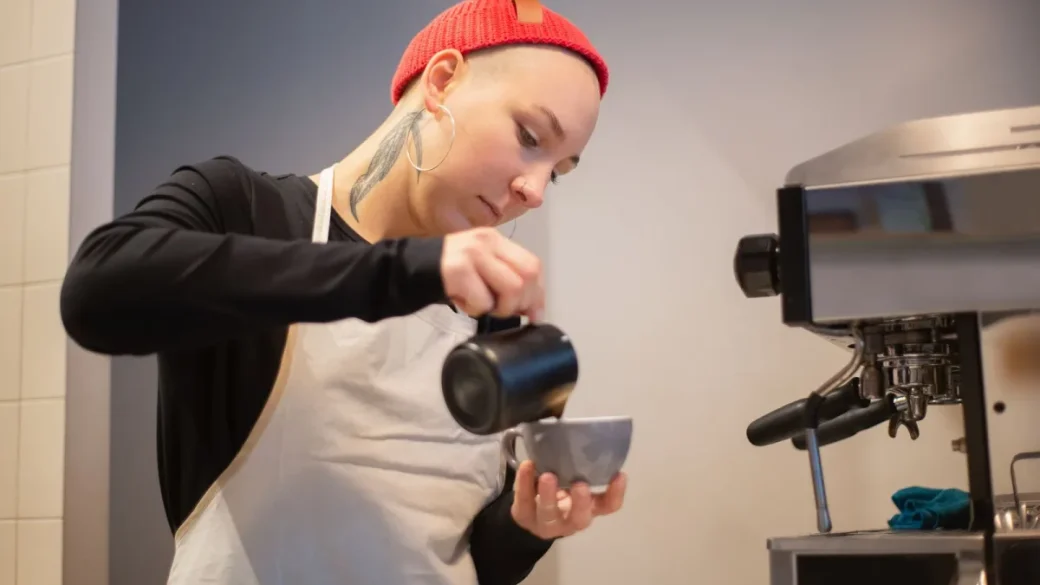
Boilers and steam: where the Silvia pulls ahead
This is the biggest real-world gap between them. The Classic uses a smaller aluminum boiler; the Silvia runs a heftier brass boiler holding around 12 oz. More thermal mass means the Silvia recovers steam faster and holds pressure longer through a milk pitcher.
On the wand, it’s not close. The Silvia’s articulating single-hole wand is stiff, reaches deep into a 20 oz pitcher, and moves in any direction. The stock Classic wand is shorter and, on older units, a Panarello-style frother that aerates for you but makes real microfoam harder.
What that means at the pitcher
If you drink milk drinks daily and care about latte art, the Silvia gives you more room to learn. I’ve taught people to texture 6 oz of milk on a Classic just fine, but they’re working within a tighter margin.
Whichever you buy, swap the stock steam tip for a single-hole tip if it isn’t already, and steam with the tip just under the surface until the milk hits about 100 degrees F, then submerge to spin. A cheap $12 thermometer teaches your ear the sound to stop at faster than any video.
Build quality and what I see fail
Both are built to be repaired, which is why they’ve lasted decades. Parts are cheap and plentiful for each. But the failure patterns differ.
On the Gaggia Classic, the fault I see constantly is a corroded or leaking solenoid valve and, on higher-mileage units, the plastic parts near the group showing heat fatigue. The pre-2015 and current Evo Pro models fixed a lot of the cheaper mid-era plastic, so check which generation you’re buying.
On the Silvia, the boiler and internals are genuinely overbuilt; what fails is usually the group gasket getting hard (a $6 part) and, occasionally, the steam valve seat. I’ve opened 15-year-old Silvias that needed nothing but a gasket and a descale.
Both machines carry mains voltage and hold a boiler full of near-boiling water. Before you open either one, unplug it, let it cool for an hour, and discharge nothing you’re unsure about. If a machine trips a breaker or leaks from the base, stop using it until it’s inspected – a failed thermal fuse or cracked boiler is not a wait-and-see problem.
Temperature stability and the PID question
Stock, both machines control temperature with a simple thermostat that cycles the heater on and off. That gives you a temperature swing, and on a single boiler that swing shows up in the cup, especially on lighter roasts.
The common upgrade on both is a PID controller, which holds the boiler within about 1 to 2 degrees F and lets you dial an exact brew temperature. Expect to pay around $150 for a kit, or buy the factory PID versions outright.
| Spec | Gaggia Classic Evo Pro | Rancilio Silvia Pro E |
|---|---|---|
| Boiler | Aluminum, smaller | Brass, ~12 oz |
| Portafilter | 58mm commercial | 58mm commercial |
| Pump | Ulka vibratory, 9 bar | Ulka vibratory, 9 bar |
| Steam wand | Short, single-hole | Articulating, longer reach |
| Factory PID | No (aftermarket ~$150) | Yes (Pro E has dual PID) |
| Typical new price | $450–550 | $850–950 |
| Warm-up time | ~15 min | ~20–25 min |
The Silvia Pro E ships with dual PIDs from the factory and even splits brew and steam into a twin-boiler-ish arrangement in that model, which is worth knowing if you’re comparing it against the base Silvia. On the Gaggia side, the machine has such a huge modding community that a PID, a dimmer for flow control, and a bottomless portafilter turn a $500 machine into something that punches far above its weight.
Buy the machine you’ll still want to repair in ten years, not the one that scores highest on a spec sheet today.
Price, value, and the used market
New, the gap is real. A Classic Evo Pro runs about $450 to $550. A Silvia sits around $700 for older stock and $850 to $950 for the Silvia Pro E. That’s nearly double.
Used is where these shine. I regularly see clean Classics for $200 to $300 and Silvias for $350 to $450 on local listings. Because both are so repairable, a well-kept used unit with a fresh descale and gasket is often a smarter buy than something plasticky and new at the same price.
Whatever you save on the machine, spend on the grinder. A stable 9-bar shot means nothing through inconsistent grounds. Both of these deserve a decent burr grinder before any machine upgrade – a point I hammer in our rundown of the best first espresso machine for beginners.
Which one should you actually buy
Here’s how I steer people at the counter.
- You want the most espresso per dollar and don’t mind modding: Gaggia Classic.
- You froth milk every single day and want the best stock steaming: Rancilio Silvia.
- You want it to last 15 years with near-zero fuss: Silvia’s brass internals win.
- You love tinkering and a big parts community: Classic, hands down.
- You want PID temperature control out of the box: Silvia Pro E.
Both are proper single-boiler semi-autos that make genuinely excellent espresso, which is more than I can say for a lot of machines at triple the price. If you’re cross-shopping all-in-one machines with built-in grinders instead, that’s a different conversation – our comparison of the Breville Barista Express vs Barista Pro covers that lane, and the folks at the Specialty Coffee Association have solid primers on extraction if you want to understand the espresso fundamentals behind all this.
My honest desert-island pick? If money’s tight, the Classic every time – I can keep one alive with parts from a drawer. If steaming is your thing and the budget’s there, the Silvia earns its premium at the milk pitcher, and it’ll still be running long after you’ve forgotten what you paid.
Frequently asked questions
It depends on how you drink coffee. If you make milk drinks daily, the Silvia's bigger brass boiler and superior steam wand genuinely justify the gap. If you mostly pull straight shots or plan to add a PID and mod the machine yourself, the Classic delivers 90 percent of the experience for far less.
No. Both are single-boiler machines, so you brew first, then flip the steam switch and wait roughly 30 to 45 seconds for the boiler to reach steam temperature. After steaming you purge water through the group to bring the boiler back down for the next shot.
You don't need one, but it noticeably improves shot consistency, especially on lighter roasts. A PID holds the boiler within about 1 to 2 degrees F versus the wide swing of the stock thermostat. Kits run around $150, and the Silvia Pro E already includes dual PIDs from the factory.
Both are highly repairable with cheap, widely available parts. The Gaggia Classic has the larger modding and repair community, so parts and guides are everywhere. The Silvia fails less often overall thanks to its brass internals, but when it does, common fixes like a group gasket cost only a few dollars.
A dedicated burr grinder that can grind fine enough for espresso and adjust in small steps. A consistent 9-bar shot is wasted on uneven grounds, so budget for a decent grinder before spending on machine mods. In many cases the grinder matters more to cup quality than the choice between these two machines.
Yes, often better value than new. Both were built to be serviced, so a clean used unit with a fresh descale and new gasket can outperform a plasticky budget machine at the same price. Just confirm which generation you're buying, since some mid-era Gaggia Classics used cheaper plastic near the group.