Key takeaways
- Roast color tells you about flavor, not strength - a light roast pulled correctly hits harder than most dark roasts.
- Thick crema often means stale, over-oily beans, not a great shot. Judge by taste, not foam.
- Higher pressure is not better. Most home machines are happiest around 9 bars at the puck.
- A shot doesn't have to run exactly 25 seconds. Chase taste and yield, not a stopwatch.
- Descale on schedule and stop over-tamping - those two habits fix most beginner machines I see on the bench.
I’ve had the same conversation at my repair bench maybe four hundred times. Someone hands me a two-year-old Breville or Gaggia, convinced it’s broken, and the machine is fine. What’s broken is what they believe about espresso.
The myths are sticky because they sound reasonable. Darker beans look stronger. Thick crema looks luxurious. A 25-second timer feels precise. But most of them come from marketing copy or a café barista repeating something they never questioned.
So here are the ones I hear constantly, and what actually happens inside the cup and the machine.
Myth 1: A darker roast means a stronger coffee
This is the big one. People taste a French roast, get that ashy, smoky punch, and read it as strength. It’s not strength – it’s roast character.
Roasting past a certain point burns off a chunk of the bean’s caffeine and mass. A dark roast bean is lighter and more brittle than a light roast bean of the same origin. Scoop by scoop, dark roast can actually give you less caffeine, not more.
What you’re tasting as “strong” is the bitterness of over-developed sugars and carbonized oils. Strength in espresso is really about concentration – how much dissolved coffee is in the water – and that’s controlled by your dose and yield, not the roast color.
The Specialty Coffee Association measures strength as Total Dissolved Solids (TDS), typically 8–12% for espresso. Roast level barely moves that number. Your grind, dose, and shot length do.
I pull a light-to-medium roast at 18 grams in, 36 grams out, and it hits far harder than the “extra dark espresso blend” my neighbor swears by. If you want to understand where that punch really comes from, the breakdown in Espresso for Beginners: How It All Works lays out the dose-to-yield logic cleanly.
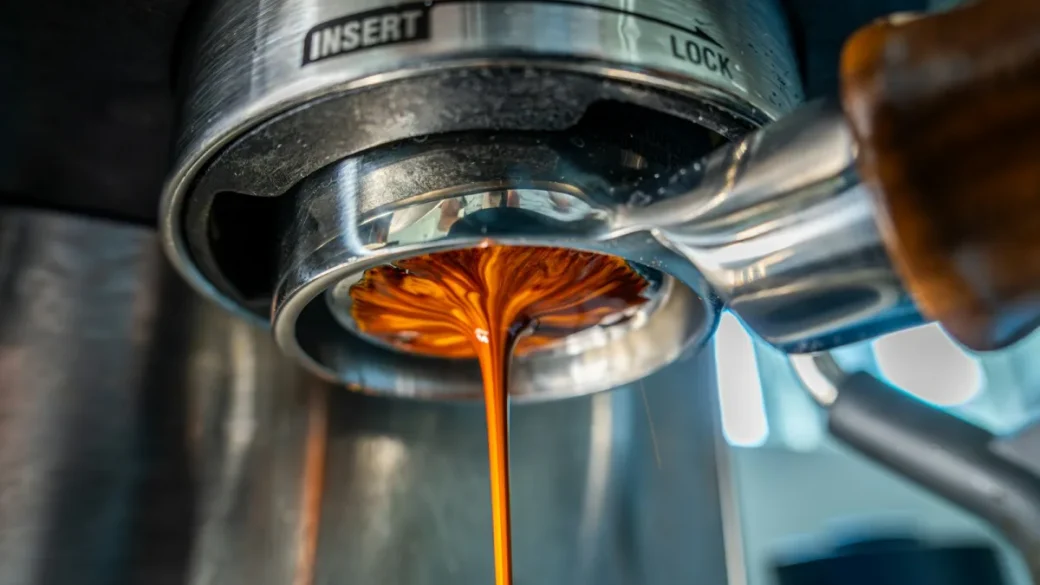
Myth 2: Thick, dark crema means it’s a great shot
Crema became a status symbol somewhere in the ’90s, and it’s caused more bad espresso than almost anything else.
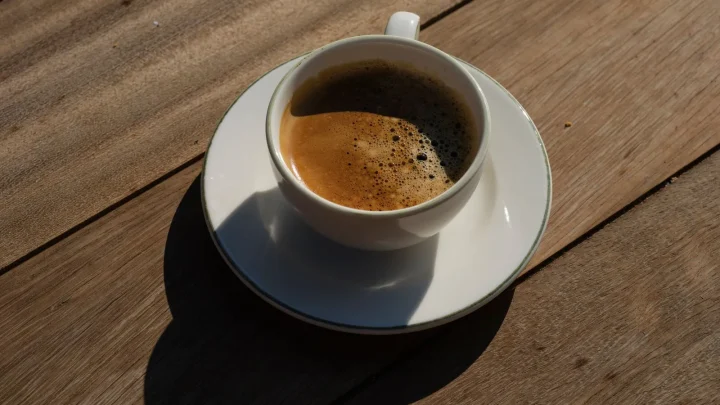
Crema is just emulsified CO2 and oils. Fresh beans off-gas a lot of carbon dioxide, and dark, oily roasts produce mountains of foam. That’s why supermarket “espresso” beans and cheap robusta blends throw a huge, stiff crema – they’re loaded with gas and oil, not flavor.
A shot from a delicate, well-roasted single origin might have a thin, quickly-fading crema and taste incredible. A shot from stale, oily beans can look picture-perfect and taste like burnt cardboard.
Judge the shot by what’s under the crema, not the crema itself.
If you want the real chemistry of why that foam forms and fades, I go deep on it in What Is Crema and Why It Forms on Espresso. Short version: crema is a byproduct, not a scorecard.
The stale-bean tell
Here’s a trick I use. If you see thick crema on beans that are three months past roast, that’s not freshness – that’s a symptom of a roast so dark and oily it never stops off-gassing. Fresh beans have a roast date, and I want to use them within about four weeks of it.
Myth 3: More pressure equals better espresso
Spec sheets love to shout “20 BAR PUMP!” and beginners assume more is better. It isn’t. That number is the pump’s maximum, not what reaches your coffee.
The target at the coffee puck is around 9 bars. That figure comes from decades of café practice and it’s baked into how these machines are designed. Above roughly 10–11 bars you start forcing channels through the puck, and the water blasts a path instead of soaking evenly.
Most consumer machines with those big vibratory pumps use an internal over-pressure valve (OPV) to bleed the excess off, so a “15 bar” and a “20 bar” machine both end up delivering something close to 9 at the group. I’ve adjusted plenty of OPVs on the bench, and dialing one from 12 back down to 9 bars transforms a harsh machine.
If your shots taste harsh and gush unevenly, the fix is rarely more pressure. Coarsen the grind one or two steps and check your distribution before you blame the machine.
The full picture on why 9 is the magic number lives in What 9 Bars of Pressure Means in Espresso. It’s one of the few espresso “rules” that actually holds up.
Myth 4: A shot must run exactly 25 seconds
The “25 second rule” gets treated like a law of physics. It’s a rough starting point, nothing more.
Time is a symptom, not a target. What you actually care about is the ratio – how much liquid espresso you get from your dose – and how it tastes. I aim for a 1:2 ratio (18 g in, ~36 g out) and let the time land wherever it lands, usually 25 to 32 seconds.
Different beans want different things. A light roast might taste best at 40 seconds and a 1:2.5 ratio because it needs more contact to extract properly. Chasing a stopwatch instead of a scale is how people end up with sour, under-developed shots.
If a shot never flows and the machine strains at high pressure for 40+ seconds, stop it. You’re choking the pump and stressing the group gasket. Grind coarser and try again – don’t let it labor.
Myth 5: A powerful tamp fixes bad shots
New owners tamp like they’re trying to crush a walnut. I’ve seen people lean their whole body weight into a portafilter, then wonder why every shot is bitter and slow.
Past about 15–20 kg of force, extra pressure does nothing measurable – the coffee bed is already fully compressed. What matters is that the tamp is level. A tilted puck sends water rushing out the shallow side, and that channeling ruins extraction far more than a soft tamp ever could.
Consistency beats force every time. I’d rather someone tamp gently and evenly with the same pressure on every shot than mash it hard and crooked.
- Grind fresh, into a clean, dry basket
- Distribute the grounds level before you tamp – a light tap or a distribution tool
- Tamp straight down, no more than ~15 kg, keeping it flat
- Wipe the rim so the portafilter seals cleanly in the group
- Weigh the shot on a scale instead of eyeballing the cup
Over-tamping and crooked tamping account for a big share of the “my machine makes bitter coffee” complaints I hear – and neither is a fault in the hardware.
Myth 6: A steam-wand cappuccino needs boiling milk
People crank the wand and let the milk scream up to a boil, assuming hotter is better. Scalded milk tastes flat and loses its sweetness above roughly 65–70°C (150–160°F).
The sugars in milk taste sweetest just before it gets uncomfortable to hold. I pull the wand out at about 60–65°C, when the pitcher is hot enough that I can barely keep my palm on it. Push past that and you cook off the flavor and kill the microfoam.
Texture matters more than temperature anyway. A short burst of air at the start, then submerge the tip to roll the milk into a glossy paint – that’s what gets you latte-art-grade foam, not heat.
What actually moves the needle
Strip the myths away and espresso gets simpler, not harder. The variables that genuinely change your cup are a small list: fresh beans, the right grind, a consistent dose and yield, clean equipment, and a machine that’s actually maintained.
That last point is where I earn my living. Half the machines on my bench aren’t faulty – they’re clogged. Skip descaling and a limescale layer builds inside the boiler and group, the temperature drifts, and flow drops. A $12 descaler and a ten-minute cycle every couple of months prevents most of the repairs I see.
Manufacturers like Breville and Gaggia publish descaling intervals in the manual, usually every 2–3 months depending on water hardness. Following that one schedule outlasts almost every “upgrade” beginners chase.
If you’re still mapping out what each component does and why it matters, Espresso Machine Parts Explained for Beginners is worth a read before you spend money on anything new.
Stop trusting the crema, the roast color, and the timer. Trust a scale, a roast date, and clean water. Do that and you’ll pull better shots than most cafés – no upgrade required.
Frequently asked questions
No - usually slightly less by weight. Roasting longer drives off moisture and some caffeine while making the bean lighter and more brittle. If you dose by scoops, a dark roast can give you less caffeine than a light one, even though it tastes more intense.
Not entirely - crema tells you the beans are fresh and off-gassing, which is useful. Just don't treat thick, long-lasting crema as proof of a good shot. Stale, oily dark roasts produce huge crema and often taste burnt, so let the flavor under the foam be your judge.
That number is the pump's maximum capability, not the pressure at the coffee. Most home machines use an over-pressure valve to bleed the excess down to roughly 9 bars at the puck during extraction. A higher headline number doesn't make better espresso and can even encourage channeling.
Not necessarily. Time is a guide, not a rule. Weigh your output instead: aim for roughly double your dose (about 36 g out from 18 g in) and taste it. If a fast shot tastes sour or thin, grind finer; if it tastes fine, don't worry about the clock.
Firm and level, around 15 kg of force - no more. Past full compression, extra pressure changes nothing, and a crooked tamp causes channeling that wrecks the shot. Consistency and a flat, level puck matter far more than raw strength.
Buy a cheap gram scale and weigh both your dose and your output. It removes the guesswork behind most beginner myths at once, letting you control ratio and strength directly instead of chasing crema, roast color, or a stopwatch.