Key takeaways
- Semi-autos give you control over grind, dose, and timing; super-autos trade that for a single button and a built-in grinder.
- Budget for the grinder separately with a semi-auto - a $500 machine plus a $300 grinder is a fairer comparison to a $900 super-auto.
- Super-autos hide more failure points (brew units, ceramic valves, gearboxes); repairs run $150-$400 and often need a tech.
- Pick based on how many drinks a day, who's making them, and whether you enjoy the process or just want the coffee.
Two machines land on my bench more than any others. One is a Rancilio Silvia with a scaled-up boiler and a proud owner who wants to keep it running another decade. The other is a De’Longhi super-auto whose brew unit has finally seized after 4,000 shots, and whose owner just wants their morning latte back with one button.
Those two customers want completely different things from a coffee machine. And honestly, neither is wrong.
The semi automatic vs super automatic espresso machine question rarely comes down to which is “better.” It comes down to who you are at 6:40 a.m. on a Tuesday.
What actually separates the two machines
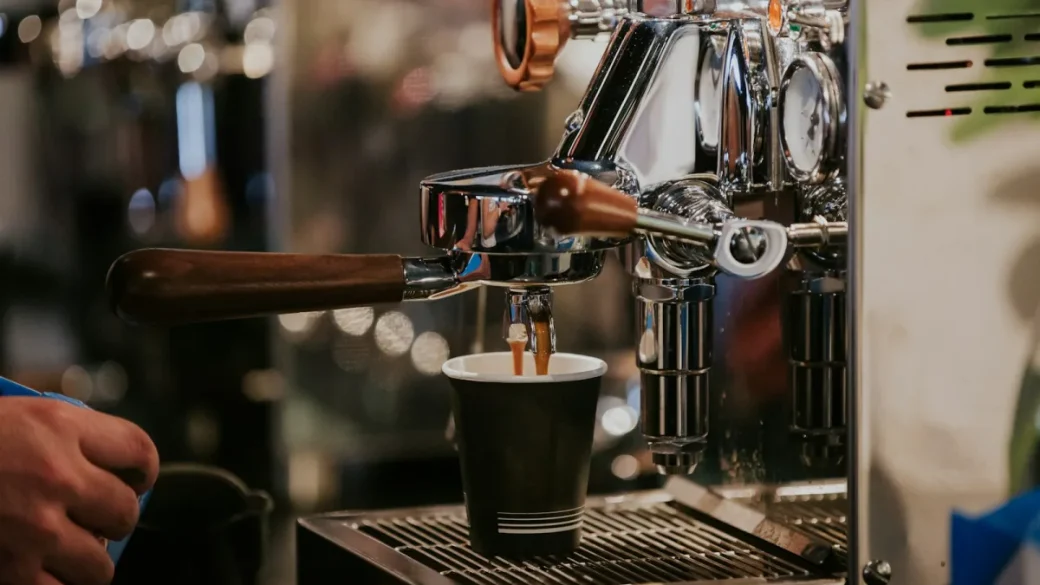
A semi-auto handles one job: it pushes hot water through a puck at pressure when you tell it to. You grind, you dose, you tamp, you start and stop the shot. Everything upstream of the pump is on you.
A super-auto does the whole chain internally. Grinder, doser, tamper (usually a spring-loaded brew unit), pump, and often a milk system – all triggered by one press. You add beans and water; it hands back a drink.
The mechanical guts differ more than people expect. Crack open a super-auto and you’ll find a removable brew group, a stepper-driven grinder, ceramic flow valves, and a small gearbox. A semi-automatic espresso machine is far simpler: a boiler or thermoblock, a vibratory pump, a group head, and a three-way solenoid.
“Automatic” in machine speak means the pump shuts off on its own via a flow meter. A true semi-auto stops when you flip the switch. Most machines sold as “semi-auto” today are technically that – you’re the timer.
Control versus convenience – the real trade
Here’s the split in plain terms. A semi-auto gives you every variable to tune. A super-auto takes those variables away so you don’t have to think about them.
Where semi-autos win
You can change grind, dose, tamp pressure, temperature, and shot time independently. Chasing a specific coffee’s sweet spot is genuinely satisfying, and the ceiling on cup quality is higher.
Steam power is usually better too. A Silvia or a Gaggia Classic pushes a stiffer steam wand than most consumer super-autos, so your milk texture for latte art is in your hands.
Where super-autos win
Consistency across users. My mother-in-law will never dial in a grinder, and she shouldn’t have to. A super-auto gives her the same flat white my brother-in-law gets, no skill transfer required.
Speed and cleanup, too. One button, drink in the cup in about 45 seconds, and the puck ejects itself into an internal bin you empty twice a week.
Buy the semi-auto if you enjoy making the coffee. Buy the super-auto if you only enjoy drinking it.
The price comparison people get wrong
Sticker prices lie here, and it trips up almost every first-time buyer I talk to.
A decent entry semi-auto runs $350–$600 – a Gaggia Classic Evo sits near $450, a Rancilio Silvia near $900. But that machine has no grinder. A grind-fresh setup needs a proper burr grinder, and a capable one (Baratza Encore ESP, DF54, Eureka Mignon) adds $150–$350.
So the honest comparison is machine plus grinder. Roughly $600–$1,100 for a semi-auto rig against $700–$1,400 for a mid super-auto like a De’Longhi Magnifica Evo or a Philips 3200.
| Factor | Semi-auto (+ grinder) | Super-auto |
|---|---|---|
| Typical all-in cost | $600–$1,100 | $700–$1,400 |
| Learning curve | 2–4 weeks to dial in | Same day |
| Time per drink | 2–4 minutes | ~45 seconds |
| Cup ceiling | High (café-level) | Good, not great |
| Daily cleanup | Wipe, backflush weekly | Empty bin, auto-rinse |
| Typical repair cost | $40–$150 | $150–$400 |
If you want the full framework for weighing these against your kitchen and budget, our overview on how to choose a home espresso machine lays out the decision tree before you spend a dollar.
What breaks – and what it costs to fix
This is where my job gives me a bias I’ll admit to: I see the failures, not the happy years before them.
Semi-auto failure points
They’re few and cheap. A worn three-way solenoid valve is $25–$40 in parts. A vibratory pump (Ulka EP5) is about $30. Group gaskets are a couple of dollars and a 10-minute job. Most semi-auto repairs are DIY-able with a screwdriver and a YouTube tab open.
On a semi-auto, backflush with plain water every week and with detergent (Cafiza, a scoop of about 3g) monthly. That single habit prevents most solenoid and group failures I see.
Super-auto failure points
More parts, more to go wrong. The brew unit takes the most abuse – its plastic gears and o-rings wear, and a replacement group runs $80–$160 plus labor. Ceramic valves crack, milk circuits clog with dried protein, and grinder burrs dull around 8–10 kg of beans.
A fault I see constantly on super-autos: an ignored descale warning. Scale seizes the ceramic valve, the pump strains, and a $12 bottle of descaler you skipped becomes a $250 valve-and-labor invoice.
Never open a super-auto’s brew unit or boiler while it’s plugged in. These machines hold pressurized hot water and mains voltage near the pump. Unplug, let it cool 30 minutes, and discharge nothing you can’t identify.
Match the machine to your morning
Forget specs for a second. The right pick falls out of a few honest answers about your routine.
- Only you drink espresso, and you like the ritual? Semi-auto.
- Four different people want four different milk drinks fast? Super-auto.
- Six-plus milk drinks a day across a household? Super-auto – the convenience compounds.
- You want to learn latte art and chase single-origin flavor? Semi-auto with a good grinder.
- Counter space is tight and you hate clutter? Super-auto – it’s one box, not two.
If you’re leaning hands-on, the classic starter duel is worth reading – our Gaggia Classic vs Rancilio Silvia breakdown covers the two semi-autos I service most. For a machine with a built-in grinder that still lets you control the shot, the Breville Barista Express vs Barista Pro comparison sits right between the two worlds.
And if this is your very first machine, don’t overthink the ceiling. Start where you’ll actually stay consistent – our picks for the best first espresso machine for beginners weigh forgiveness over raw capability.
How I’d choose if it were my kitchen
I own a semi-auto. I also recommend super-autos to roughly half the people who ask me, and I mean it every time.
My rule is simple: if pulling a shot sounds like a hobby you’d enjoy, the semi-auto rewards you for years and costs almost nothing to keep alive. If pulling a shot sounds like a chore between you and caffeine, the super-auto earns its keep every single morning.
One more thing from the bench. Whichever you buy, water quality decides its lifespan more than brand does. Run filtered or bottled water around 50–100 ppm hardness (the Specialty Coffee Association publishes a target range worth following), descale on schedule, and either machine will outlast the warranty by a decade. Skip that, and I’ll see it on my bench inside two years regardless of what the box cost.
Frequently asked questions
It depends on your goal. A super-auto is easier day one because it removes grinding, dosing, and tamping, so you get a drinkable coffee immediately. A semi-auto has a two-to-four-week learning curve but teaches you real espresso skills and produces a higher ceiling of cup quality once you dial it in.
Not worse, just less adjustable. A good super-auto makes a consistently solid cup, but its fixed grind and pressure profile cap the flavor you can extract. A semi-auto with a quality burr grinder lets you tune every variable, which is why serious home baristas can pull café-level shots a super-auto can't quite match.
Semi-autos usually win on total cost. Their parts are cheap (a solenoid valve is $25-$40, a pump around $30) and most repairs are DIY. Super-autos have more failure points like brew units and ceramic valves, with repairs commonly running $150-$400 that often need a technician.
Usually better, actually. Manual steam wands on machines like the Rancilio Silvia or Gaggia Classic give you full control over milk texture, which matters for latte art. Most super-autos automate milk through a carafe or frother, which is convenient but produces more uniform, less controllable microfoam.
With filtered water and regular descaling, a well-built semi-auto can run 10-15 years with only cheap gasket and valve swaps. Super-autos typically need brew-unit service or valve replacement around the 4,000-6,000 shot mark. Water quality and descaling discipline affect lifespan far more than the brand you choose.
Yes, for good espresso. Semi-autos don't include a grinder, and pre-ground coffee goes stale and won't let you adjust grind size, which is essential for dialing in a shot. Budget $150-$350 for a capable burr grinder as part of your total setup cost.