Key takeaways
- The Gaggia Classic Evo Pro (~$450) pulls the best shot per dollar under $500 and is repairable for a decade.
- Skip machines with pressurized-only baskets if you plan to grow - single-wall baskets reward better beans.
- Budget $80-$150 more for a real grinder; a $450 machine on stale pre-ground coffee tastes like a $90 one.
- Watch for aluminum boilers on the cheapest models; they scale and pit faster than brass or stainless.
- A 58mm portafilter (not 51mm or 54mm) means cheaper, easier-to-find accessories for years.
Every January my bench fills up with machines people bought in a hurry. Half of them cost under $500, and about a third of those were the wrong buy for the person standing in my shop.
Not because the machines are bad. Because nobody told them a $400 espresso machine on stale supermarket beans tastes roughly like a $90 one.
So this is the roundup I wish those folks had read first. Five machines I’ve had apart, repaired, and in some cases run in my own kitchen. Ranked by the only metric that matters at this price: how good the shot is per dollar you hand over.
What “best espresso machine under 500” actually buys you
At this budget you’re in single-boiler territory. One boiler heats water for the shot, then switches over to make steam. You brew, you flip a switch, you wait 30-40 seconds, you steam. That’s the trade-off, and it’s fine for one or two drinks at a time.
What separates the good from the forgettable here is three things: the basket, the boiler material, and whether parts exist five years from now.
A quick decoder on baskets, because this trips up almost everyone.
Pressurized (dual-wall) baskets force the coffee through a single tiny hole, faking crema even with a bad grind. Single-wall (non-pressurized) baskets demand a proper grinder and technique but reward you with real espresso. Most machines here ship with both. Learn on the pressurized, graduate to the single-wall.
If you want the longer version of how these pieces fit together, I wrote a fuller walk-through of choosing a home espresso machine that pairs well with this list.
1. Gaggia Classic Evo Pro (~$450) – the shot-per-dollar champion
If you asked me to spend $450 of my own money today, this is where it goes. No hesitation.
The Evo Pro brought back the stainless steel boiler and a genuine commercial 58mm portafilter, the same size you’d find on a café machine. That 58mm number matters more than it sounds: baskets, tampers, and bottomless portafilters for it are everywhere and cheap.
The three-way solenoid valve is the quiet hero here. It dumps pressure off the puck the instant you stop the shot, so your knock-out is a dry, clean puck instead of a soupy mess. On a repair bench, three-way valves are the difference between a machine you can live with and one you fight.
What breaks, and when
The stock steam wand is single-hole and slow. Most owners swap it for a Rancilio Silvia wand (around $25) within the first month. Beyond that, the usual failures are the brew switch and the boiler o-ring, both under $15 and a 20-minute fix.
You can push the temperature with a PID controller later if you catch the tinkering bug. Stock, it runs a touch hot, so I pull the “cooling flush” trick: run 4-5 seconds of water before locking in the portafilter. Gaggia’s own history and lineup are worth a look on the official Gaggia site if you want to see the family.
Buy the machine you can still get parts for in 2035. The Gaggia Classic has passed that test for 30 years running.
2. Breville Barista Express (~$500, often on sale) – grinder built in
This is the one I recommend to people who don’t want a separate grinder taking up counter space, or a separate learning curve.
The Barista Express bundles a conical burr grinder, a 54mm portafilter, and a decent steam wand into one box. At its list price it kisses the top of our budget, but I see it discounted to $450 and even $400 a few times a year.
The built-in grinder is the whole pitch. It’s not a $300 standalone grinder, but it’s genuinely good enough to pull real espresso, and having grind-to-portafilter in one motion saves counter space and mess.
The Barista Express uses a 54mm basket, not 58mm. Accessories are a little pricier and less common. Before you buy a fancy bottomless portafilter, confirm it’s the 54mm version or it simply won’t lock in.
Its 15-bar pump is marketing more than physics; espresso extracts at roughly 9 bars, and the machine’s OPV manages that internally. Don’t let a bigger bar number on a box sway you. If you’re weighing this against its slightly pricier sibling, my Barista Express versus Barista Pro comparison lays out exactly what the extra money changes.
3. Rancilio Silvia (~$500 used or on deal) – the tank
The Silvia barely fits under $500, and usually only used or on a rare sale. But I’d be lying if I left it off.
It’s a brass boiler and a build so overengineered I’ve seen 15-year-old units still pulling daily shots with nothing more than a descale and a fresh gasket. The commercial 58mm portafilter and that legendary steam wand punch far above the price.
The catch: no PID from the factory, so temperature surfing takes practice. This is a machine that rewards the person willing to learn it, not the one who wants a button. New home baristas often flinch at the Silvia and the Gaggia for the same reason, so I broke down the Gaggia Classic versus Rancilio Silvia matchup separately.
4. De’Longhi Dedica Arte (~$250) – the small-kitchen answer
Not everyone has 12 inches of depth to spare. The Dedica is 6 inches wide and slots into apartments where nothing else fits.
For the money it’s honest. It’s a 15-bar pump machine with a pressurized 51mm basket, a thermoblock instead of a boiler, and it heats in about 40 seconds. The shots are good, not great, and the steam wand is on the weak side for latte art.
Thermoblock machines like the Dedica scale up internally where you can’t see it. Descale every 4-6 weeks in hard-water areas. A neglected thermoblock is the single most common irreparable failure I see on cheap machines, and it usually ends the machine’s life.
The 51mm portafilter is the real limitation long-term: accessories are scarcer and the smaller puck is fussier. But for $250 in a tight kitchen, it earns its spot. De’Longhi’s range is worth browsing on the official De’Longhi site if space is your constraint.
5. Flair 58 / manual lever (~$350-$450) – no electronics to fail
Left field pick, and my personal favorite to work on because there’s nothing to work on.
A manual lever like the Flair 58 has no pump, no boiler, no electronics. You bring the water to temperature yourself (kettle or the Flair’s own heating element), you pull the lever, and your arm is the pump. It uses a full 58mm basket, so it pulls café-grade shots.
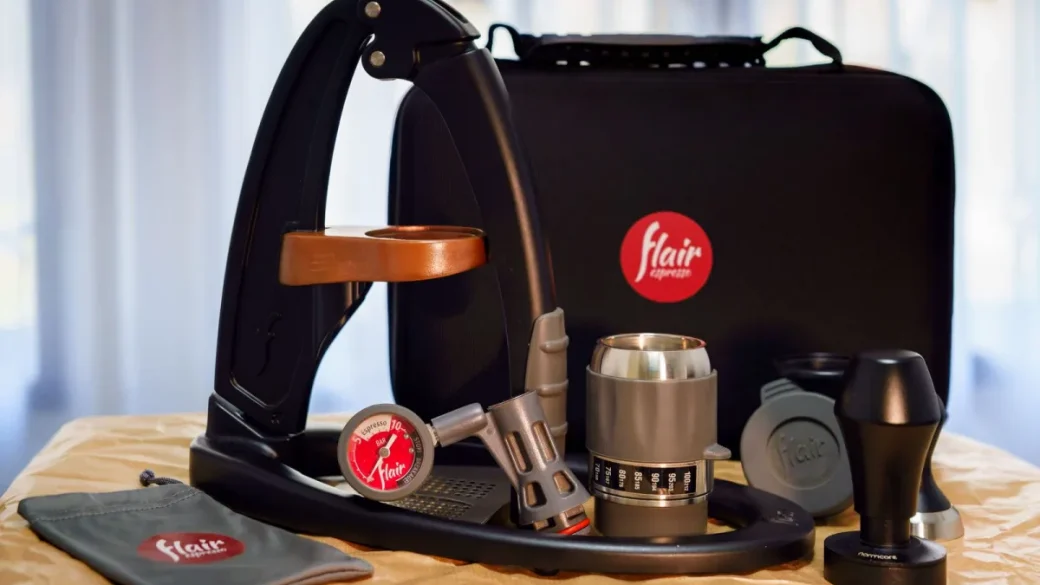
The trade-off is obvious: it’s slow, it’s manual, and you can’t bang out four drinks for guests in a hurry. But the shot quality per dollar is genuinely startling, and it will outlive every electric machine on this list. Espresso is just water forced through coffee at pressure, and the lever does that as purely as anything, as the background on espresso lays out.
Quick comparison, side by side
| Model | Street price | Portafilter | Boiler | Best for |
|---|---|---|---|---|
| Gaggia Classic Evo Pro | ~$450 | 58mm | Stainless | Shot quality + repairability |
| Breville Barista Express | $400-$500 | 54mm | Thermocoil | Built-in grinder, all-in-one |
| Rancilio Silvia | ~$500 | 58mm | Brass | Longevity, steaming |
| De’Longhi Dedica Arte | ~$250 | 51mm | Thermoblock | Tiny kitchens, tight budget |
| Flair 58 | $350-$450 | 58mm | None (manual) | Purists, no-electronics |
Where your money actually goes
Here’s the uncomfortable part I tell everyone who walks in. The machine is maybe 60% of your shot. The grinder and the beans are the rest.
A fault I see constantly: someone spends $450 on a lovely Gaggia, then feeds it pre-ground coffee from a bag that’s been open three weeks. The result is flat, sour, and they blame the machine.
Before you check out, run through this.
- Have I budgeted $80-$150 for a real burr grinder (not a blade grinder)?
- Does this machine use a 58mm or 54mm portafilter, so accessories stay cheap?
- Is the boiler brass, stainless, or thermoblock – and am I ready to descale a thermoblock monthly?
- Can I still buy a gasket and a brew switch for this model in five years?
- Am I buying fresh, whole beans roasted within the last month?
If you’re brand new and this all feels like a lot, start with my shorter picks for a first espresso machine and come back to this list once you know you’re hooked.
My honest one-line answer, if you make me pick: the Gaggia Classic Evo Pro, a $120 burr grinder, and fresh beans. That trio, all in around $580, will out-pour a $1,000 super-automatic every single morning. And in ten years I’ll still be able to fix it on my bench in under an hour.
Frequently asked questions
Yes, easily. Machines like the Gaggia Classic Evo Pro use the same 58mm commercial portafilter and a three-way valve found on far pricier gear. The bigger limiter under $500 is usually your grinder and bean freshness, not the machine itself.
A built-in grinder like the one on the Breville Barista Express is genuinely good enough to start. But a dedicated $80-$150 burr grinder will out-perform most built-ins and gives you room to grow. If counter space and simplicity matter most, the all-in-one wins.
A single-boiler heats a small tank of water and holds temperature well, which the Gaggia and Rancilio use. A thermoblock heats water on demand as it flows through, which is faster to warm up but scales internally and is harder to repair. Thermoblocks need monthly descaling in hard-water areas.
58mm is the commercial standard, so baskets, tampers, and bottomless portafilters are cheap and everywhere. 54mm (Breville) and 51mm (many budget De'Longhi units) have fewer and pricier accessories. A bigger basket also holds more coffee, which makes a more forgiving, better-tasting shot.
It can be, if you enjoy the process and only make one or two drinks at a time. There are no electronics to fail and it pulls café-grade shots from a 58mm basket. The downside is it's slow and manual, so it's a poor fit if you need quick drinks for a household.
On a repairable machine like the Gaggia or Rancilio, plan on a fresh group gasket and boiler o-ring every year or two, both under $15. Descaler and a good backflush detergent run about $20 a year. Machines with sealed thermoblocks are cheaper up front but often unfixable when the heater scales shut.