Key takeaways
- Cafiza is a backflush detergent that strips coffee oils from the group head and screen; descaler is an acid that dissolves limescale in the boiler and lines.
- They are not interchangeable. Running Cafiza through the water tank or descaler through the group both cause damage.
- Backflush with Cafiza weekly to biweekly; descale every 1 to 3 months depending on your water hardness.
- A 2 lb tub of Cafiza runs about $15 to $20 and lasts most home users a year or more; skip the acid myths like vinegar in aluminum boilers.
- Only machines with a three-way solenoid valve (and a blind/blank basket) can be backflushed.
Last month a customer dropped off a Rocket Appartamento that wouldn’t pull a proper shot. Pressure was fine, the pump sounded healthy, but every espresso tasted like an ashtray. He was convinced the machine was dying.
It wasn’t. He’d been descaling religiously every month and had never once backflushed. The boiler was spotless. The group head was packed with months of rancid coffee oil.
That mix-up is the single most common misunderstanding I run into. People treat “cleaning” as one task with one product, when really there are two separate messes inside an espresso machine, and each needs its own chemistry.
Two different problems, two different chemicals
Coffee leaves behind two kinds of residue, and they live in different parts of the machine.
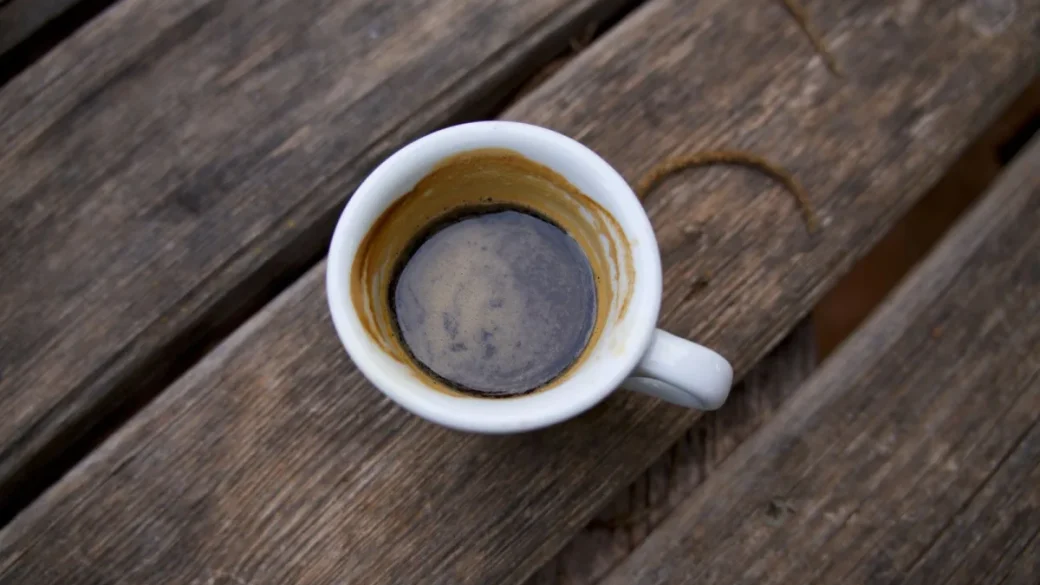
On the brew side, ground coffee sheds oils. Those oils coat the shower screen, the group gasket, and the internal passages behind the three-way valve. They go rancid, and rancid oil is what tastes like an ashtray.
On the water side, minerals in your tap water, mostly calcium and magnesium, drop out of solution when heated and stick to the boiler walls and heating element as limescale. That’s a mineral crust, not an oil.
You need an alkaline detergent to break down oil and an acid to dissolve mineral scale. One product cannot do both jobs well, which is exactly why two products exist.
Cafiza cleans what coffee leaves behind. Descaler removes what your water leaves behind.
What Cafiza actually is
Cafiza (made by Urnex) is a powdered alkaline detergent, sodium percarbonate based. It’s the go-to for backflushing, which is the process of forcing water back through the group head instead of down through the portafilter.
You use it with a blind basket, also called a blank or blind filter. That’s a basket with no holes. Water can’t escape, so it backs up, floods the chamber behind the shower screen, and the three-way solenoid valve dumps that dirty water out the drain.
A half teaspoon of Cafiza in the blind basket, five on-off cycles of about 10 seconds each, and you flush the oils out. It’s genuinely satisfying to see the drain water go from murky brown to clear.
Only machines with a three-way solenoid valve can be backflushed. That’s most prosumer E61 machines and many pump machines. A basic single-boiler like a stock Gaggia Classic without the valve can’t backflush the same way. Check your manual before you buy a blind basket.
What it costs and how long it lasts
A 2 lb (900 g) tub of Cafiza runs about $15 to $20. At half a teaspoon per backflush, once a week, that tub lasts a home user well over a year. It’s one of the cheapest things you’ll buy for your machine, which makes skipping it a false economy.
What descaler actually is
Descaler is an acid, usually citric or lactic based in the commercial stuff (Urnex Dezcal, De’Longhi EcoDecalk, and the like). Acid dissolves limescale. It does nothing useful against coffee oil.
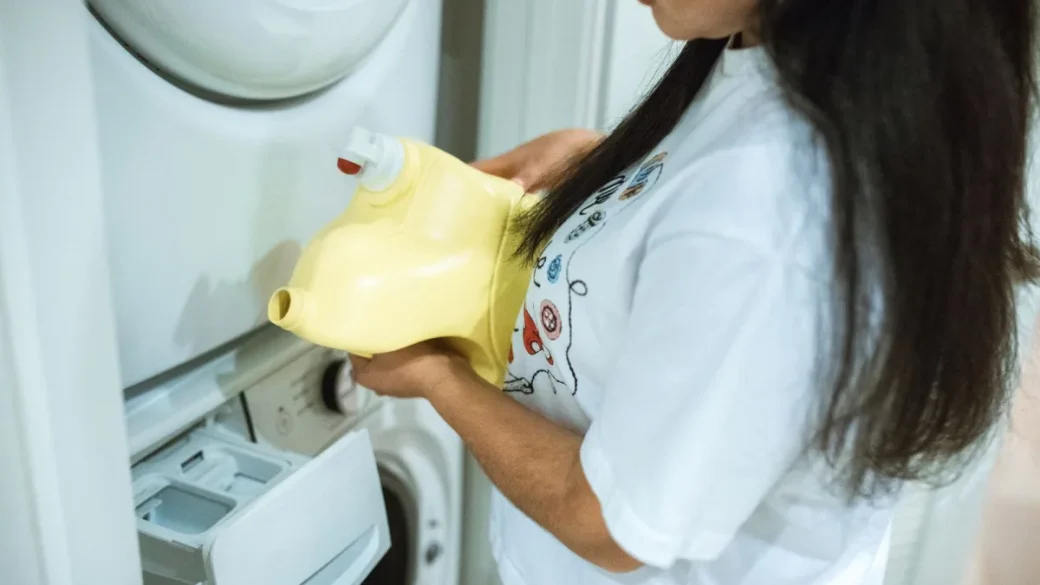
Descaler goes in the water tank, not the group. You run it through the whole water path, boiler included, then flush thoroughly with fresh water. The whole cycle takes 20 to 40 minutes on most home machines.
How often depends entirely on your water. On hard water (above roughly 200 ppm), I tell people every 4 to 6 weeks. On soft or filtered water, every 2 to 3 months is plenty. If you run a bottled or filtered supply, you can stretch it further.
The step-by-step for the full routine lives in our walkthrough on cleaning and descaling an espresso machine, and there are machine-specific versions for the Breville Barista Express, the De’Longhi, and the Gaggia Classic.
Never put descaler through the group head as a backflush, and never run Cafiza through the water tank. Acid sitting against an aluminum boiler can corrode it, and detergent left in the boiler is a nightmare to rinse out. Wrong product, wrong path, real damage.
Cafiza vs descaler at a glance
| Cafiza (backflush detergent) | Descaler | |
|---|---|---|
| Chemistry | Alkaline detergent (sodium percarbonate) | Acid (citric or lactic) |
| Removes | Coffee oils and residue | Limescale and mineral buildup |
| Where it goes | Blind basket in the group head | Water tank |
| Method | Backflush cycles | Full water-path flush |
| How often | Weekly to biweekly | Every 1 to 3 months (water dependent) |
| Typical price | $15 to $20 per tub | $8 to $15 per bottle |
| Needs a 3-way valve? | Yes, for backflushing | No |
The mistakes I fix over and over
The Rocket owner from the intro is one flavor of this. Here are the others that land on my bench.
Descaling to fix a taste problem
Bitter, ashy, or muddy shots are almost always an oil problem, not a scale problem. Scale affects temperature stability and flow rate long before it affects taste. If the coffee tastes bad, reach for Cafiza first.
Vinegar in an aluminum boiler
People descale with white vinegar to save a few dollars. On a stainless boiler it’s merely smelly and hard to rinse. On an aluminum boiler it can pit the metal. A $10 bottle of proper descaler is cheap insurance.
Backflushing a machine that can’t take it
Forcing a backflush on a machine with no three-way valve just builds pressure with nowhere to go. Know your machine’s plumbing before you start.
Keep two labeled containers on the shelf: a blind basket next to your Cafiza tub, and a measuring cup next to your descaler bottle. Physically separating the two products is the simplest way to never grab the wrong one at 7 a.m.
A simple maintenance rhythm that keeps both problems away
You don’t need to overthink this. The two jobs run on two different clocks, and once you separate them in your head, the whole thing gets easy.
Here’s the cadence I give every customer who picks up a repaired machine.
- After each session: flush the group for 2 seconds and wipe the screen with a cloth.
- Once a week: backflush with plain water, then one round with a pinch of Cafiza.
- Every few weeks: change the group gasket if shots start dripping past the portafilter (a $3 part on most E61 machines).
- Every 1 to 3 months: descale, timed to your water hardness.
- Test your water once: a cheap TDS meter or hardness strip tells you how aggressive your descaling schedule needs to be.
Get a hardness reading and you stop guessing. Under about 100 ppm, descale quarterly. Between 100 and 200, monthly-ish. Above that, either descale every few weeks or, honestly, switch to filtered water and save yourself the chore.
The espresso brewing itself is a fussy little process, as the Specialty Coffee Association will happily remind you, but keeping the machine clean is not. Two products, two clocks, two paths through the machine. Keep them straight and you’ll go years without a repair bill.
Frequently asked questions
No. Cafiza is an alkaline detergent designed to remove coffee oils during a backflush. It has no meaningful effect on limescale, which is a mineral deposit that only an acid descaler can dissolve. Using Cafiza in the water tank as a descaler will leave scale untouched and is hard to rinse out of the boiler.
You shouldn't. Descaler is acidic and is meant to flow through the water path, not sit in the group head. Backflushing forces it against the three-way valve and shower screen where it does nothing for oils and can attack seals and metal over time. Use a proper backflush detergent for the group and keep descaler in the tank.
Backflush with Cafiza weekly to biweekly for a home machine that gets daily use. Descale every one to three months, depending on your water hardness. Hard tap water above roughly 200 ppm needs descaling every four to six weeks, while filtered or soft water can stretch to quarterly.
Almost certainly Cafiza. Bitter, ashy, or muddy flavors come from rancid coffee oils built up in the group head, which a backflush removes. Limescale affects temperature and flow rate long before it changes taste, so descaling rarely fixes a flavor complaint on its own.
Only cautiously, and not on aluminum. Vinegar is a weak acid and can dissolve some scale, but it is hard to rinse and can pit aluminum boilers found in many entry-level machines. A dedicated citric or lactic acid descaler is cheap, formulated for the job, and rinses cleaner, so it's worth the few dollars.
No. Backflushing needs a three-way solenoid valve to divert the dirty water to the drain. Most E61 and prosumer pump machines have one, but many basic single-boiler machines do not. Check your manual, and if there's no three-way valve, clean the group by soaking the screen and gasket instead.