Key takeaways
- Backflush with plain water after every session and with detergent (2-3g Cafiza) once a week on machines with a three-way solenoid valve.
- Wipe and purge the steam wand within 5 seconds of every use - dried milk protein is the single most common repair I see.
- Soak the portafilter and baskets in a Cafiza solution weekly; deep-clean the group gasket and screen monthly.
- Descale on a schedule set by your water hardness, not the calendar - every 2-3 months on hard water, up to 6 on soft or filtered.
- A $15 tub of detergent and ten minutes a week is cheaper than a $180 solenoid valve or a seized pump.
The saddest machine I ever opened was a two-year-old Breville Barista Express that came in “making weak, sour shots.” Inside the group, the shower screen was caked with a black-brown lacquer of old coffee oil, and the steam wand tip had three of its four holes plugged solid with dried milk.
Nothing was broken. The owner had just never cleaned it. Twenty minutes with a brush and some detergent and it pulled like new.
That machine is why I hand every customer the same thing: a routine broken into daily, weekly, and monthly jobs. Follow it and you’ll spend more time drinking espresso than reading about repairing it.
Why a Schedule Beats “When It Looks Dirty”
Coffee is oily, and those oils go rancid. Left on a shower screen or in a basket, they turn bitter within days and coat everything downstream.
Milk is worse. Protein and sugar bake onto a hot steam wand almost instantly, and once it dries inside the tip you need a pin and a lot of patience to clear it.
Then there’s scale – the mineral crust that builds inside the boiler from your tap water. That’s a separate job with its own timing, and I’ve covered the full method in how to clean and descale an espresso machine if you want the deep version.
Cleaning removes what coffee and milk leave behind. Descaling removes what your water leaves behind. They are two different jobs on two different clocks.
An honest espresso machine cleaning schedule keeps both from ever reaching the point where they cost you money. Here’s exactly what I run at home, and what I recommend to every customer.
Espresso is coffee brewed by forcing near-boiling water through finely-ground beans at around 9 bars of pressure. That pressure is also why residue matters – a clogged screen or basket changes how the water flows and quietly ruins your extraction. More on the method at Wikipedia’s espresso entry.
Daily: The Five-Minute Habits
These are the ones that save you the most grief, and they take almost no time once they’re muscle memory.
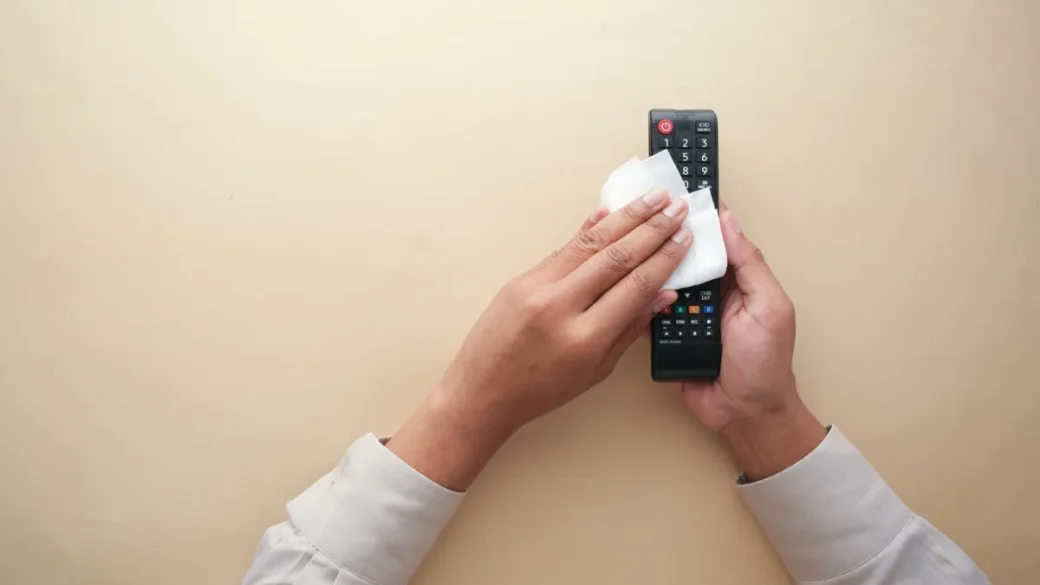
Right after each shot
- Knock the puck out and give the basket a quick rinse under the tap.
- Run a blank shot (no portafilter, or with a blind basket) for 2-3 seconds to rinse coffee off the shower screen.
- Wipe the group gasket area with a damp cloth.
Right after steaming milk
- Purge the steam wand for one second to blow milk out of the tip.
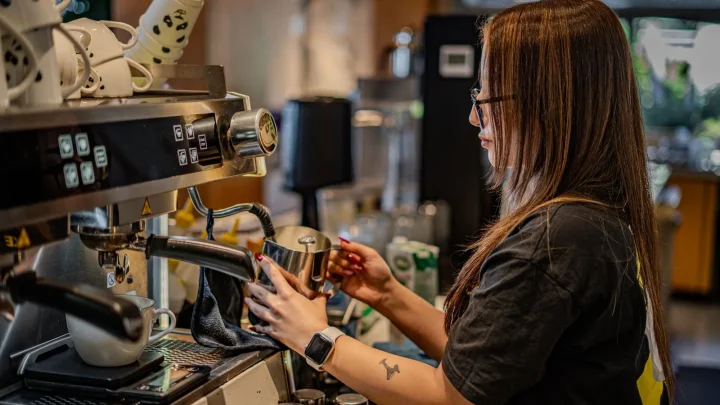
- Wipe the wand with a damp microfiber cloth within about five seconds, before anything dries.
End of the day
- Empty and rinse the drip tray.
- Dump the water from the tank if your machine sits unused – standing water breeds biofilm.
- Do a plain-water backflush (no detergent) if your machine has a three-way solenoid valve.
The five-second rule on the steam wand is the single best habit you can build. Dried milk protein is the number one cause of the plugged, spitting wands I see on the bench. A cloth costs nothing; a new wand assembly on a De’Longhi runs $30-45.
Weekly: The Deep Backflush and Soak
Once a week is where detergent enters the picture. This is the routine that keeps oils from ever building into that black lacquer I described up top.
Detergent backflush
If your machine has a three-way solenoid valve (most Gaggia, Rancilio, Breville dual-boiler, and prosumer machines do), fit the blind basket and add about 2-3 grams of espresso detergent – Cafiza or Urnex are the ones I trust. A tub is around $15 and lasts most people a year or more.
Run the pump for about 10 seconds, stop, wait 10, and repeat five times. Then remove the detergent, refit the blind basket, and rinse-backflush five more times with plain water until there are no suds.
Never detergent-backflush a machine without a three-way valve – that includes most single-boiler entry machines and every pod machine. With no valve to relieve pressure, you’ll push detergent back into the pump and boiler with nowhere to drain. If you’re unsure, check your manual or the maker’s site, like Gaggia or Breville, before you start.
Soak the removable parts
- Drop the portafilter, baskets, and shower screen (if removable) into a bowl of hot water with a teaspoon of Cafiza.
- Soak 20-30 minutes. You’ll see the water turn amber – that’s the oil coming off.
- Scrub the basket holes with a soft brush, rinse thoroughly, and dry.
For milk-heavy machines with an auto-frother or milk carafe, run the maker’s milk-clean cycle weekly too. On a Breville the specifics live in how to descale a Breville Barista Express, which walks the same machine’s care menu.
Monthly: Gaskets, Screens, and a Hardware Check
Once a month I go a level deeper – the parts that don’t need weekly attention but degrade quietly if ignored.
Group head and shower screen
Unscrew the shower screen (usually one central screw, torqued only hand-tight – about 2 Nm, snug but not forced). Behind it you’ll often find grounds and a dispersion block that needs a scrub. Clean both, check the screen holes are clear, and reseat.
Inspect the group gasket
The group gasket is the rubber ring the portafilter seals against. When it hardens or cracks you’ll notice the portafilter creeping toward the 6 o’clock position and coffee squirting from the sides.
They’re a $6-10 part and last roughly 9-18 months depending on use. Replacing one is a five-minute job with a pick and a flat screwdriver – far easier than living with a leaking group.
Water path and filters
- Swap the in-tank water filter if your machine uses one (Breville and De’Longhi both do).
- Descale the tank and check the pickup tube for slime.
- Wipe the machine’s exterior and vents so it runs cool.
| Task | How often | Time | What it costs to skip |
|---|---|---|---|
| Steam wand wipe & purge | Every use | 10 sec | Plugged wand, $30-45 assembly |
| Plain-water backflush | Daily | 1 min | Oil buildup, sour shots |
| Detergent backflush + soak | Weekly | 10 min | Rancid oils, $180 solenoid valve |
| Gasket & screen service | Monthly | 15 min | Leaks, poor extraction |
| Descale | Every 2-6 months | 30 min | Seized pump, scaled boiler |
Descaling: The One Task You Time by Water, Not Calendar
Descaling deserves its own line because the interval isn’t fixed – it depends entirely on your water. Hard water (above roughly 150 ppm) scales a boiler in weeks; soft or filtered water can stretch to twice as long.
My rule of thumb for home machines: hard tap water, descale every 2-3 months. Filtered or soft water, every 4-6 months. If your shots start running cool or the pump gets noisy, that’s scale talking – don’t wait for the calendar.
The chemistry and step-by-step differ a little by brand. For a De’Longhi, how to descale a De’Longhi espresso machine covers the light-cycle prompts; for a single-boiler classic, how to descale a Gaggia Classic at home is the one I point people to.
Use a filtered or bottled water in the 50-100 ppm hardness range and you’ll roughly halve how often you descale. It also protects the boiler and heating element, which are the expensive bits. The Specialty Coffee Association publishes target water standards worth a look if you want to dial this in.
Print This and Stick It on the Machine
The whole point of a routine is that you stop thinking about it. Copy the checklist above onto an index card and tape it inside a cupboard door near your setup – daily tasks on one side, weekly and monthly on the other.
In twelve years on the bench, I can count on one hand the machines that failed early despite a real cleaning habit. The ones that come in dead almost always tell the same story: never backflushed, never descaled, wand wiped “sometimes.”
Ten minutes a week and a $15 tub of detergent buys you years. That’s the trade, and it’s a good one.
Frequently asked questions
Backflushing pushes water (or detergent) back through the group head to clear coffee oils and grounds - it cleans the brew path. Descaling circulates an acid solution through the boiler to dissolve mineral scale from your water. They target completely different residues and run on different schedules, so you need both.
No. A detergent backflush only works safely on machines with a three-way solenoid valve, which can relieve the built-up pressure and drain the detergent away. Most single-boiler entry-level machines and all pod machines lack this valve, and forcing detergent through them pushes it into the pump and boiler. Check your manual before trying.
It depends on your water hardness, not the calendar. On hard tap water (above roughly 150 ppm) descale every 2-3 months; on filtered or soft water you can stretch to 4-6 months. If shots run cool or the pump gets louder, descale sooner regardless of when you last did it.
Cafiza or Urnex espresso machine detergent are the two I rely on - a tub runs about $15 and lasts a year for most home users. Use roughly 2-3 grams for a backflush and a teaspoon in a bowl of hot water for soaking parts. Avoid dish soap and bleach; they leave residues and can damage seals.
Yes, and within about five seconds. Milk protein and sugar bake onto hot metal almost instantly and dry inside the tip holes, which is the most common wand failure I see on the bench. A quick one-second purge plus a damp-cloth wipe takes ten seconds and prevents a plugged, spitting wand later.
Watch where the portafilter locks in. A fresh gasket seats it around the 3 to 5 o'clock position; as the rubber hardens the handle creeps toward 6 o'clock, and you'll start seeing coffee squirt from the sides during a shot. That's your cue - the part is $6-10 and takes about five minutes to swap.