Key takeaways
- Soak the portafilter body, spouts, and baskets in a cafiza solution (about 1 tsp per liter of hot water) for 15-30 minutes to dissolve baked-on coffee oil.
- Hold each basket up to a light after soaking; if you see dark or blocked holes, you're not done.
- Never submerge the whole portafilter with the plastic handle attached for hours, and keep the group gasket area dry.
- A monthly deep soak plus a weekly rinse keeps shots pouring evenly and stops channeling before it starts.
- Replace a warped or heavily pitted basket rather than fighting it; a quality double runs $12-$25.
The first time someone hands me a portafilter and says “my shots taste bitter no matter what I do,” I flip the basket over and hold it up to the shop light. Nine times out of ten, a third of the holes are dark. Blocked. Coated in a lacquer of old coffee oil that no amount of grind adjustment will fix.
People obsess over their grinder and their beans. Meanwhile the one part that touches every single shot gets a quick rinse under the tap and goes back in the machine.
A basket has somewhere between 400 and 700 holes, each around 0.3mm across. That’s roughly the width of a thick hair. They clog quietly, and by the time you taste it, they’ve been partially blocked for weeks.
Why a rinse under the tap does nothing
Coffee is oily. Those oils are what make a good crema, but they also oxidize and turn into a sticky, varnish-like film that bonds to stainless steel. Hot water alone won’t shift it, and a cloth can’t reach inside a 0.3mm hole.
The film builds in three places: the underside of the basket, the inside of the spouts, and the little ledge where the basket sits in the portafilter body. Left alone, it goes rancid. That rancid oil is a big part of the stale, ashy taste people blame on their beans.
If you can smell old coffee on a dry portafilter, it’s already overdue for a soak.
This is why soaking beats scrubbing. A proper detergent breaks the oil’s grip chemically, so it floats off the metal instead of you trying to grind it out of holes you can’t even see. The Specialty Coffee Association has published plenty on how residue affects extraction, and it lines up with what I see on the bench every week.
What you’ll need
You don’t need much, and most of it lasts a year or more.
- Espresso machine cleaner (cafiza / Puly Caff / Urnex – a tub is $12-$18 and lasts ages)
- A heatproof bowl or jug big enough to submerge the basket and spouts
- A soft brush – an old toothbrush works, or a proper group brush for $6
- A pin or a dedicated basket-cleaning needle (0.3mm) for stubborn holes
- Clean towel and a source of hot water, around 60-70°C
Cafiza and its rivals are alkaline detergents, not descalers. Descaler tackles limescale inside the boiler; cafiza tackles coffee oil on parts. They are not interchangeable. For the scale side of things, see our overview on how to clean and descale an espresso machine.
The soak method, step by step
1. Separate what you can
Pop the basket out of the portafilter. On most machines it lifts out with a fingernail under the rim; a few clip in and need a gentle twist. If yours has a retaining spring, note which way it sits before you remove it.
If the spouts unscrew (many bottomless conversions and older E61 portafilters), take them off too. The insides of spouts hide a shocking amount of grime.
2. Mix the solution
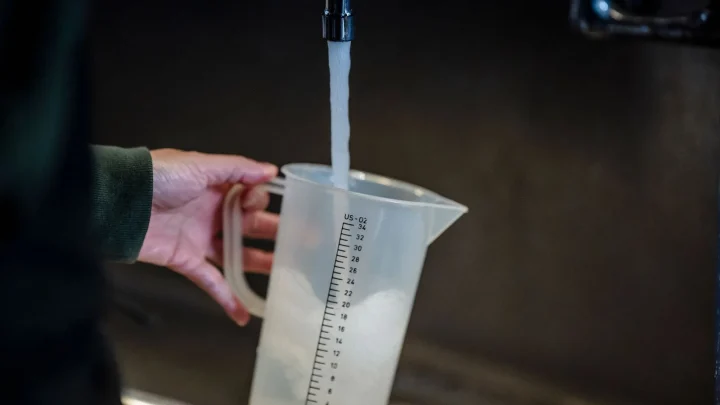
Roughly one level teaspoon of cleaner per litre of hot water. Stir until it dissolves. It shouldn’t be a slurry; a clear, slightly soapy-feeling solution is right.
Keep the plastic handle out of the water and never soak a portafilter with a wooden handle at all – the wood swells and the finish lifts. Submerge only the metal body, basket, and spouts. And don’t leave aluminium parts (some vintage baskets) in alkaline cleaner for more than 20 minutes, as it will dull and pit the metal.
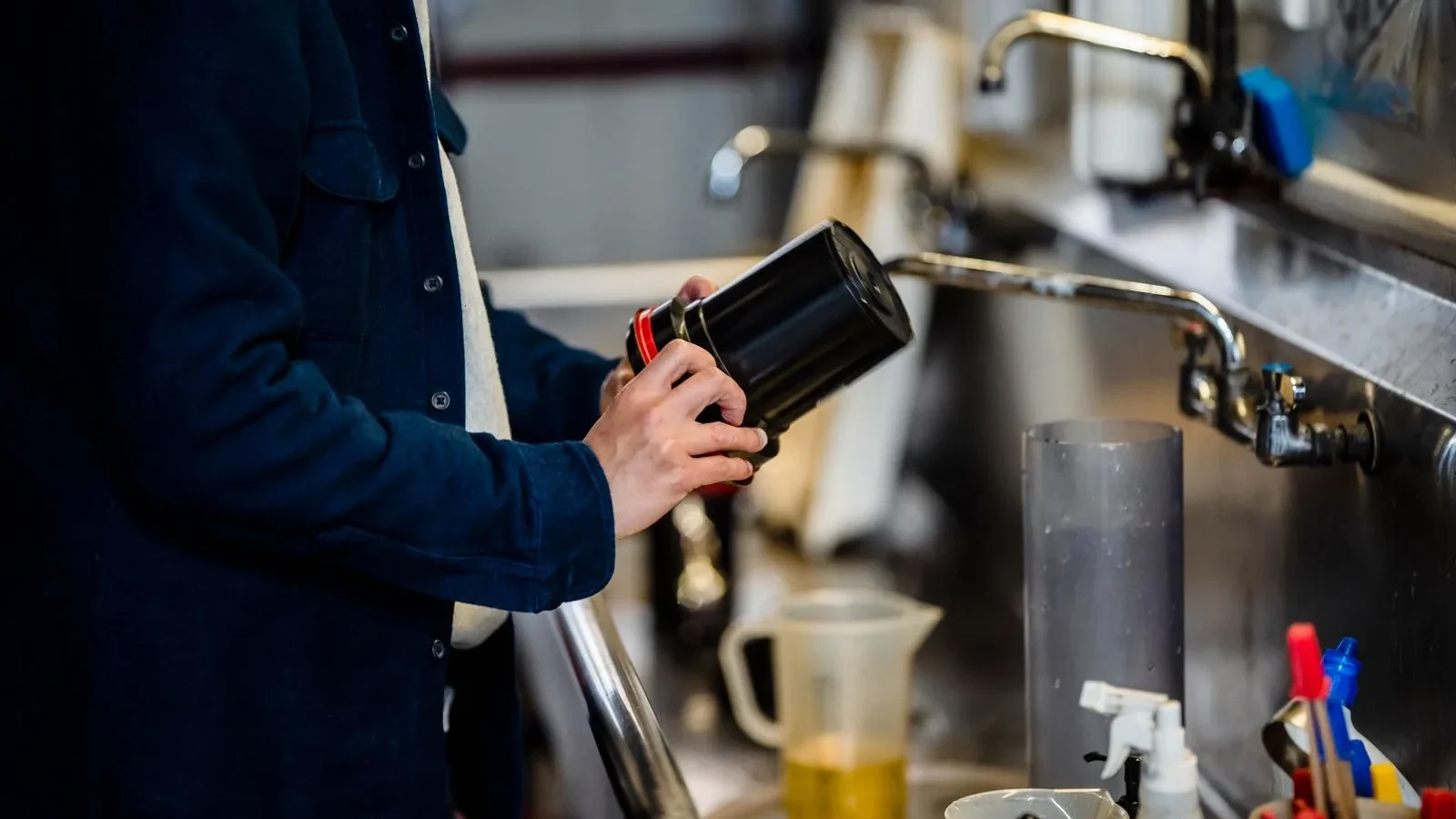
3. Soak 15 to 30 minutes
Drop the basket and spouts fully under. Lean the portafilter body in so the basket seat and shower side are submerged while the handle stays dry and propped on the rim.
You’ll often see the water turn brown within five minutes. That’s the oil letting go. For a badly neglected basket, give it the full 30.
4. Brush, then check the light
Brush the basket inside and out, work the brush into the spouts, and scrub the seat where the basket rests. Then rinse thoroughly under running water – really thoroughly, because leftover detergent tastes soapy in the next shot.
Now the important part. Hold the basket up to a bright light or a window and look through the holes. Even light across the whole pattern means you’re done. Dark patches mean oil is still in there.
For the last few stubborn holes, push a 0.3mm pin through from the outside in, one at a time, while the basket is still wet. Do it dry and you risk scratching the tapered hole and causing channeling right there. Ten seconds of pinning saves you a second soak.
How often, realistically
Home use isn’t a café pulling 200 shots a day, so you can be sensible about it.
| Task | Frequency | Time |
|---|---|---|
| Rinse basket and wipe portafilter | After every session | 30 seconds |
| Backflush with water (if machine allows) | Weekly | 2 minutes |
| Full soak of basket, spouts, body | Monthly | 30 minutes |
| Replace basket | Every 1-2 years, or when warped | – |
If you drink two or three doubles a day, monthly is about right. Push it to every two or three months and you’re back to that dark, uneven basket and the bitterness that comes with it.
Machine-specific notes worth knowing
Not every portafilter behaves the same, and a couple of popular machines catch people out.
On the Breville Barista Express and Barista Pro, the baskets are dual-wall (pressurised) by default. Those have a single tiny exit hole under the perforated top plate, and that exit hole clogs completely if you skip cleaning. Soaking is the only sensible fix, since you can’t pin a hole you can’t reach. Owners of that model should also read our walkthrough on how to descale a Breville Barista Express, because scale and oil problems often show up together.
Gaggia Classic baskets are simple single-wall stainless and take a soak beautifully; the chrome portafilter body cleans up like new. If your Classic is also running slow, our notes on how to descale a Gaggia Classic at home cover the boiler side.
Many De’Longhi models, like the Dedica and Magnifica portafilters, use plastic-framed pressurised baskets with a spring valve. Keep the soak to 15 minutes and warm rather than near-boiling water so you don’t stress the plastic, and follow up with our De’Longhi descaling guide when scale is the issue.
When a basket is past saving
Cleaning fixes clogging. It does not fix damage.
Set the basket on a flat surface and press the rim. If it rocks, it’s warped, usually from being knocked against a hard knock-box for years. A warped basket seals unevenly against the group head and channels no matter how well you dial in.
Also look for pitting or holes that have gone oval from over-pinning. At that point stop fighting it. A quality double basket – an IMS or VST precision basket – runs $12 to $25 and will pour more evenly than a five-year-old stock one ever did.
A precision basket has holes drilled to tighter tolerances and a flatter bed, which is why upgrading one alone can visibly smooth out your pour. It’s the cheapest meaningful upgrade in the whole espresso chain.
Keep it easy on yourself
The trick isn’t doing this perfectly. It’s doing the 30-second rinse every day so the monthly soak stays a 15-minute job instead of a scrubbing marathon.
Set a recurring reminder on the first of the month. Drop the basket and spouts in a bowl of cleaner while you make breakfast, brush, rinse, check the light, done. Your next shot will run visibly more even, and the one after that will actually taste like the beans you paid for.
Frequently asked questions
Put the loose baskets in, but leave the portafilter out. Dishwasher detergent is harsh enough to dull stainless and it will attack the plastic or wooden handle and the group gasket seat over time. A dedicated espresso cleaner soak is gentler on the parts and far better at dissolving coffee oil than a dishwasher cycle.
Cafiza (and Puly Caff, Urnex, etc.) is an alkaline detergent that dissolves coffee oil and residue on parts like baskets and portafilters. Descaler is an acid that removes limescale from inside the boiler and pipes. Use cleaner for the portafilter and baskets, and descaler for the machine's internals. They do not do each other's job.
Hold the clean, dry basket up to a bright light and look through the perforations. A healthy basket shows an even field of tiny bright points. Dark or missing points mean those holes are blocked with oil, which forces water through the open holes and causes bitter, uneven extraction.
Yes, and it's often the only way to clean one, since you can't reach the single exit hole with a pin. Submerge it in cleaner solution for 15 to 30 minutes, then rinse hard to flush the loosened oil out through the valve. For plastic-framed pressurised baskets, use warm water rather than near-boiling and keep the soak closer to 15 minutes.
First re-check the basket against the light, since one deep soak doesn't always clear a badly neglected basket. Then look at whether the basket is warped or pitted, which cleaning can't fix. If both check out, the bitterness is likely coming from grind, dose, or water temperature rather than the basket itself.
Mix it fresh each time. Once cafiza has pulled oil out of your parts, its cleaning power is spent and the dissolved gunk can redeposit if you reuse it. A teaspoon of powder per litre costs a few cents, so there's no reason to save the used solution.