Key takeaways
- Backflushing only works on machines with a three-way solenoid valve and a backflush (blind) basket - E61, Breville dual boiler, Gaggia Classic, Rancilio Silvia Pro.
- Rinse with plain water 5–7 times, then run one cycle with about 3 grams of detergent, then rinse another 8–10 times to clear residue.
- Use a purpose-made cleaner like Cafiza or Puly Caff - never dish soap, which leaves a film and taints shots.
- Backflush water-only once a week, with detergent every 1–2 weeks for daily drinkers; it clears the solenoid path, not scale.
- If backflushing does nothing for a slow group, the three-way valve or its seals are likely worn and need service.
Pull the shower screen off a machine that’s never been backflushed and you’ll find a black, waxy paste caked into the group. That’s coffee oil, fines, and stale grounds baked on by heat over months. It’s the number one thing I scrape out on the bench, and nearly every time the owner had no idea the machine could clean that spot itself.
Backflushing is how you get at it. You block the basket so water can’t escape downward, and the machine forces that water back up through the group and out the three-way solenoid valve instead. It’s the only routine cleaning that actually flushes the valve path.
A fault I see constantly is a group that dribbles or leaks at the portafilter long after you stop the shot. Nine times out of ten that’s a gummed-up solenoid, and a proper detergent backflush fixes it before it ever reaches me.
Does your machine even have the plumbing for it?
This matters before you buy anything. Backflushing needs a three-way solenoid valve – the part that releases pressure after a shot so the puck comes out dry, not soupy.
If your machine dumps that pressure back through the group, you can backflush it. If it doesn’t have a three-way valve, blocking the basket just builds pressure with nowhere to go, and that’s how you pop a seal or trip a pressure relief.
Machines that take a backflush: any E61 group head, the Breville Dual Boiler (BES920/BES990), Rancilio Silvia Pro, most Gaggia Classic and Classic Pro units, Lelit Bianca, ECM and Profitec E61 machines. The espresso machine category is broad, so check your manual for the words “backflush” or “blind filter.”
Never backflush a single-boiler machine without a three-way valve – the entry-level Breville Bambino and Barista Express (single-boiler models) do not have one. Blocking the basket on those just spikes pressure and can rupture a seal. If you’re unsure, check the manual or feel the puck after a normal shot: a dry, compact puck means you have a three-way valve.
How to tell in ten seconds
Pull a normal shot and pop the portafilter out. If the puck is dry and holds its shape, you have a three-way valve and you’re good to go. If it’s a wet, sloppy mess, you don’t – stop here and don’t block the basket.
What you actually need
The list is short and cheap. None of this is specialist gear.
- A blind basket (also called a blank or blind filter) – the solid insert with no holes, about $8–$15
- Espresso machine detergent – Cafiza, Puly Caff, or Urnex, roughly $12–$18 for a tub that lasts a year
- A small measuring scoop or a 0.5g scale
- A clean cloth and a group brush
Some machines ship with a rubber blind disc instead of a basket – the Breville Dual Boiler and the Gaggia Classic both include one in the box. Either works. The rubber disc seats in your normal basket; the steel blind basket drops straight into the portafilter.
One tub of Cafiza will outlast most espresso machines. You use about 3 grams per detergent backflush – that’s a small pea-sized amount, not a heaped scoop. Overdosing doesn’t clean better; it just means more rinse cycles to clear the foam.
The water-only backflush, step by step
Always start with plain water. This flushes loose grounds before you introduce detergent, and it’s the routine you should run most often anyway.
- Bring the machine to full temperature. A cold group won’t shift the oils. Give it 20–25 minutes from cold, or check your ready light.
- Drop the blind basket into the portafilter and lock it into the group.
- Start the shot as if you were brewing. Pressure will climb to 9–10 bar with nowhere to go, then the water reverses through the solenoid.
- Run it for about 5 seconds, then stop.
- Stop the pump. You’ll hear the solenoid release with a hiss and see water spit into the drip tray.
- Repeat that on-off cycle 5 to 7 times.
That pulsing is the whole point. Each release drives dirty water out through the valve and drain line, which is exactly where gunk collects. A continuous run doesn’t scrub the path the way short bursts do.
Short pulses clean the valve. Long runs just heat the group. Five seconds on, release, repeat.
Adding detergent to clean the solenoid path
This is the part that separates a real clean from a rinse, and it’s the reason the whole exercise exists. Coffee oil doesn’t dissolve in water – you need the enzymatic detergent to break it down inside the valve body.
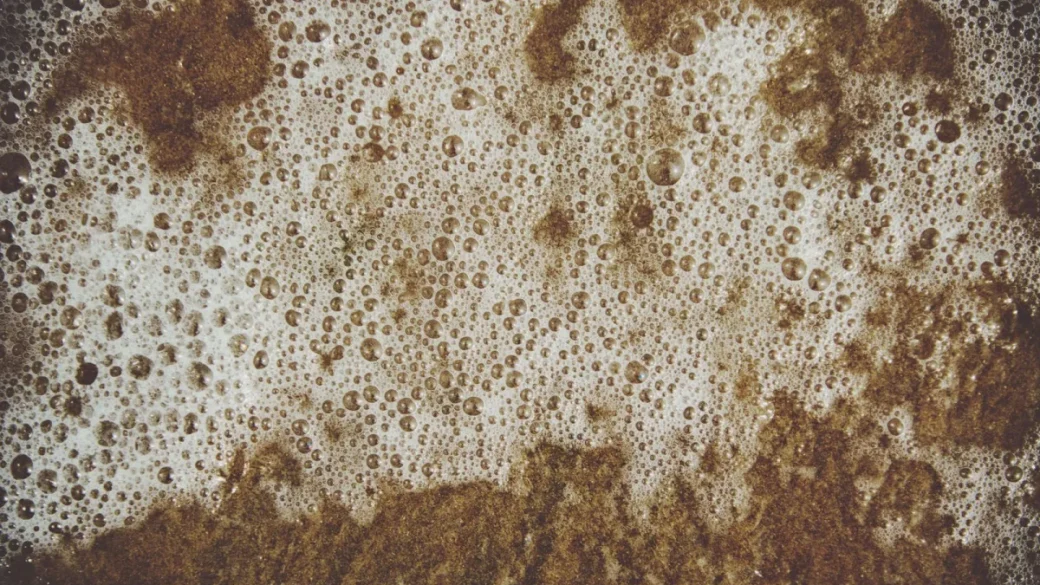
Put roughly 3 grams of Cafiza or Puly Caff into the blind basket. Lock it in, then run the same 5-second on-off cycle 5 to 6 times. On the third cycle you’ll often see brown foam in the drip tray – that’s the emulsified oil coming out of the group and the solenoid path.
The Specialty Coffee Association and every manufacturer I’ve dealt with are firm on one thing: only use a cleaner designed for espresso equipment.
Never use dish soap, vinegar, or bleach in a backflush. Dish soap leaves a film that taints every shot for a week and can attack seals. Vinegar is for descaling, not the group, and it will not clean coffee oil. If you want the scale side of things, that’s a separate job – see our walkthrough on how to clean and descale an espresso machine.
Rinse like you mean it
Detergent residue is worse than the oil you just removed. After the detergent cycles, drop the detergent, keep the blind basket in, and run 8 to 10 plain-water backflush cycles.
Then remove the blind basket entirely and run a short flush of clear water through the open group for two or three seconds. If you can smell anything but hot water on that flush, run three more rinse cycles.
How often – and what it won’t fix
For a machine pulling two to four shots a day, I tell people to backflush with plain water once a week and with detergent every one to two weeks. Heavy use, a café or a busy household, bump the detergent cycle to twice a week.
Here’s the split that trips people up: backflushing cleans coffee oil from the group and valve. It does nothing for limescale inside the boiler.
| Job | What it removes | How often | Product |
|---|---|---|---|
| Water backflush | Loose grounds, light oil | Weekly | Plain water |
| Detergent backflush | Baked-on coffee oil in solenoid path | Every 1–2 weeks | Cafiza / Puly Caff |
| Descaling | Limescale in boiler and lines | Every 1–3 months | Citric or descaling solution |
Scale is the other half of the maintenance story. If your machine is slowing down or the water tastes flat, that’s descaling territory – the routines differ by model, so we’ve got dedicated walkthroughs for the Breville Barista Express, the De’Longhi lineup, and the Gaggia Classic.
If a detergent backflush makes a slow-dripping group noticeably faster, the solenoid was gummed and you caught it early. If it changes nothing, the three-way valve seals are likely worn – on an E61 that’s a $15 O-ring kit and about 30 minutes with a 3mm and 4mm hex key, but it’s a bench job, not a rinse.
When backflushing stops being enough
There’s a point where cleaning can’t save a valve. If you’re still getting a slow leak at the portafilter after a thorough detergent backflush, the rubber seat inside the solenoid has hardened, and no amount of Cafiza softens perished rubber.
On the E61 group I rebuild these constantly – the parts are cheap, around $20 for the full seal and spring kit, and the plunger seat is the usual culprit. On a Breville Dual Boiler the solenoid is a sealed assembly, closer to $60 to replace, and worth doing rather than fighting.
Keep the shower screen honest too. Pull it monthly, drop it in a cup of detergent solution for 15 minutes, and scrub the group gasket with a brush while it’s out. A backflush cleans the path behind that screen, but the screen itself still needs a soak. Do both and a home machine will run for a decade without ever seeing my bench.
Frequently asked questions
It needs a three-way solenoid valve, which you can confirm by pulling a normal shot and checking the puck. If the puck comes out dry and compact, you have the valve and can backflush safely. If it's wet and sloppy, your machine vents pressure differently and blocking the basket could damage a seal.
No. Dish soap leaves a film that taints your shots for days and can degrade the seals, while vinegar does nothing for coffee oil and is meant for descaling. Use a purpose-made espresso cleaner like Cafiza, Puly Caff, or Urnex - a tub costs around $12 to $18 and lasts about a year.
About 3 grams, which is a small pea-sized amount rather than a heaped scoop. Overdosing doesn't clean any better and just creates more foam you have to rinse out. Follow the detergent cycles with 8 to 10 plain-water backflushes to clear all residue.
For two to four shots a day, run a plain-water backflush weekly and a detergent backflush every one to two weeks. Heavy or café-level use warrants a detergent cycle twice a week. Backflushing removes coffee oil but does nothing for limescale, so keep a separate descaling schedule.
Often, yes, if the leak comes from coffee oil gumming up the three-way solenoid. A detergent backflush clears that path and can restore proper release. If the drip persists afterward, the valve's rubber seals have likely hardened and need replacing - roughly a $15 to $20 O-ring kit on an E61.
You need either a blind (solid, no-holes) basket that drops into your portafilter, or a rubber blind disc that seats in your normal basket. The Breville Dual Boiler and Gaggia Classic ship with a rubber disc, while E61 machines usually take a steel blind basket for about $8 to $15. Either one blocks water flow so it reverses through the solenoid.